


The Milei siblings, Javier and Karina, built a popular movement literally from scratch. In a country as bureaucratic and politically structured as Argentina, they managed to achieve the impossible and reach the top office relying on Javier’s charisma and Karina’s control. Once they took charge of the government, they met the difficult challenge of constructing a cabinet, a legislative caucus and a political structure, in order to manage possibly the most complex organisation in the country.
That’s where Manuel Adorni comes in, a trusted friend of Javier’s, one unpolluted by the political caste who is seen as 100-percent loyal. Adorni went from zero to hero alongside the Mileis, building his star power on social media, as a panellist in different news shows and then as the presidential spokesperson, trolling journalists and the opposition from the bully pulpit. He became so popular amongst the libertarian base that he went on to head La Libertad Avanza’s candidate list in last year’s local elections in Buenos Aires City, where he won and laid the groundwork for the party’s aspiration in 2027: to strip the mayorship from the Macri clan.
Until recently, Adorni was seen as the strongest potential candidate for that race, despite facing a strong internal challenge from Patricia Bullrich who’s always politically competitive. Now, Adorni is looking to avoid the fate of José Luis Espert, another high-flying libertarian hero who was expected to lead the ticket in Buenos Aires Province’s local midterms last year before being forced to quit amid a scandal linking him to accused drug-trafficker Alfredo ‘Fred’ Machado, a criminal recently convicted of fraud and money-laundering offences in the United States. Espert was gearing up to dispute the governorship of Argentina’s most important province. We haven’t heard of the loud-mouth economist since he's been banished to the Siberian tundra of Argentine politics.
Adorni’s fall from grace is different. The Milei siblings refuse to let him go. In a recent TV interview after having finally submitted his official net worth statement, he explained that it was painful to be called a “crook” but said that the reason “he didn’t leave”the government was he finally understood he wasn’t the “objective” of the media carnage that has dominated headlines for several weeks now. “The objective is Milei, they want this administration to fall,” he said.

Adorni has been in the eye of the storm for a full three months now, since it was first revealed that he took his wife, Bettina Angeletti, on an official trip to New York City on the taxpayer’s dime. Then came reports of a chartered private flight to Punta del Este, expenditure well beyond his official salary bracket and the purchases of fixer-uppers across multiple properties. He first claimed all of his assets had been properly disclosed (something President Milei publicly expressed his support for), only to come around and explain that he had hidden some US$500,000 from the taxman. These were profits allegedly gained from cryptocurrency trading, betting on Bitcoin, in a cold wallet he had lost and later found, which happens to conveniently coincide with his appointment into public office.
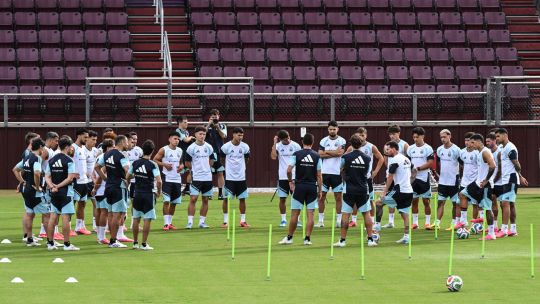
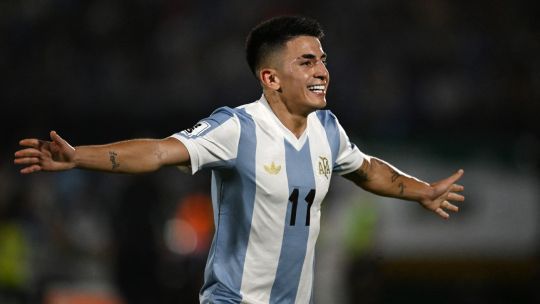
The Mileis are losing soldiers, fast. They were forced to hand their enemies Espert’s head on a platter. Karina has lost trust in controversial political advisor Santiago Caputo, putting him on the verge of an exit at any point. They fired former Cabinet chiefs Nicolás Posse and Guillermo Francos. Bullrich is already seeming to jump ship, prioritising her personal political project. The libertarian coalition, La Libertad Avanza, can no longer lose loyal figures from its ranks that are popular with the base. Adorni’s explanations appear timed with the beginning of the FIFA World Cup where Argentine society has deposited its hope and expectations on ‘La Scaloneta,’ as the team coached by Líonel Scaloni and led by Líonel Messi is known. FIFA President Gianni Infantino’s decision to enlarge the tournament adding more teams and a six-week fixture should give Adorni ample cover to drop out of people’s minds and off their agenda.
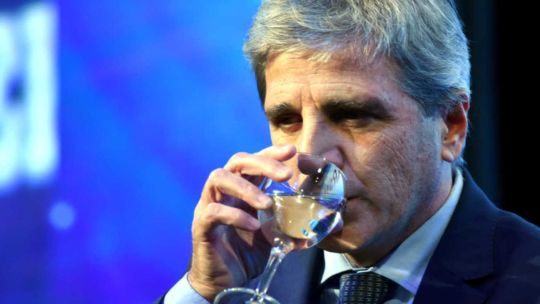
Milei and his Economy Minister Luis ‘Toto’ Caputo are also hoping that Argentina’s economy will begin to show signs of strength and consolidate a positive trajectory. If the nation’s football team has a decent showing in the World Cup, inflation continues to come down and the economy begins to grow, then Javier and Toto can hope to come out the other end and look to consolidate their political project for the second half of 2026.

This is key because Milei has seen a very substantial slide in his public image over the past several months, although there are incipient signs of recovery. Recent polls such as the ESPOP survey put together by San Andrés University indicate that he has slid from the top of the public opinion rankings, while La Libertad Avanza is behind Peronism in a potential voting intention scenario ahead of 2027. Fortunately for the libertarians, there is no real opposition in front of them – starting with the Peronists. The first issue is how to define such an amorphous group. Some are tying recent popular mobilisations to the passing of Carlos Alberto Solari – aka ‘el Indio” – to the resurgence of a united Peronist front. Solari’s very public wake was amongst the largest seen in Argentina, comparable to other popular idols including Eva and Juan Domingo Perón, Diego Maradona and Carlos Gardel, with nearly a million people paying their respects. As one of the leaders of the iconic rock band Patricio Rey y sus Redonditos de Ricota, Solari veiled his political inclinations through sophisticated poetry, though later in life he admitted to some sympathy with Peronism and Kirchnerism more specifically. He visited Cristina Fernández de Kirchner, who is detained under house arrest while serving a corruption sentence, last year and had nasty things to say about Milei in the few times he spoke publicly in recent years.
Solari’s funeral was an opportunity for Máximo Kirchner to seek protagonism given a supposed closeness to the late musician’s family. Buenos Aires Province Governor Axel Kicillof did the same, putting the region’s full resources on disposal for the million-person mobilisation that the Milei administration blocked from occurring in Congress, where most popular heroes receive their farewells from the masses. In truth, it is too early to tell whether the march should be analysed politically, even though there’s an attempt to connect it with a revitalisation of Peronism. While it seems exaggerated to imagine that Máximo and Axel will halt the hostilities and seek common ground because of Indio’s funeral, they at least collaborated in making it happen.
Much like the Peronists, who appear dishevelled and fragmented, ex-president Mauricio Macri has been trying to group together the “non-Kirchnerites” in order to recreate something like that coalition that took him to power in 2015. He’s started campaigning, increasing his exposure to the public and even started presenting his new girlfriend Dolores ‘Lola’ Teury in select environments. Macri’s ex-wife, Juliana Awada, was fundamental in the construction of his public persona during his first successful campaign for Presidency and as Argentina's first lady. The former president has been making the rounds, particularly with the ‘círculo rojo’ group of decision-makers made up of businessmen, politicians, journalists and other leading opinion-makers. His platform is pro-Toto Caputo’s economic policies, in favour of businesses and respect for institutions.

Yet it’s not clear whether Macri has the intention to run himself, or whether he’s looking for “the right candidate.” The talk of the town has been the search for an “outsider,” someone who can replicate Milei’s rise. The ideal candidate would be a young centrist with the capacity to appeal to a broad portion of society, a “rational” person who would mark a clear contrast with Milei’s madness. Many are looking for a businessman who could take that spot and also attract funding from their peers. Banker Jorge Brito, who was formerly president of River Plate football club, one of the country’s most popular teams, is being positioned by some sectors. His background mirrors Macri’s in some way: the son of a successful businessman who later proved his own talent. Macri too was president of the other nation’s other major football team, Boca Juniors, providing a jumping board into national popularity. At a banker’s association event this week, his entrance prompted an onslaught of journalists who were in attendance at the cocktail honouring them (it was “Journalists’ Day” last Sunday), creating a de facto press conference where the question on everyone’s mouth was whether he had finally decided to run.
There are many potential contenders, not least Bullrich, but Milei remains the most competitive of the bunch. He holds the levers of power from the Casa Rosada and has an ambitious legislative plan ahead of him. Last year’s surprise win in the national midterm elections, with the direct support of US President Donald Trump, blew wind into his sails. Milei hopes the economy will make him the preferred candidate but knows that the election will probably occur in a fragmented field, with a run-off likely to define the winner. Until then, he will continue to suffer the onslaught of the opposition, particularly in the face of a consistent barrage of corruption scandals like ‘$LIBRA,’ ANDIS and now Arsat. He already lost Espert, but expect him to cling on to Adorni. It’s not clear Adorni will have the guts to see it through.






Comments