

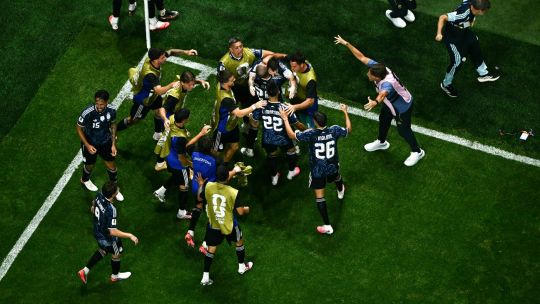
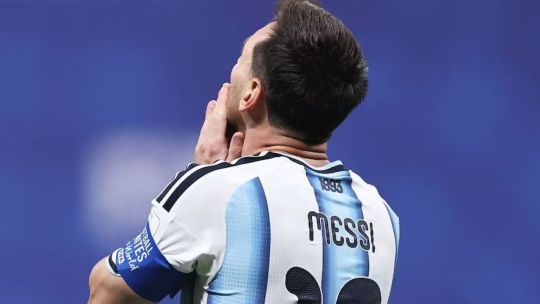
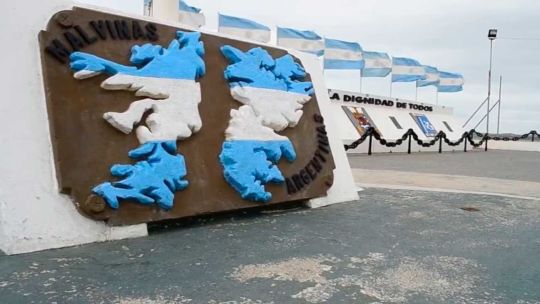
It’s almost impossible for a football-crazed population like Argentina’s to pay attention to anything else during the World Cup. This is especially so this time around, in the context of Líonel Messi’s “last dance” and the squad’s incredible resilience. The win against England in the semi-finals propelled the status of this team into the eternal realm once again, after having won the tournament in Qatar in 2022. With a superb Messi on the pitch, leading football domination over an arch-rival, ‘La Scaloneta’ (as the team is called after manager Lionel Scaloni), they even entered the political debate by displaying a banner that read: “Las Malvinas son argentinas,” referring to Argentina’s historic sovereignty claim over the archipelago in the Southern Atlantic that was the subject of a war with Britain.
While the Malvinas has been a rallying call for the nation’s football fans over the decades, Javier Milei’s libertarian government agreed with football governing body FIFA and US security agency FBI on their decision to ban the presence of shirts and flags referencing the sovereignty claim. National Security Minister Alejandra Monteoliva announced it in the context of US security forces being on high alert for potential disruption and violence, given the rivalry between the fans. It was the players themselves who ultimately defied the prohibition with Giovani Lo Celso laying the flag in the centre of the pitch after the match had finished. Britain complained, while President Milei sought to minimise the issue by saying footballers were free to express themselves but had no impact on the diplomatic process. He was forced to address a thorny issue he had sought to avoid during the World Cup. Indeed, Milei had invited the national football team to use the Casa Rosada’s famous balcony to be greeted by fans upon their return from the World Cup, claiming he and sister, Presidential Chief-of-Staff Karina Milei, would stay away in order to avoid politicising a popular phenomenon.
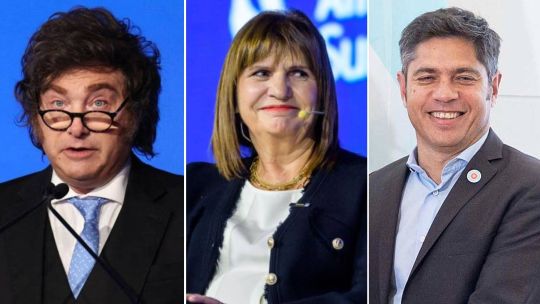
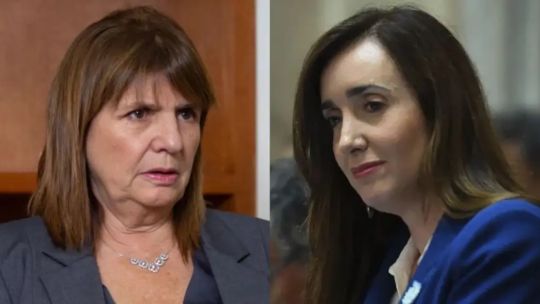
The World Cup gave the Milei administration a much-needed breather after three months under siege given corruption accusations against former Cabinet chief Manuel Adorni. The President and his sister tried to prop Adorni up for as long as they could, claiming they would never feed him to the hounds, butt he pressure became insurmountable – to the point where the political cost of standing their ground and the growing body of evidence of Adorni’s malfeasance made the official’s expulsion from the libertarian Garden of Even inevitable. To replace the pure-breed mileista official they were forced to turn to Diego ‘el Colo’ Santilli, a professional politician with close ties to Mauricio Macri. Santilli had already been called on to lead the Interior Ministry in charge of negotiations with provincial governors when the Milei administration needed political dexterity to pass structural reforms. As Cabinet Chief, Santilli brings with him years of experience as part of the “caste” that Milei promised to annihilate. His background is similar to Patricia Bullrich’s, the former security minister currently leading the La Libertad Avanza caucus in the Senate. As the World Cup evolved, the Milei siblings restructured their Cabinet and political machine, professionalising certain key aspects.
A consequential move by Santilli this week was to strip controversial political advisor Santiago Caputo of certain key responsibilities. Telecommunications regulator ENACOM, the Innovation, Science & Technology Secretariat, government-owned telecommunications firm ARSAT and the national post service, Correo Oficial, were all moved under “Ginger’s” watchful eye. This is relevant because Caputo is engaged in an inexplicable Cold War with Karina, who has been slowly chipping away at his power base. Caputo the Younger is a freelancer who ran a substantial portion of the Argentine state from the shadows, without even having legal responsibility over his actions. Now, with Santilli in charge, the Milei administration is “normalising” the way certain things should work, though Caputo still wields power and has the full support of the President. None of this necessarily means things will work well or that corruption will be eradicated, but the working of the state will at least resemble normalcy in some way.

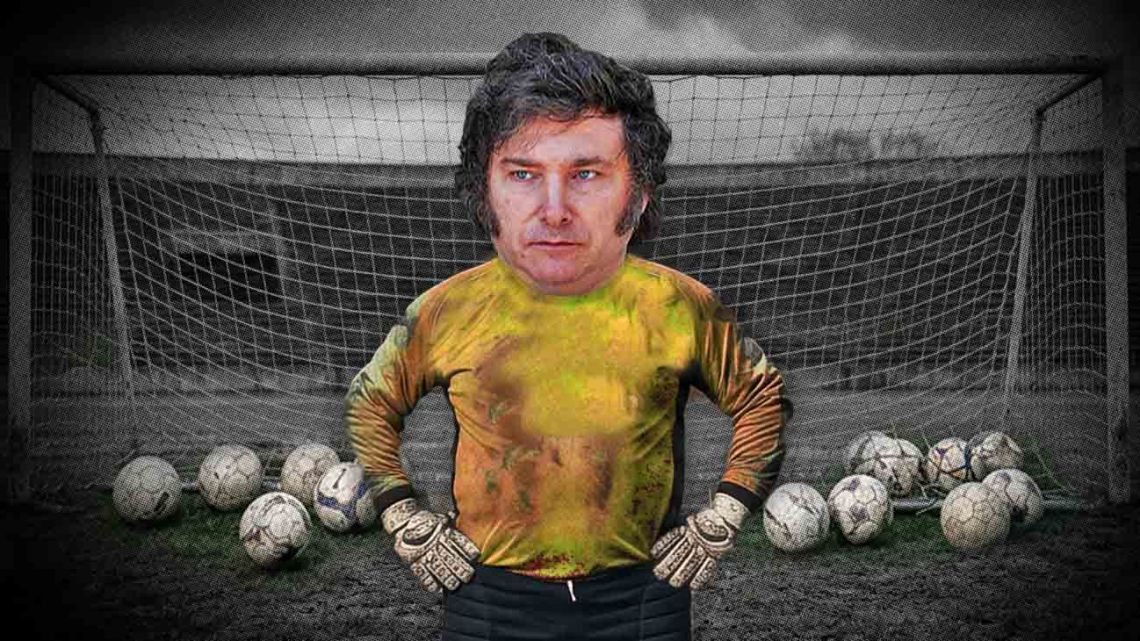
The ultimate goal of the whole political apparatus put together by Karina is to secure her brother’s re-election in 2027. The vote appears so far in the horizon that it is difficult to begin to talk about potential outcomes, as political strategist Jaime Durán Barba explained in his last column in Perfil, which he titled ‘Milei’s re-election.’ In the column he noted that today’s society has been deeply transformed by the proliferation and capillarity of smartphones and the Internet, leading to 24/7 connectivity and a certain disconnection with certain “heavy” issues that were important in the 20th century, like politics. Electors go to the ballot box with 30 to 50 percent indecision, meaning their vote is decided on a whim and by more emotional rather than ideological or analytical motives. This is the mechanism by which Milei and other similar right-wing populists made it to power, subverting traditional party politics. Another phenomenon Durán Barba notes is that in the Americas, the only president to attain re-election in the context of free elections in the past several years is Ecuador’s Daniel Noboa. Even Donald Trump in 2020 and Jair Bolsonaro in 2022 were defeated in their bids. Milei, like Argentina’s football team in the World Cup, has the odds stacked against him. But while Durán Barba doesn’t state it explicitly, he seems to be the best positioned, given the current state of the race.
Milei came into the Casa Rosada claiming he would be a single-mandate president, but he quickly changed his mind. Sister Karina wasted no time trying to structure a national party, looking to strengthen their position in each electoral cycle. Santilli and Bullrich, while eternal mavericks, are part of that strategy. The new Cabinet chief knows what he was called for, his ambition being the governor of Buenos Aires Province. Bullrich, a former presidential candidate, was looking to take control of the Buenos Aires City mayoral post, particularly after Adorni’s potential candidacy was killed stone-dead by his fall from grace, but she could also have higher aspirations, including being Milei’s running-mate. As a side note, Santilli’s potential run for governor was also made possible by the political death of José Luis Espert, who left frontline politics after allegations of his ties to drug-trafficker Federico ‘Fred’ Machado emerged.
Javier and Karina Milei are learning by doing, but by doing so they are slowly but surely resembling what they initially promised to battle. Apart from “becoming caste,” with the likes of Bullrich and Santilli around them, the decision to name Juan Bautista Mahiques as Justice Minister, replacing Mariano Cúneo Libarona, has given the government the speed it needed to designate judges throughout the vacated Judiciary. Naming judges is an important mechanism for those in power to try and protect themselves in advance of when they leave office. While there are no guarantees, naming judges in key positions, not to mention to the benches of the Supreme Court or the post of attorney general, would give the Milei siblings piece of mind in the context of mounting accusations, which include the ‘$LIBRA’ crypto-scandal and a bribery and kickbacks scheme at the ANDIS national disability agency. By choosing Mahiques, they are picking a professional, but they are also picking sides.

Further evidence of the libertarians assimilating caste-like behaviour emerged when images of the disgraced Martín Insaurralde, a former mayor of Lomas de Zamora once considered untouchable among the Peronist ranks, surfaced publicly. He was watching a World Cup match, smoking a cigar and was seated next to Juan Ignacio Napoli, a man dubbed the “libertarian banker.” They were at an apartment owned by Rodrigo Fernández Prieto, a well-connected real-estate businessman. Napoli was a candidate for Milei’s La Libertad Avanza for senator in 2023. Insaurralde has been marred in a major corruption scandal of which the latest were videos filmed by his ex-wife, model Jessica Cirio, showing millions of dollars neatly packed away in his dressing room, sealed in packaging indicating they came from some official banking institution. Host Prieto also has close ties with officials of the AFA football association, currently run by Claudio ‘Chiqui’ Tapia, who together with the organisation’s treasurer Pablo Toviggino is also under investigation for corruption.
All of this goes full circle, so to speak. Power and politics mixes with money and football in Argentina. Milei has intelligently tried to use the World Cup and the success of ‘La Scaloneta’ to ease the pressure on his government. He got dragged in by the Malvinas affair, but managed to remain out of sight while restructuring his government. Pope Leo XIV’s visit to the country later this year will give him another chance to hide in plain sight. Now all he needs are jobs and rising wages – if only things were so simple.




Comments