

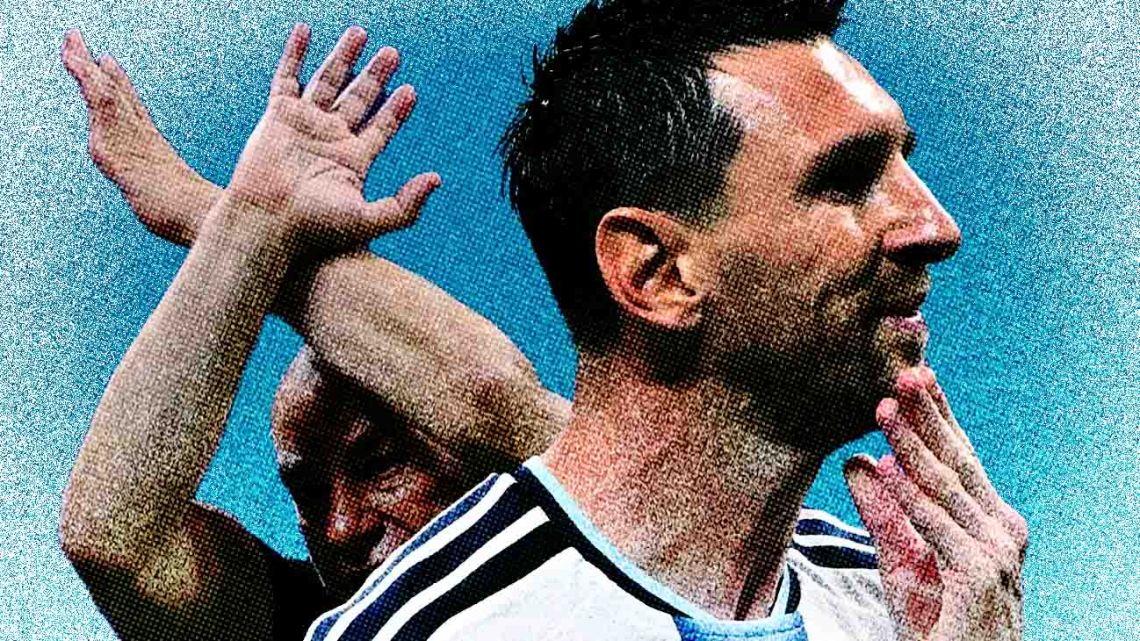
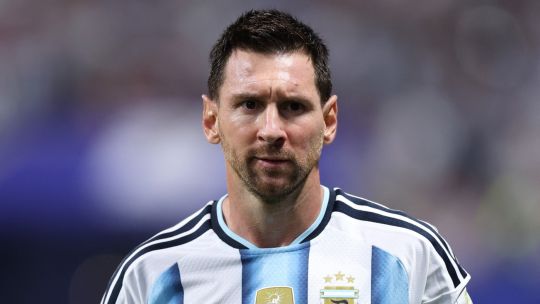
The 2026 FIFA World Cup being held in the United States, Canada, and Mexico is proving to be quite successful for Argentina to many degrees. On the pitch, Lionel Messi continues to lead the team into epic battles that end up with the Albiceleste on top, feeding his legend as the “GOAT,” or the “greatest of all time.” As the team went deep, pulling off a massive comeback against Egypt in Atlanta, back home the country was paralysed, shocked by potential elimination and ultimately pushed into climax followed by ecstasy after the winner by midfielder Enzo Fernández. People once again took to the streets to celebrate as the rest of the world sought to explain such a wild sporting phenomenon.
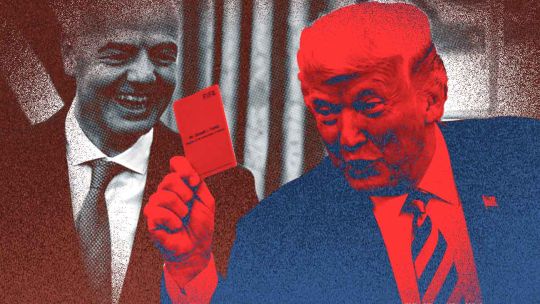
From a socio-cultural perspective, Tuesday’s events opened up multiple lines of debate that feed into the current genre of “culture wars” favoured by Donald Trump and Javier Milei. There’s talk about some sort of behind-the-scenes political pressure to favour Argentina, given’s Messi worldwide idol status. These kinds of narratives are difficult to ignore when people like Trump admit to calling FIFA President Gianni Infantino in the aftermath of a controversial and rare reversal of a match suspension for US star Folarin Balogun. The President of the United States even admitted to not knowing what a red card was beforehand, claimed he didn’t believe it was a foul and said that the best players should be allowed on the pitch. Ultimately, Balogun was on the pitch in the fateful match between the US Men’s National Soccer Team and Belgium, in which Trump’s boys were thrashed 4 to 1. And while former president Mauricio Macri presides over the FIFA foundation and Argentine Football Federation President Claudio ‘Chiqui’ (aka. “Tiny”) Tapia is an ally of Infantino’s, there doesn’t seem to be much more than football trash talk to the allegations.
Also at issue is the racial make-up of the Argentine national team, one of the only, if not the only one without a single player of African descent on its squad, a fact that often leads to accusations of racism online. This was linked to the stance taken by Egyptian manager Hossam Hassam during and after this week’s legendary match against Argentina, the coach reportedly accusing French match referee François Letexier and FIFA of xenophobia against his team. Similar remarks were made by the Iranian delegation, particularly by skipper Mehdi Taremi, during the tournament. In the midst of a world at war, with the United States and Iran engaged in a high-stakes game of chicken across the Middle East that includes tit-for-tat bombings and aggressions, the geopolitical undertones are difficult to overlook. Not that Argentina has any skin in that game particularly, beyond Milei’s total adherence to Trump’s political ideology and foreign policy. While some members of the Argentine national team squad have had their issues with racist comments in the near past, including Enzo Fernández and keeper Emiliano ‘Dibu’ Martínez after they mocked the French national team after victory at the Qatar 2022 tournament, no such issues have been seen on or off the pitch this time.
The immigration debate is front and centre regarding the ethnicity of Argentina’s stars and that of major European sides. Those on the right and far-right suggest European teams have become “reverse-colonised” by Africa and the Middle East, in some cases leading pundits to claim that is the reason for a certain decadence, as occurred with Germany. In others, the criticism is that multiple teams are fielding too many players who have been born abroad. Counter-intuitively, many of these teams are former French colonies in Africa, where a large number of squad members were born, raised or formed in the French football youth system. Not that the French are complaining, led by Kylian Mbappe (himself of Cameroon and Algeria descent), a footballer who generates as much love as he does hate, as they emerge as the prime candidate for the title.

Politics and football have a long history, particularly in Argentina. In 1978, the Albiceleste claimed their first world title under the leadership of César Luis ‘El Flaco’ (aka. “skinny”) Menotti on the bench and Mario ‘Matador’ Kempes. The Military Junta led by dictator Jorge Rafael Videla sought to leverage the global spotlight to project an image of respect for human rights just as reports of the disappearance spread through the international media. “Los argentinos somos derechos y humanos,” read the slogan of their marketing campaign, riffing on the concept of “derechos humanos” (human rights). As the tournament played out, members of the Junta tortured and murdered civilians a few blocks from Monumental stadium, where the national team would eventually lift the trophy.
Diego Armando Maradona was another heavily politicised character from the Argentine national football team. Ideologically closer to the left, ‘La Pelusa’ (aka. “fluff” or “lint,” as Diego was known in the start of his career), spent years recovering from drug addiction in Havana, Cuba, under the auspices of Fidel Castro. He had a large tattoo of Argentine-born guerrilla fighter Ernesto ‘Che’ Guevara on his right arm and the latter part of his life embraced then-president Cristina Fernández de Kirchner, probably in part as a reaction to Macri’s political weight (During his years as president of the Boca Juniors football club, Macri had a public falling out with Maradona, ultimately pushing him into retirement).
After the national football team ending a 28-year title drought in 2021 with a Copa América win against Brazil in the mythic Maracaná stadium, Messi finally rose to the Olympus of the Argentine 'hincha' ("fan,") but it was the 2022 World Cup that propelled him into another galaxy. Both in 2021 and 2022, the team led by Messi and manager Líonel Scaloni decided not to visit the Casa Rosada, as had been customary in the past. It was the days in which Alberto Fernández wore the presidential band and Fernández de Kirchner was his internal sworn enemy. It was also towards the end of the global Covid-19 pandemic and the level of polarisation in Argentina had reached a fever-pitch.

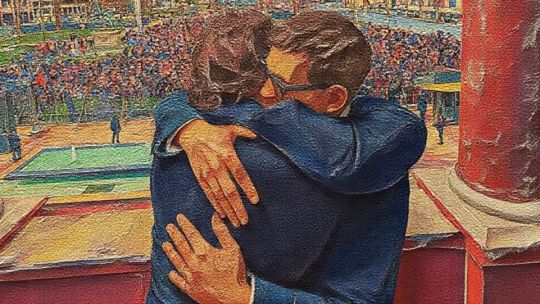
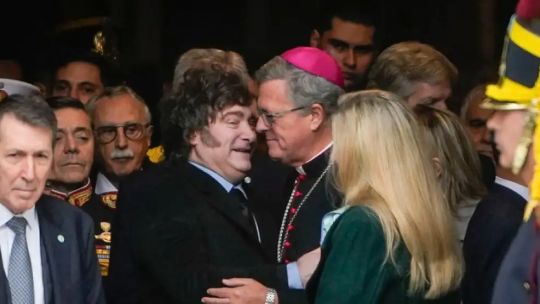
This time around, President Milei says that the invite for Messi and the team to celebrate with fans from the balcony in the Casa Rosada remains open, adding that he and his sister would stay out of the way in order to avoid the situation getting politicised. Lofty words, particularly as his digital troll army, run by controversial political advisor Santiago Caputo, has pushed the narrative that the ‘kuka’ or Kirchnerite sectors of society want the Albiceleste to fail in order to erode his government’s public standing. A recent study of digital conversations put together by the Reputacion Digital consultancy firm noted that the sentiment is wildly divergent when comparing the national football team to the political ecosystem, with 71 percent positive regarding the squad and 64 percent positive on Messi. Still, positive sentiment regarding politics went from one percent to eight percent in the aftermath of the Argentina–Egypt match, indicating there is some level of knock-on effect.
World Cups don’t occur in a vacuum. Rather, they are an integral part of the construction of cultural subjectivity across the globe given the prevalence and capillarity of football. Argentina’s central role in global football and its obsessed population add complexity and intensity. Hyper-connectivity and social media have accelerated and distorted the information ecosystem, pushing narratives to the edge. And characters like Messi, but also Trump and Milei, come into play perfectly, much like Argentina’s banging back-to-back comebacks. The political class, off the centre of the agenda for the first time in a long while, smiles.



Comments