

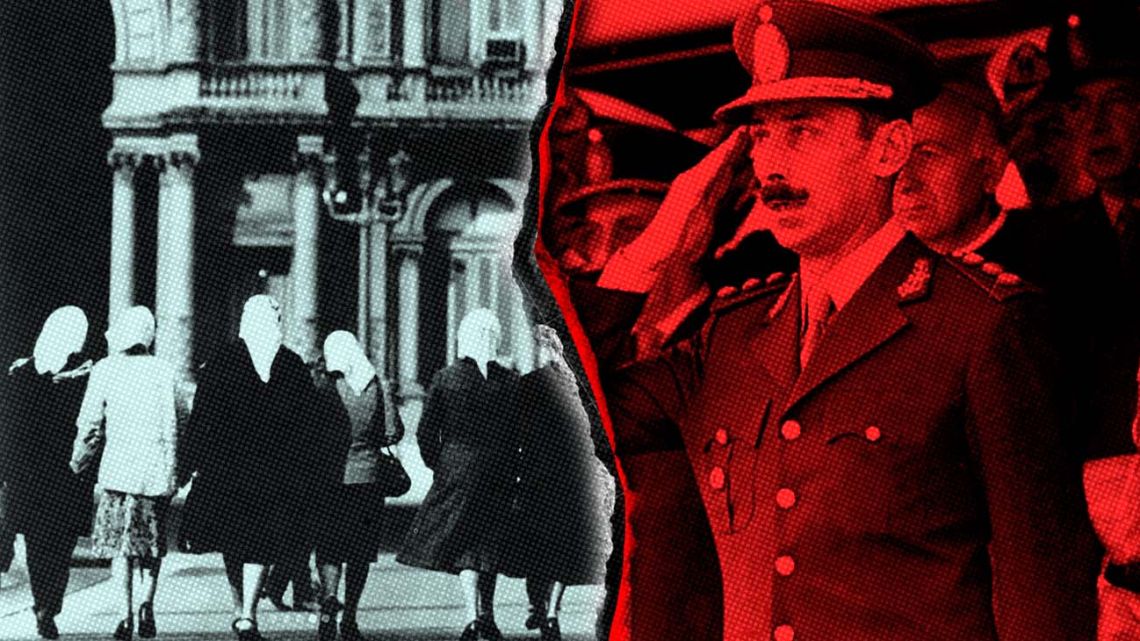
Argentina, like most of the so-called ‘Western world,’ is suffering from an acute loss of trust in democracy and its main institutions, including journalism. Fifty years on from the coup d’état that unleashed the bloody 1976-1983 military dictatorship, it is troubling to see how society’s view of democracy has slid, with a substantial portion of the population saying the political system is indifferent to them or even that they prefer an authoritarian regime. Sadly, many of the positive lessons and socio-cultural underpinnings that stemmed from a period marked by state terrorism, torture and death have been corrupted by deep polarisation – previously dubbed locally “la grieta” – and have morphed into culture wars. The past two decades demonstrate how noble causes, such as the defence of human rights in a country where they were systematically abused, can be leveraged politically by one side and then the other of the political spectrum, ultimately eroding trust in the historical process and its capacity to act as a guiding force for current and future generations.
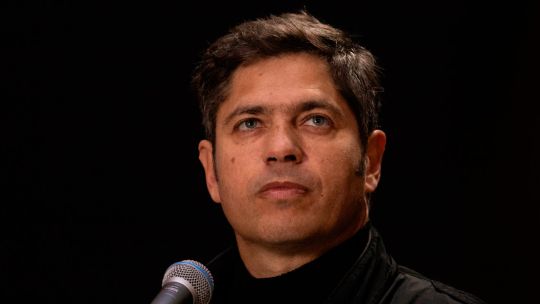
The significance of historical events such as March 24, 1976, is only constructed in their aftermath. Two conflicting visions emerged after last week’s multitudinous march to Plaza de Mayo in downtown Buenos Aires. There was a political vector, in which Buenos Aires Province Governor Axel Kicillof sought to steal the spotlight, delivering a speech against President Javier Milei in tune with part of the message uttered by Madres de Plaza de Mayo president Carmen Arias. It was under the same conceptual framework that the Milei administration released a video that sought to, “give visibility to the entire truth,” highlighting the pain of the victims of the leftist guerrilla groups and the re-victimisation of a woman who had been illegally abducted from her disappeared parents but who embraced her new family.
The two leading narratives that emerged through the political spectrum share the opportunism of those seeking power with partial truths. Former presidents Néstor Kirchner and Cristina Fernández de Kirchner cleverly elevated the human rights movements for their own political gain, having never had any real involvement during the heat of the dictatorship. They instructed the Judiciary to investigate crimes against humanity perpetrated by the genocidal security forces during the period spanning from 1976 to 1983, gave out reparations to victims and reinvigorated the human rights movements. At the same time, they created multiple schemes of corruption (some of which were associated with human rights groups, further humiliated the Armed Forces by vindicating the role of left-wing guerrilla groups such as Montoneros) and ERP and ended up bastardising the cause by trying to associate it to their political project. The once unquestionable Abuelas de Plaza de Mayo and Madres de Plaza de Mayo found themselves joined at the hip with the disreputable Kirchnerites.
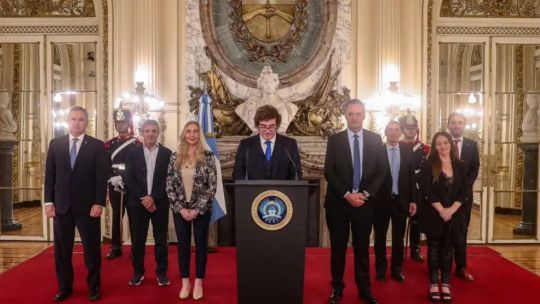
Across the aisle, so to speak, Milei found in Vice-President Victoria Villaruel an excellent electoral candidate to build on the anti-Kirchnerite narrative that got him elected lawmaker and later president. Villaruel is a ‘negationist,’ a denialist who smartly switched her rhetoric from denying the crimes perpetrated by the military dictatorship to defending the rights of the victims of the leftist guerrilla groups, who have been historically relegated in the official narrative. It doesn’t matter that Milei and Presidential Chief-of-Staff Karina Milei, have a sworn vendetta against their own vice-president (for her political ambition), they still latched on to her ideology to wage culture wars, associating March 24 with the “human rights hustle” mounted during the heyday of Kirchnerism. From the Casa Rosada, through its digital and analogical tentacles, the Milei administration pumps out a political message disguised as an attempt at historical divisionism that results in denialism. Its communications ecosystem delivers it far and wide.

These positions contrast with the social vector that was present for many participating in last week’s march, where what mattered was the original message of the “nunca más” (“never again”) movement that emerged as a response to the violent depravity of the dictatorship. There appeared to be something universal in society’s response to the trials against the military junta, conducted by a civilian tribunal during the Presidency of Raúl Alfonsín. In his closing arguments, prosecutor Julio César Strassera explained it thus: “Unless the moral conscience of Argentine society has descended to tribal levels, no-one can admit that kidnapping, torture, or murder, constitute ‘political circumstances’ or ‘collateral damage.’ Now that the Argentine population has recovered its government and control of its institutions, I assume the responsibility of declaring, in its name, that sadism is not a political ideology nor a strategy of war, but a moral perversion. From this trial and its sentencing on, Argentina will recover its self-esteem, its belief in the values on which the nation was built, and its international stature, severely damaged by illegal repression.” Strassera goes on to reject amnesties and forgetfulness, proposing instead peace built on memory and justice, ending his speech with the iconic “nunca más.” He was met with a standing ovation.
The values Strassera refers to, truly liberal at their conception, are under siege in Argentina, and across the world. Probably as a response to the agony of a socio-economic model that was built during the post-war period of the 20th century and was consolidated after the fall of the Berlin Wall and successive implosion of the Soviet Union. Regardless, Argentina has suffered consistent bouts of economic and social crises since the return of democracy in 1983. Fortunately, any possible military intervention into democratic processes appears totally untenable, while violence as a political weapon has mostly been eradicated. But populism, on the left and on the right, has wrecked havoc, helping to exacerbate the decline of traditional democratic values. While inevitable, it’s a shame that the defence of human rights has become fodder for culture wars and polarisation.
Journalism has also suffered the same overarching tendencies. Impoverished and disrupted, it has lost the trust of a majority of the people while diluting the quality of its reporting. It is difficult to imagine journalists today would have the courage of Robert Cox, the editor of our predecessor publication, the Buenos Aires Herald, during the toughest days of the dictatorship. Bob and the team at the Herald published reports of the missing while receiving their grieving family members, trying to figure out whether their disappeared were alive or dead. Among the stories they published was that of the disappearance of a young journalist, Jorge Fontevecchia, the founder of this media company. The news made its way to international news agencies and together with the relentless search led by his parents Alberto and Nelva, Fontevecchia was released from the abyss of ‘El Olimpo,’ an illegal clandestine detention centre and concentration camp where 95 percent of those who passed through its gates never made it out.

Let’s hope journalism – and society more generally – can recover that courage.









Comments