

The powerful autocratic Iranian government strategy of financing and arming terrorist groups over the last 40 years (supported either by other wealthy countries) have produced thousands of deaths worldwide and an almost extinction of credible truths.
Iran makes no discrimination in its financing and eventual direction of these groups – extremely antagonist groups such as Sunnis, Shiites, Christians, or even common criminal and drug gangs can be employed, as long as they bought the discourse of hatred, terrorism and death. For these purposes they have used many disguises and masks: “business,” "liberation,” "resistance,” “al-Qaeda,” "ISIS,” “Jihad," “Boko Haram” etc. However, their evident, or even hidden hands, are always suspected to be behind terrorist actions.
In addition, Tehran financed a hybrid warfare with “journalistic" diatribes at once highly prestigious media outlets worldwide, twisted research at western universities, as well as thousands of fake “influencers” in social media. Their sophisticated strategy wasn’t only to invent better lies, but also a more “refined” use of truths and distort them in a way that justifies or conceals their atrocities and intentions.
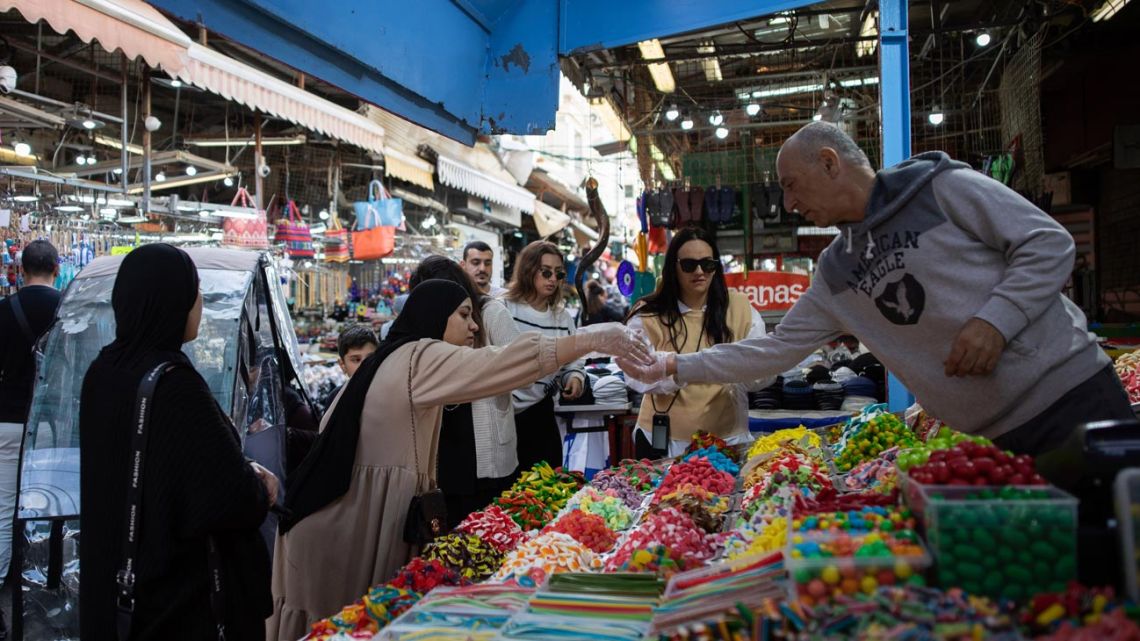
In a context of total distortion, the real life of Arab Israelis is deserving of attention, with well-documented and updated information.
Israeli Arab population
As of 2023-2024, there are approximately 2.1 million Arab citizens and residents in Israel, constituting around 21 percent of the country's total population. This group includes Muslims (about 83 percent), Christians and Druze, with a significant population living in the northern region and in different mixed cities. Arab Muslims and others hold full Israeli citizenship, just like any Jewish citizen.
It is evident that in Israel, Arab Israelis – both men and women – have achieved higher levels of education and a relative well-being, especially considering that they constitute approximately 40 percent of the entire Israeli healthcare workforce. In fact, 25 percent of all physicians (rising from eight percent in 2010), 27 percent of all nurses, 27 percent of all dentists, and approximately 49 percent of all pharmacists are Arab Israelis.
The education level highlights an amazing trend: by 2021, 43 percent of all new physician licences were granted to Arab and Druze doctors; in the 2022-2023 academic year, Arabs represented 70 percent of all pharmaceutical students and 33 percent of nursing students. Of course, this is due mainly to their own merit, but it also proves that they are welcome at all higher education institutions.
Arab Israelis also serve throughout the judicial system, including lawyers, prosecutors and judges in magistrate courts, district courts and the Supreme Court – however they are often described as under-represented, considering 21 percent represents the Arab population. There are now 10 Arab members in the Israeli Parliament (8.33 percent of the 120 seats); this quantity depends only from total votes received by every list in open democratic elections, though the splitting of lists and low population participation (voting is not mandatory) is what determined the few seats obtained.
Military service, IDF
Military service is compulsory for Jewish Israelis (men and women). Druze men, though not women, are also subject to mandatory conscription and have a long tradition of military service.
As a community with a high enlistment rate, Druze are also well-integrated into military leadership. Many have reached the rank of general (Aluf or Brigadier General); notable examples include Maj. Gen. Ghassan Alian, former Brig. Gen. Imad Fares, and Gen. Yusef Mishleb.
Arab Muslims are exempt from military mandatory service but despite this exemption, hundreds of Muslims, Bedouins, and other non-Jewish minorities volunteer each year to serve in the Israeli Defence Force (IDF).
An estimated 10,000 to 12,000 Arabs – including Druze, Bedouin, other Muslims and Christians – typically serve in the IDF. Muslim volunteers often face complex social decisions – balancing loyalty to the state of Israel along some communities’ pressures that sometimes discourage enlistment.
This is not a new occurrence, one of most famous historic cases was that of the Shaked commando’s commander Lt. Col Abd al-Majid Khader, the first Bedouin to command a mostly Jewish elite IDF unit, who later changed his name (but not his Muslim faith) to Amos Yarkoni in order to better protect his family.
The numbers of volunteers have been increasing in recent years, and maybe the most surprising phenomena, is the number of Arab women enlisting to the IDF.
As much as we know, Captain 'B' is the first Israeli Arab Christian woman in an IAF airborne unit, other intelligence and medical Arab women officers are also preserving their identities in order to protect their families from possible terrorist attacks.
These days, the most famous Muslim woman in the IDF is “Captain Ella” – in fact she is now Lt. Col (the highest military rank that a Muslim woman has in the world), heading the IDF Arabic communications department.
Centrifugal and centripetal trends
Schools are still largely segregated (though not universities), with over 70 percent of students attending either Arab-only or Jewish-only institutions, limiting educational interaction until higher studies.
A substantial majority of Arab Israelis support the participation of Arab parties in government coalitions (instead of the historic Arab inclusion in Jewish parties), a trend that saw the inclusion of the Ra'am party in the previous executive government of 2021.
These sociological trends are characterised by a complex, dual process of increasing integration – particularly in the economy, higher education, and healthcare – alongside other political or social polarisation. Unfortunately, this has been exacerbated after the deadly Hamas attacks in October 2023, notwithstanding the fact that Hamas’ terrorists kidnapped, raped and killed with the same ferocity many Arab Israelis.
Despite the tensions, a majority of Arab Israeli citizens recognise their educational and economic progress and therefore continue to sustain their desire for greater integration into Israeli society, instead of moving to areas of Palestinian influence.
On the other hand, a large portion of the Jewish public supports state investment in Arab communities and accepts them in workplaces all over the country. However, there is a strong resistance to greater Arab political power or their movement to Jewish residential areas (except those in mixed population cities).
This polarisation is empowered by extremist actions from both sides: Muslims launching knife terrorist attacks or ramming are recurrent actions directed preferably toward elders and women; at the same time, hooligan-style stone-throwing and torches are a sad characteristic of Jewish terrorist groups in the way they act toward some Arab villages and plantations. In these days of war, the Israeli government has been impelled to send another infantry battalion to better protect Arab areas affected by these Jewish hooligans’ actions.
We are witnessing contradictory trends: on the one hand, the idea of uniting and strengthening – on the other, the idea of separation and fragmentation. The Machiavellian enemies of humankind certainly prefer the latter (divide and conquer); however, imagining a better future for all, must mobilize toward the pursuit of a beneficial true partnership. Inshallah!










Comments