

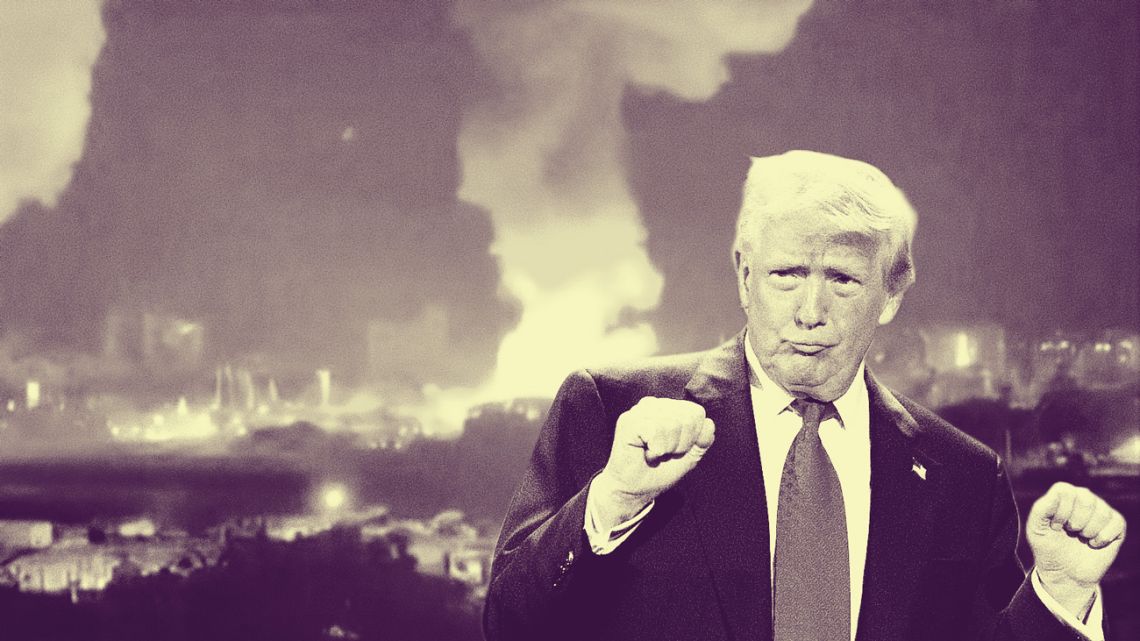
Donald Trump thoroughly enjoys playing the role of the world’s most powerful sentient being. Since returning to office, he has been busily dividing it into spheres of influence. Naturally enough, he began by assuming that the Western Hemisphere belongs to him, that China could get a large chunk of East Asia, and Vladimir Putin’s Russia could have her near abroad, which as well as Ukraine might even include much of Europe. However, as time went by he seemed to take a slightly more nuanced approach. After all, it would not be in his interest to let either Xi Jinping or Vladimir Putin get their greedy hands on too much real estate. Trump also feels obliged to keep reminding them and everybody else that he is the top dog.
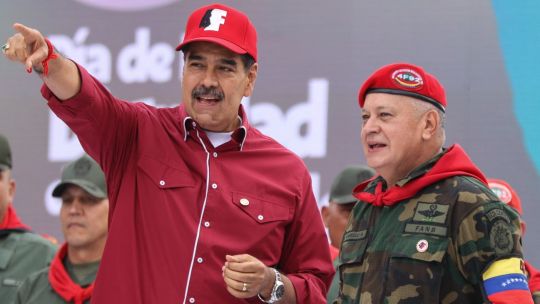
No doubt both autocrats were suitably impressed by the feat performed by the men of the US Special Forces under Trump’s command who grabbed Venezuela’s unlovable dictator Nicolás Maduro – a key ally of China, Russia and Iran – from the fortified complex in Caracas in which he had holed up and despatched him and his wife to a notorious New York jail to await trial for some of their many misdemeanours.
For Trump, that was all in a day’s work, but deciding what to do next is already proving to be rather more difficult. Though he and his aides insist that they have drawn up a carefully worked-out plan to make Venezuela great again, or something like that, they do not seem to be aware of the magnitude of the task they have undertaken. Destroying a functioning society can be wonderfully easy; putting back together the available pieces so Venezuela can become a proper democracy will be anything but.
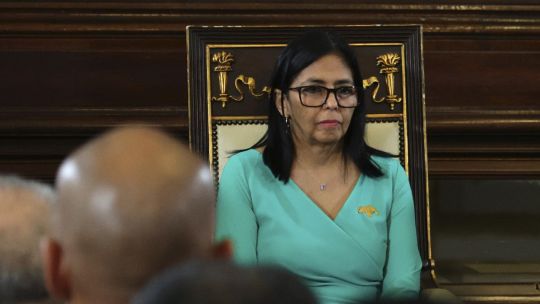
After Trump said that, until further notice, he will “run” the unfortunate country Hugo Chávez and then Maduro transformed from a badly governed but nonetheless viable republic into a poverty-stricken wasteland infested by drug-dealers, politicised thugs, corrupt cops, useless military officers (in Venezuela there are far more generals and admirals than in the US Armed Forces) and gangs of Jihadists bankrolled by Iran, he surprised everyone by saying that he will leave the former vice but now provisional president Delcy Rodríguez in charge of the mess she did much to bring about.

Trump apparently took it for granted that, with the help of US business tycoons, she would know how to make the most of Venezuela’s huge oil reserves. To sell his Venezuelan project to his fellow US citizens, he feels obliged to assure them that it will be cost-free. The thought that by speaking the way he does he makes it easy for his many critics to say that he is only interested in stealing another country’s oil wealth does not worry him in the slightest.
Just how long this peculiar arrangement will last is hard to say. It could well be over by the time this is printed but Trump seems to think that it will be enough for him to bark out orders and that the Chavistas – who are accustomed to doing whatever the boss tells them to do – will be happy to obey him. No doubt many will, as their counterparts working for bureaucracies in other parts of the world have often done after those they had worked for were defeated in war or overthrown in a coup, but unless almost all of them turn out to be as subservient as he evidently hopes, Trump will have little choice but to send in large contingents of troops to keep a semblance of order.
This eventuality cannot be to the liking of the many MAGA enthusiasts who think the United States should stand aside and let other countries ruin themselves if so inclined. And they are not the only people who think this way. Trump himself rose to power by making much of the folly of engaging in “forever wars,” a term that politicians opposed to them have grown accustomed to applying to low-intensity campaigns that are akin to the colonial policing in tribal areas that the wicked old imperialists treated as business as usual.

In any event, the rulers of the United States have rarely been comfortable with the idea that great power entails great responsibility and that, as the late Colin Powell often said: “If you break it, you own it.” To justify their unwillingness to do much more than hand out aid, they persuaded themselves that formally taking charge of problematic countries, such as Iraq after the fall of Saddam Hussein, and trying to knock them into shape smacked of old-fashioned imperialism – an evil European practice they have been against ever since the war of independence rebellious British colonists waged against the armies of George III that culminated in July 1776. With that as an excuse, they did much to hasten the demise of the British Empire; by doing so, they secured for themselves the several decades of global hegemony that, according to some observers of the international scene, are now approaching their end.
Be that as it may, though the US enjoyed remarkable success in remaking Japan and West Germany after World War II, the half-hearted efforts to do the same in Afghanistan and Iraq proved catastrophic. Given the inability of most North American officials to understand what was going on in the natives’ heads, this was not surprising. In any case, while the Japanese and Germans already had much in common with the North Americans and found it relatively easy to adapt to the changes they introduced which did not strike them as outlandish, let alone impious, the cultural norms of peoples living in the Middle East were, and remain, radically different. To “modernise” them, a colonial power would have to stick around for at least a century.
Contemporary Westerners are reluctant to waste time worrying about the fate of future generations. Their attention span has become so limited that few bother to look beyond the current election cycle, let alone what might happen half a century or more hence. This is certainly true in Trump’s case. Hours after disposing of Maduro and, presumably, of Venezuela, he blithely told the Danes that he wanted Greenland – a semi-autonomous territory that belongs to the Kingdom of Denmark – to be made part of the US and hinted that, if forced to, he would achieve this by military means. The Danish authorities, backed by their neighbours, responded by warning him that an attack on them would mean the end of NATO but as Trump already thinks the Atlantic alliance is dead in the water and that most European countries are too decadent to count for anything in the brave new world he is busily bringing about, he will not have found that particular prospect at all disturbing.









Comments