

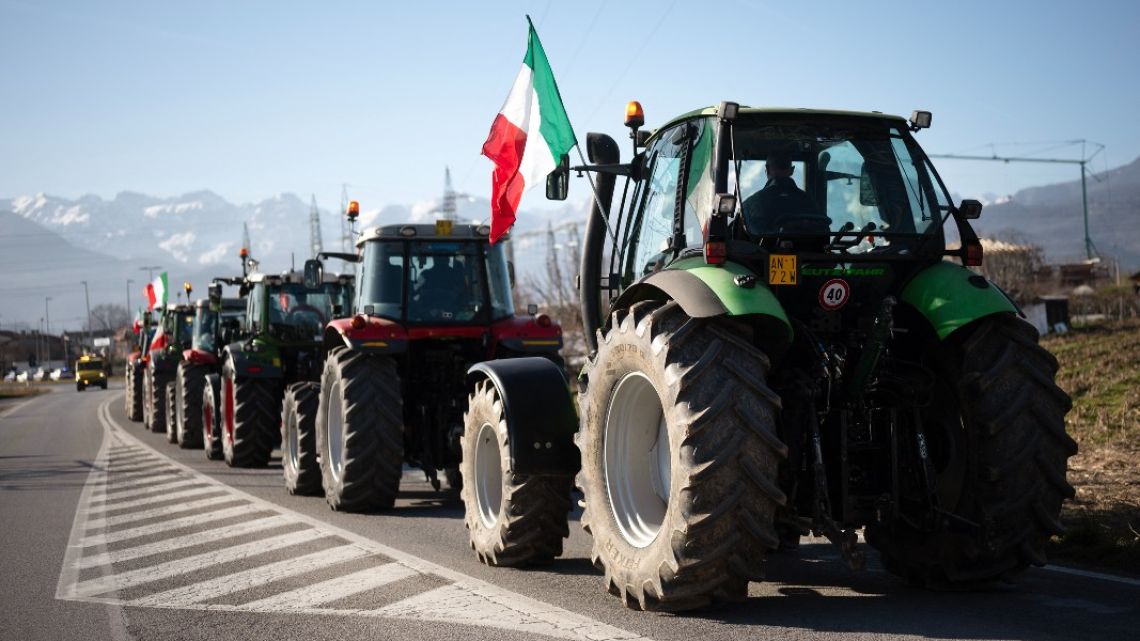
The European Union says it will strengthen its controls on agricultural imports – a clear signal to doubtful France, which is opposed to the sweeping trade agreement with the South American Mercosur bloc.
To verify that products entering Europe comply with EU standards, the European Commission promised to increase the number of controls abroad by 50 percent over the next two years. In addition, controls at border posts within the EU will increase by 33 percent to ensure that "member states carry out inspections" properly.
The EU Commission also plans to update its rules on the presence of banned pesticide residues within the EU in imported products and announced the creation of a working group on this issue.
European Commissioner Olivier Varhelyi, responsible for animal health and welfare, told the press that these measures "will contribute to the implementation and launch of the agreement with Mercosur" bloc, which is made up of Argentina, Brazil, Uruguay and Paraguay.

France opposes the trade agreement in its current form and has demanded that controls, particularly on pesticide residues, be strengthened before it would reconsider its position.
In principle, European states will vote on this trade agreement between December 16 and 19 in Brussels.
The Commission then expects the treaty to be signed shortly after, on December 20, in Foz do Iguaçu, in southern Brazil, at a Mercosur summit, according to a European source.

It will then have to be ratified by the European Parliament, probably in early 2026.
The free-trade agreement will allow the EU to export more vehicles, machinery, wines and spirits to Latin America and will facilitate the entry of South American meat, sugar, rice, honey and soya.
– TIMES/AFP













Comments