

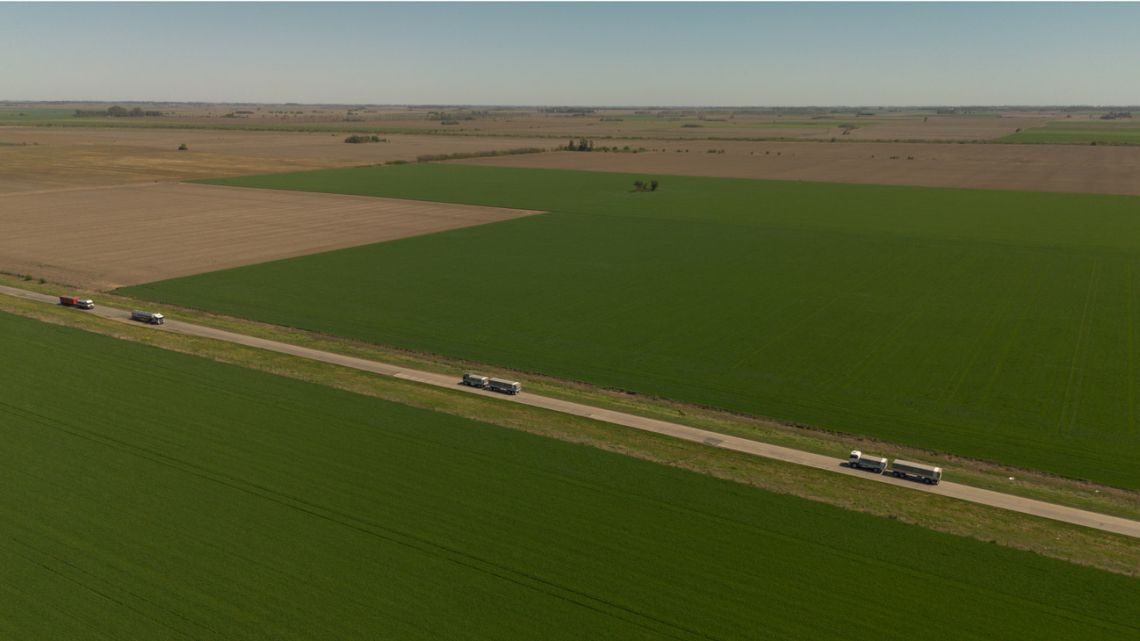
Argentina’s economy grew more than expected in December due in part to a historic wheat harvest that offset the fallout from a pivotal midterm election.
Economic growth ticked up 1.8 percent in December compared to November, the INDEC national statistics bureau reported Tuesday, after South America’s second-biggest economy shrunk 0.3 percent in November. From a year earlier, the economy grew 3.5 percent, far surpassing the estimate of zero growth from economists surveyed by Bloomberg.
The farm and finance sectors contributed significantly to the economy’s growth in last year’s final month, while manufacturing and retail fell. Argentina’s key agriculture sector in particular was boosted by 32 percent year-on-year growth.
“After two months in which the economy performed worse than expected, December was very strong,” said Maria Castiglioni, director of C&T Asesores Economicos, a Buenos Aires-based consultancy. “Clearly, agricultural activity helped a great deal.”

After a bruising defeat in last September’s Buenos Aires Province vote, President Javier Milei’s party rebounded with a sweeping midterm win the following month. Argentine markets slid in the run-up to October’s national election as investors bet on another setback. Most sectors sped up production in the third quarter to get ahead of a feared post-election devaluation, slowing down economic activity in October and November.
“The manufacturing industry is still taking a hit. The upside is that the agricultural cycle is independent of the election,” said Sebastian Menescaldi, director at local consultancy EcoGo.
The data should provide some relief to President Javier Milei’s administration and bolster hopes for his macreoeconomic programme. However, we think several factors expected to underpin robust growth this year – such as credit momentum and real exchange rate depreciation – now look likely to provide a more modest impetus," said Jimena , Argentina economist for Bloomberg.

Overall economic growth was slow last year as monthly activity expanded only 0.02 percent in the first 11 months of the year, according to a research note from Goldman Sachs Group Inc published Tuesday. The jobs market also lagged, with higher-paying formal jobs in decline mostly compensated by informal sector jobs.
In January, monthly inflation sped up for a fifth consecutive month to hit 2.9 percent, led by prices for food, restaurants, hotels and utilities. Annual inflation is expected to cool to 22% this year, while the economy is forecast to grow 3.2 percent, according to economists surveyed by the Central Bank last month.
by Manuela Tobias, Bloomberg









Comments