

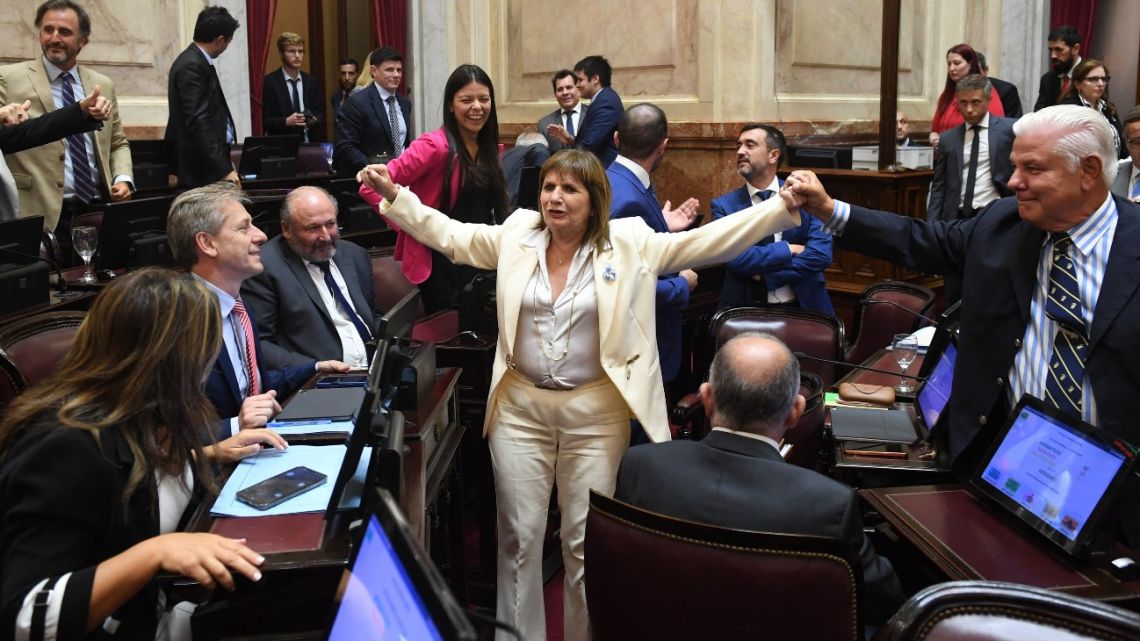
President Javier Milei’s signature labour reform cleared its final hurdle in the Senate, a pivotal victory in the libertarian’s ambitious agenda that could help the South American nation return to global markets.
The upper chamber approved the landmark legislation in a 42-28 vote late Friday after a months-long crusade against deeply entrenched labour interests that sparked multiple protests and a nationwide strike. Two senators abstained from the vote.
Both houses had already passed the bill by comfortable margins, but it needed a final green light from senators after Milei stripped out a controversial article limiting sick-leave pay, which threatened to sink the legislation.
The bill was watered down significantly in negotiations with allies and opponents, notably removing sections that would have cut tax revenue and mandatory fees to labour unions. Milei also took out another article that would have let Argentines have their salaries directly deposited to digital wallets after local banks pushed back against the measure.

Despite the last-minute changes, the labour reform stands to be one of the biggest overhauls to Argentina’s economy in decades. The legislation unwinds laws dating back to the 1970s that are so rigid that by some measures nearly half of Argentines work off the books. The bill aims to draw those workers into formal employment.
With the ultimate aim of making it cheaper to both fire and hire workers, the legislation pushes wage negotiations down to the company level from nationwide sectoral agreements, narrows the definition of what can be considered severance and streamlines labour lawsuits.
It also creates an obligatory fund for employers to finance severance payments. The measures respond to a labour lawsuit industry in Argentina that can make firing workers a costly ordeal.

The legislation, however, comes at the same time as formal, well-paid jobs have been on the decline in Argentina, while informal gig work is on the rise, a shift unfolding as Milei dismantles long-standing protectionist policies that had shielded local businesses from an influx of cheaper imports from countries like China.
More manufacturing employers anticipate layoffs over the next few months than during the peak of the Covid-19 pandemic, according to government data.
Unemployment has outranked inflation as the top concern for voters since last September, according to a survey conducted by AtlasIntel for Bloomberg News published Thursday. Disapproval for Milei currently stands at 55 percent, while approval is 41.5 percent, according to the poll.

Milei won power with a landslide victory in October’s midterm elections, boosted by the backing of US President Donald Trump, and the labour reform will be the first test of how he can implement his vision.
Milei had to convince lawmakers from more centrist blocs to agree to the reforms for them to pass through the houses. Approval of the plan may lead to lower interest rates and position the government to return to international bond markets after a sovereign default in 2020.
Investors are watching developments closely because the approval of the bill will be a clear sign of Milei’s political strength, and raise hopes for economic stability. The president heads to New York in March to try convince Wall Street banks and funds about investing in Argentina as he seeks to increase the flow foreign capital into the country to help drive growth.
related news


by Manuela Tobias, Bloomberg














Comments