

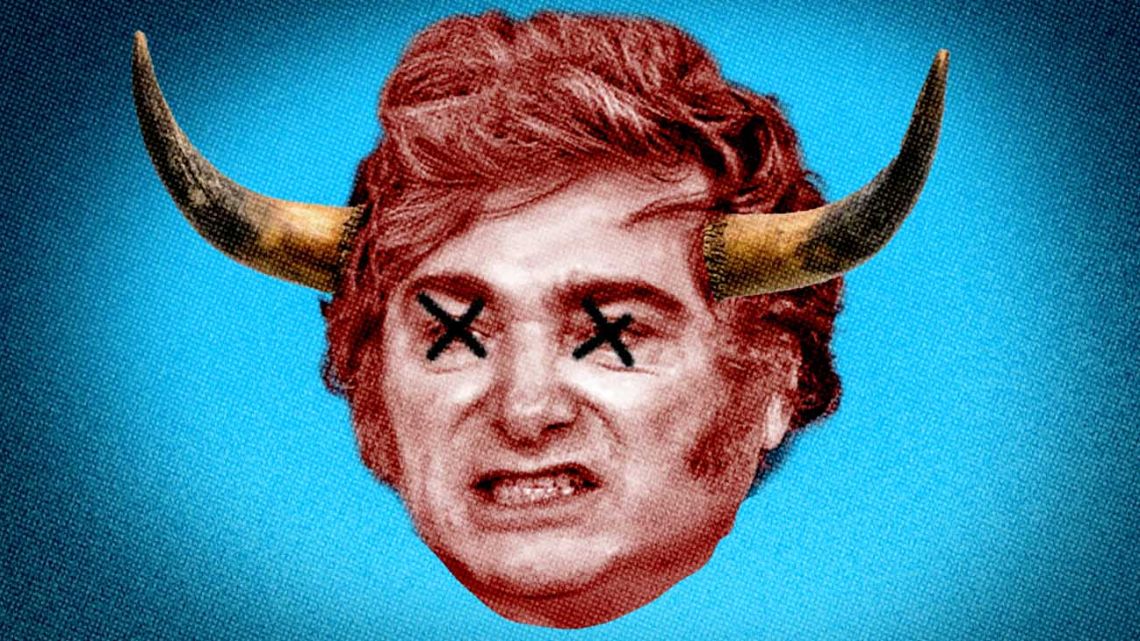
President Javier Milei goes to Vaca Muerta on Monday to inaugurate the massive AOG (Argentina Oil & Gas) Patagonia 2026 annual conference, where he will try to profit from the one sector of the country’s economy that is booming amid a general feeling of sluggishness.
The contrast between an Argentina that speaks in billions of dollars of investment and hundreds of thousands of barrels of exported oil, and an Argentina that continues to lose jobs and now flirts with recession is slowly becoming politically unbearable. One year out from the presidential election, it’s growing into a narrative weapon for the opposition.
By now, it seems clear that Milei and his economy minister, Luis Caputo, will not be able to deliver an economic miracle that would guarantee re-election. The economy will likely resemble – in the best of cases – the one we have when Argentines start thinking about their presidential options in mid-2027. The International Monetary Fund is already acknowledging this scenario by cutting its growth forecasts significantly, from 3.5 percent in its previous forecast published in July to 2.1 percent now.
Monthly inflation is back on a seesaw and hit 1.9 percent in September, the same as it was four months ago. Job losses continue to rise: this week, the government posted the employment data for July – another 12,000 people were fired from the private sector. That’s the 14th consecutive month of decline. Since Milei became president, Argentina’s private sector has shed 265,000 jobs, around four percent of the country’s total. This adds to the 80,000 people who lost their jobs in the public sector due to Milei’s “chainsaw” cuts.

When Milei lands in Neuquén on Monday, he will meet with Governor Rolando Figueroa, whose problems are entirely different. The provincial leader is learning to manage abundance and growth, trying to make sure that as much of the wealth that the fracking wells are creating spills over to the people of Neuquén, both present and future. Unlike Milei’s, Figueroa’s re-election next year is a given.
The growing divide between the wealth of a handful of sectors and the mediocrity of the vast majority of the economy is becoming a riddle for the administration. President Milei had to state in an interview this week that Caputo will not go, aware that the political wing of his administration is getting jittery about the electoral outlook, given this bleak economic picture. These are people in Karina Milei’s inner circle whose chief motivation in life is to survive in power. All they are asking for is a little pragmatism, to get some money – even if only in the short term – into voters’ pockets.
Going after Caputo, however, is just a placebo. Milei said he is “symbiotically intertwined” with his minister and that nobody should be angry at the official because the government’s economic policy is his. The risk, of course, is that people – both within and outside the government – get angry with him.

Beyond the fact that inflation is not the mess it used to be and that (some) Argentines can freely buy US dollars in the exchange market, the government’s economic narrative has very little to show for the ordinary man. Caputo splits his outspoken communications agenda between warning about how terrible things would be if the Peronists came back next year and announcing new benefits for large investments in energy and mining under Milei’s signature RIGI incentive programme.
The opposition will predictably exploit this vulnerability as it gradually builds its own winding road for 2027. This week, national deputy Máximo Kirchner said for the first time in public that, should the Peronists land back in the Casa Rosada next year, there will be a “project by project” audit of the RIGI programme. Others think the same but are still not saying so in public.
This type of revision is the worst nightmare for investors, who are committing to cough up their billions – US$35 billion committed only in oil and gas under RIGI – under the assumption that the benefits, and hopefully Milei, will continue for the foreseeable future. This anxious optimism will greet the President at Vaca Muerta, the only place so far where his programme works well and that would be happy to re-elect him.
* Marcelo J. García is a political analyst and Director for the Americas for the Horizon Engage political risk consultancy firm.





Comments