

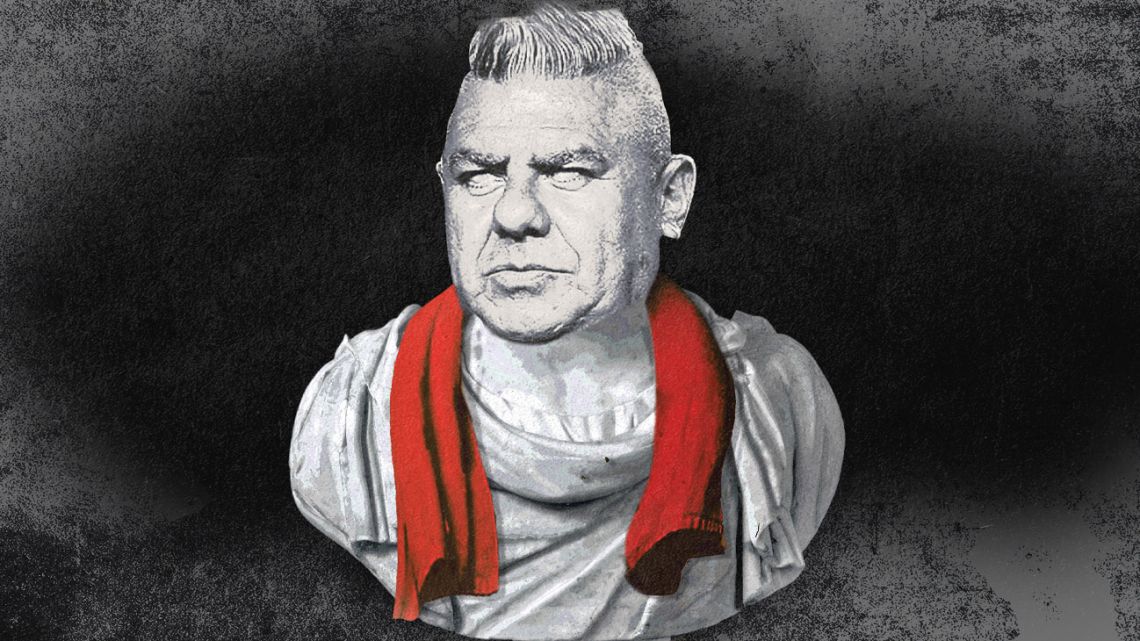
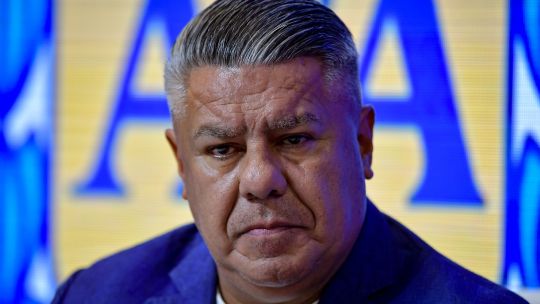
Claudio Tapia, president of the Argentine Football Association (AFA), is known locally as “Chiqui,” which roughly translates into “tiny,” despite his being a robust man of size. Typical Argentine satire in assigning nicknames. Not long ago, Tapia was a street cleaner, and until recently, was in the Olympus of Argentine football idols for a large portion of the country’s fans for having been the man in charge of AFA when the national team ended nearly three decades of sporting title drought. Under his tenure, skipper Lionel Messi and the rest of the crew conquered the World Cup, two Copa Américas, and a Finalissima in which they humiliated Italy, re-establishing the nation’s self-confidence on the pitch and its condition as a global powerhouse.
During this time, “Tiny” was following in the footsteps of none other than Julio Grondona – the legendary head of AFA who ruled Argentine football with an iron fist for 35 years. “Don Julio” oversaw two World Cup titles, together with multiple Copa Américas. He was also “Co-Conspirator #1” for investigators in the global corruption scandal known as ‘FIFAgate,’ senior vice-president and treasurer of FIFA – the global football governing body – and seen as one of the key decision-makers behind the graft scheme. Accused throughout his life of being corrupt, Grondna always dodged the bullet, ultimately managing to skip out on the FIFAgate case entirely having passed away just a year before it broke out into the open. Fortune favours the bold, they say.
Football is a global passion which has been converted into a money making-machine that is not isolated from political vicissitude. Indeed, FIFAgate is a leading case whereby the United States sought to impose global jurisdiction over what it considered acts of corruption somehow utilising the US financial system and the global reserve currency, the US dollar. At the same time, both the United States and the United Kingdom were enraged at the rampant levels of corruption at the highest echelons of FIFA, at the time presided by Joseph ‘Sepp’ Blatter but organised and executed by Grondona. The underlying case isn’t part of some moral higher ground in which sports should be pure and free of spurious dealings, but rather that the United States and United Kingdom were surprised by the FIFA Executive Committee’s decision to award the 2018 and 2022 World Cups to Russia and Qatar, respectively. The UK has been yearning to “bring it back home” for decades – it is the birthplace of football and hasn’t hosted a World Cup since 1966. Historically impermeable to football, the United States has been looking to butt in to the business of the world’s most popular sport time and time again. Indeed, it will now host next year’s World Cup, just a few years after seducing Messi to make the move to Inter Miami FC, a club partially owned by David Beckham, propping up the second-tier Major League Soccer ahead of football’s top competition in 2027. Two of the world’s most powerful countries were internationally humiliated by FIFA. Ultimately, FIFA was dismembered. Tit-for-tat.
Back to ‘Tiny’: Grondona’s story suggests that the intersection between football and politics at the Argentine and international levels is extremely relevant. Tapia is finally in the eye of the storm after managing to deflect all sorts of accusations given his status as untouchable, in part considered responsible for the World Cup title and as a friend of Messi. Yet the way he has managed Argentine football, together with AFA Treasurer Pablo Toviggino, has sounded the alarms time and time again, particularly on the pitch where teams associated with both – Barracas Central and Central Córdoba from Santiago del Estero Province – appear to have been consistently benefitted. The suspicion of a scheme of corruption leading to the personal benefit of Tapia and Toviggino has blown to the surface with a recent investigation into Sur Finanzas, a financial firm accused by Argentina’s national DGI tax authority, or Dirección General Impositiva, of processing 818 billion pesos in unjustified transactions.

Run by Ariel Vallejo, Sur Finanzas has very close ties with Tapia, sponsoring the league, major clubs and acting as a financial intermediary for financially troubled teams such as San Lorenzo, which received a major loan from the firm. According to an investigation by Federal Judge Sebastián Casanello and Prosecutor Franco Piccardi, at least 42 registered entities involved in 72 billion pesos in transactions were non-existent or had no funds, while another group of firms with little to no financial backing generated another 200 billion pesos in transactions. Outside their association with Tapia, Toviggino, and Argentine football, prosecutors believe there are other types of players involved in the fraudulent schemes. Indeed, Sur Finanzas was formerly named Neblockchain and appears in the corruption investigation tied to the ANDIS national disability agency which has President Javier Milei’s former personal lawyer and the body’s ex-head, Diego Spagnuolo, up against the ropes. There’s also suspicions of involvement with Elias Piccirillo, who jumped to fame after marrying model Jésica Cirio and spending over a million dollars renting a yacht in the Mediterranean. He was arrested after escaping in his underwear through the streets of a private neighborhood in Nordelta after planting cocaine on a creditor to dodge a debt while a weapon was found in the car of his former sidekick Francisco Hauque. Piccirillo is under investigation for shoddy currency trades tied to the “dólar blue,” or parallel exchange rate during the heyday of currency controls under then-president Alberto Fernández and then-economy Minister Sergio Massa. The former is friends with Toviggino, a staunch Peronist.
Tapia and Toviggino have attracted attention not only for Sur Finanzas’ relationship with Argentine football, but for their own millionaire lifestyles. Reporter Camila Dolabjian dug out Tapia’s declaration of assets. He presides a public waste treatment company named CEAMSE (he was initially put there by Mauricio Macri, and later confirmed by Buenos Aires Province Governor Axel Kicillof) and claims to earn 818 million pesos a year and have no savings. Weird. That’s around 68 million pesos a month from his posts in CEAMSE and as a representative for CONMEBOL, the South American football federation. He declares multiple properties including a US$15-million mansion in San Isidro, a posh neighbourhood just north of Buenos Aires City.
Tapia and Toviggino have been accused by Coalición Cívica leader Elisa ‘Lilita’ Carrió of using low-income front men to mask their ownership of a mansion in outer Buenos Aires where they reportedly have a collection of antique cars, an equine establishment with a stud farm and a helipad, which is frequently used. The accusation cites a tweet by former football star and current manager, Carlos Tevez, which reads: “So many trips to Pilar [neighbourhood] must have you lost, Toviggino, outside of your collection of antique and imported cars, there’s also the duffle bags you buried from Qatar and the friendly matches in China.” Off the cuff, maybe?

Tapia and the AFA scandal sit at the centre of a web of connections looping in almost the entire political ecosystem. It is under scrutiny by investigative journalists and the Judiciary, but also by the United States, where Donald Trump will be part-hosting next year’s World Cup. The Milei administration, already having cancelled the trip to yesterday’s World Cup draw – sparking a response from US Treasury Secretary Scott Bessent who in turn called off a trip to Argentina – could potentially face a confrontation with Messi and the national team in the heat of the competition. The stakes for everyone are extremely high.
‘Tiny,’ however, seems confident he’ll come out on top. All he’s got to do is follow in the footsteps of his mentor, ‘Don Julio,’ who wore a ring on his pinky reading: “Everything will pass.”







Comments