

Last month, US President Donald Trump led the first meeting of his Board of Peace in Washington to define the future of Gaza and even the current global (dis)order. In fact, other world leaders, including the late Pope Francis and His Holiness Mirza Masroor Ahmad, spiritual caliph of the Ahmadiyya Muslim Community, had anticipated this global crisis and pointed out that, for years now, we are eyewitnesses of the Third World War, which can be seen “in pieces.”
However, as I write these lines, there are more than 50 armed conflicts in the world, but specifically the wars in Ukraine and Gaza have cast a shadow over world peace. In recent years, both regions have ‘contaminated’ the planet with the blood of thousands of innocent people. The bombs have not only blown up the lives and homes of the people who live there, but also our relationships, our hopes and our dreams of a more humane world.
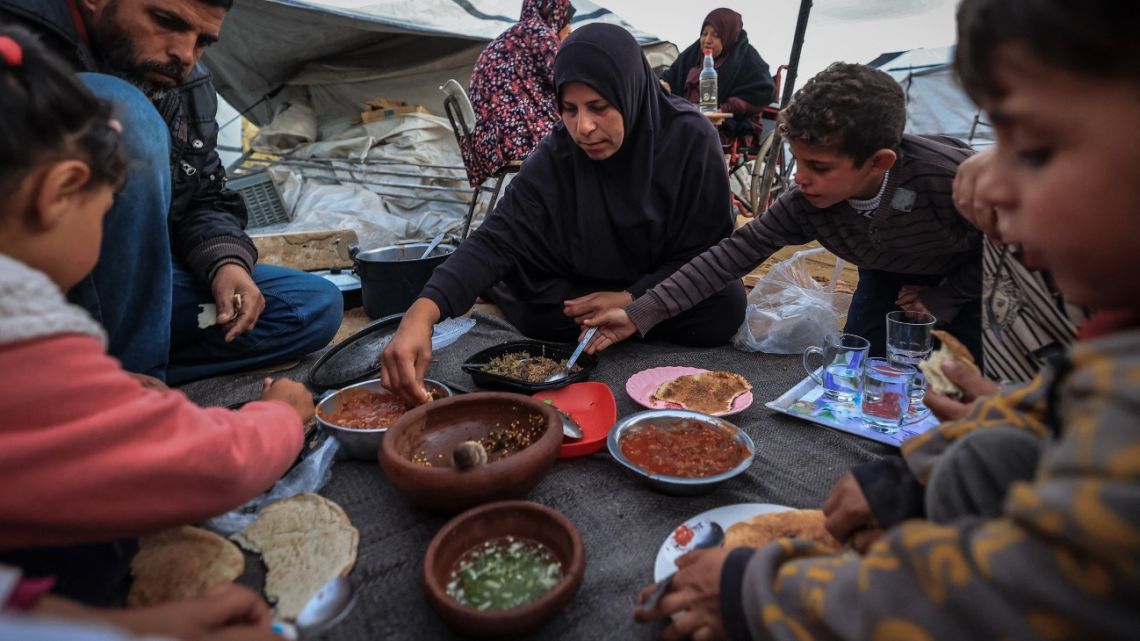
Amid such a dark outlook, there is now a glimmer of hope, especially for the Muslim world, which is suffering the consequences of war in its own societies, whether in Gaza, the West Bank, Lebanon, Syria, Sudan or Iran. For this reason, many Muslims look forward with great enthusiasm to the month of Ramadan, which began last week and will continue until March 19.
Since time immemorial, fasting has been practised in all religions as a means of strengthening spirituality and achieving inner peace. Likewise, fasting during the month of Ramadan, which is the ninth month of the Islamic calendar, is one of the five pillars of our religion. It is a mandatory commandment for all Muslims, although some exceptions are allowed. For example, those who are ill or in poor health, pregnant or breastfeeding women, women who are menstruating, children and adolescents who have not yet reached physical maturity, and those who are travelling are exempt. These faithful must subsequently make up for the days on which they did not fast or, as atonement, feed a person in need for the same number of days lost.

In essence, Ramadan is an extremely important month in the life of every Muslim. During this period, one not only abstains from food, drink and sexual relations from dawn to dusk for a month but also focuses on improving one's spiritual and moral state. For this reason, the Prophet Muhammad (peace be upon him) said:
“God does not need the renunciation of food or drink from a person who does not renounce the practice of lying and evil deeds.”
The spirit of Ramadan, with its intense prayers, frequent recitation of the Holy Quran and vehement effort against one's own ego, provides believers with a unique opportunity to experience spiritual rebirth. Fasting not only requires a Muslim to endure hunger and thirst, but it also implies that the person must distance himself from all vice and evil. In addition, during this month, acts of charity and generosity are encouraged in order to draw closer not only to the Creator, but also to His creation, without distinction of creed or ethnicity. Thus, the Prophet of Islam gave the following recommendation to his followers:

“Fasting is a protection (against sins). Therefore, when one of you is fasting, let him not speak inappropriately or act foolishly. If anyone disputes with you or insults you, say: I am fasting, I am indeed fasting.”
In conclusion, fasting is not merely a diet, but a vehicle for approaching peace and finding the climax of our moral and spiritual life. May this Ramadan be a point of reconciliation for every believer with their Creator and, at the same time, for all societies and peoples in conflict. It is my deep desire that we may heal our differences and that all the wars that besiege us today may cease.
*Imam Marwan Gill is an Islamic theologian and president of the Ahmadiyya Muslim Community in Argentina.










Comments