


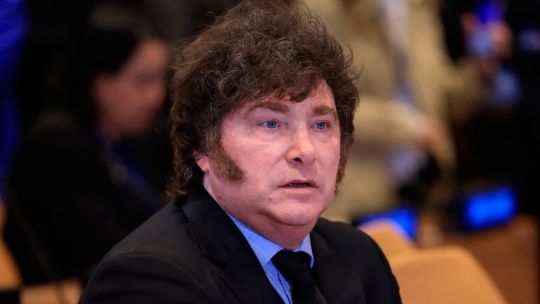
President Javier Milei has once again captured the spotlight and is using it to set the agenda to his tune. After returning from New York, where he attended the United Nations General Assembly, he went on a media raid before jetting off to Paris for a new edition of the ‘Argentina Week’ investment roadshow. As he defended his tenure and once again campaigned for re-election by promising the promised land, he also had time to deliver a series of bizarre, truth-bending statements that sparked a flurry of reactions in the media. The one that drew the most attention was the supposed expulsion of some “30,000 terrorists” from the country who apparently had the intention of “putting dynamite to the Argentine model.” It accompanies accusations levelled at the opposition blaming them for seven attempted coup d’états and 40 attempts to break his Budget surplus. The President also noted that the economy is not in recession and that macro data wasn’t accurately measuring the strength of the recovery given methodological obsolescence. Scummy and corrupt journalists and opposition politicians were to blame for the spreading of falsities, he added.
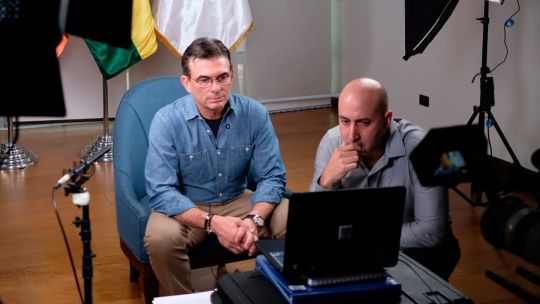
The information ecosystem sparked into activity immediately, with immediate speculation about the President’s mental state, particularly given recent reports of extended bouts of isolation in the Olivos presidential residence and supposed tensions with his chief-of-staff, Karina Milei. Javier has explained repeatedly that Sister Karina is the pillar of his emotional state and that without her, he’d be doomed. He has delegated great portions of the administration of the state to her and trusts her judgement as if it were infallible. A break, even a small one, between the Milei siblings is definitely cause for concern. Journalists and those with a critical view of the President added questions about his physical demeanour, looking more bloated – and therefore elevating the angle of the camera in each successive interview in order to avoid potential double chins – and dressed as if he were going to the gym or the corner grocery shop in a videoconference interview with José Del Río who was hosting the IDEA conference in Mar del Plata, arguably the most important private-sector event in the country.
Not only was Milei expressing some serious paranoia – his view on the economy appeared to be overly optimistic. Over the past few weeks, INDEC’s EMAE activity indicator has contracted while consumption continues to sink, unemployment and poverty statistics have jumped, and Argentina’s country-risk premium rating has suffered a sharp uptick. While Milei accurately points to exogenous factors, including the US Federal Reserve’s decision to raise interest rates and the geopolitical conflict pushing oil prices higher, his only explanation for the lack of a widespread sensation of economic bonanza is in great part the fault of those opposed to him. This is particularly relevant because next year’s presidential campaign is already underway. Who has he been speaking to? He already demonstrated in last year’s primaries that when he speaks directly to his electorate, as he did in that controversial rock concert, traditional journalists rage in anger, while his core experiences satisfaction. What about potential foreign investors? They also seem to focus on his macroeconomic performance, where stoking fears about a potential descent into the depths of the Kirchnerite inferno may have a spooking effect. In the words of Economy Minister Luis ‘Toto’ Caputo, who this week channelled his inner Peter Thiel: “Kirchnerism is hell and [Buenos Aires Province Governor Axel] Kicillof is the Antichrist.”
Yet Milei is struggling in terms of societal approval. The latest government confidence figures from Universidad Torcuato Di Tella’s school of government show a decline to the lowest values of his government, matching troughs hit in September 2025 and July 2026. His performance is in line with Mauricio Macri’s and Cristina Fernández de Kirchner’s (in both her first and second term) by month 33. A major red flag for the President’s campaign team is that he remains well below Néstor Kirchner, while CFK I showed a major jump shortly after the comparable moment, associated with her husband’s death and economic improvement. Those are the only examples of re-election or political continuity in the past seven presidential terms, which also include Alberto Fernández and Eduardo Duhalde. Journalist Carlos Pagni repeatedly stresses the strong correlation between the index and the incumbent’s voting intention, and he suggests it represents 38.8 percent for Milei if the election were today. Taking his hypothesis forward, the President could lead the first-round vote against a Peronist candidate, potentially Kicillof, but wouldn’t be in condition to achieve a first-round win. This means a run-off, with all the risks it presents for the incumbent, as it could unify the opposition against him.

Another interesting finding in the September polling index was that the perception that the administration has society’s best interests while governing has fallen well below other measured components (government trust, efficiency, honesty, and problem-solving capacity). Starting with CFK I, the interests component had essentially remained consistently above government trust and efficiency, generating a big gap during Alberto Fernández’s in great part due to the pandemic response. Capacity and honesty fluctuate but generally remain at the top of the chart. With Milei there’s a clear inversion between interests and efficiency, as people appear to acknowledge the ruthlessness of certain policies such as “chainsaw austerity” while probably recognising his capacity to lower inflation. The President has consistently underperformed with women, those residing in the Greater Buenos Aires region (AMBA) and those with lower academic levels.
The situation is fluid, both economically and politically. While the President defends his economic plan, he’s failing to acknowledge the issues affecting a majority of the working population. GDP growth on the back of extractivist sectors motivated via the RIGI incentive scheme for major investments is desirable, but masks a second and much slower pace of growth for excluded sectors, which are highly concentrated around major urban centres, particularly the ‘Conurbano’ ring of municipalities that surround Buenos Aires City. There’s a lot of votes there.
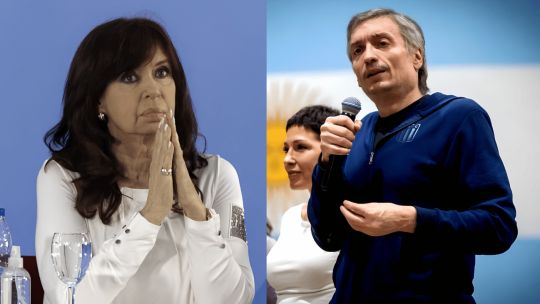
Simultaneously, the anti-Milei opposition remains fragmented. Within the ranks of the Partido Justicialista (PJ), Peronists are engaged in a bloody civil war. Kicillof is looking to position himself while Cristina’s son Máximo Kirchner maintains a steady barrage of rockets aimed at his positions, including proposing his mother’s own candidacy next year. Milei appears to be successfully absorbing everything “to the right of the centre” but has yet to ink a deal with the Macris, Mauricio and cousin Jorge, who is the mayor of Buenos Aires City. Failure to do so could lead to a splinter candidate who could nibble away at Milei’s margins. Patricia Bullrich, currently leading the libertarian caucus in the Senate, is constantly trying to show her independence. She has a history of breaking off from her political bosses – just ask the Macris. Provincial governors will once again seek to show strength via Provincias Unidas, while the left appears to be growing, particularly around the leadership of Myriam Bregman. There’s eternal talk of an outsider looking to emulate Milei’s skyrocketing political growth. The field is full of opportunities and space for surprises.

The economy will remain one of the major factors determining how this fragmented field enters the actual electoral season. The framework, whether there are PASO primaries or not, will be decisive, along with the actual make-up of the political offering. There’s also external factors, from important elections in Brazil, the United States, and Israel, to geopolitical and global economic issues. For now, Milei is sticking to his guns.




Comments