


On September 24, the president of the United Nations General Assembly asked repeatedly for order, as dozens of delegations rose and left the hall, the moment Prime Minister Benjamin Netanyahu of Israel was announced as the next speaker. The walkout had been organised in advance. The Palestinian Mission to the United Nations had circulated a message urging member states to bring as many staff as they could and walk out together when his name was called, so that the cameras would find the widest possible expanse of empty seats. Netanyahu waited, then invited anyone else who felt the same way to leave before he started.
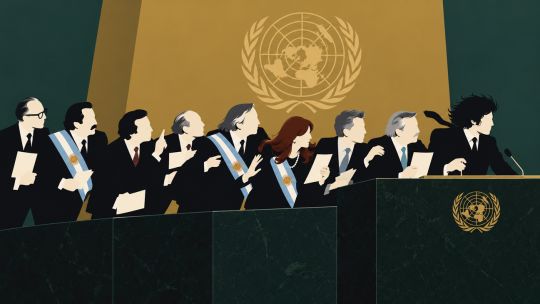
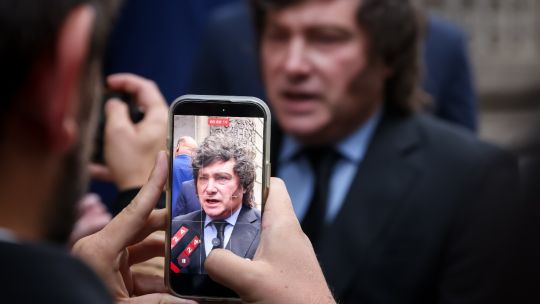
A day earlier, from the same podium, Argentina’s President Javier Milei had opened with the sentence he has used since his inauguration: it is always better to tell an uncomfortable truth than a comfortable lie. He said the member states of the United Nations had voted against Israel systematically while keeping silent about the terrorism carried out in Islam’s name, and he repudiated the Iranian regime’s attacks on Israel. He also told the Assembly, in plain terms, where his country stands. Argentina has made a geopolitical choice, Milei said, and has aligned itself without ambiguity with the West, with the United States and with Israel, countries with which it shares values and strategic interests.
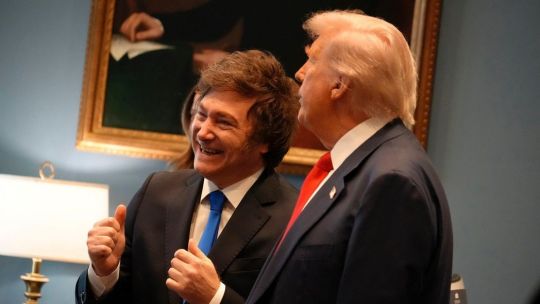
I worked for US President Donald Trump for nearly a quarter of a century, in business and then as a White House Middle East envoy, and I have followed his relationship with Milei closely since the Argentine leader took office. When Argentina’s peso came under pressure last October, the United States Treasury put a US$20-billion currency swap behind Milei’s economic programme. Milei, for his part, joined Trump’s Shield of the Americas, the coalition against drug-cartels, at its founding in March, and has backed the United States on Iran and Israel when many governments in Latin America and elsewhere would not. Two days before the Argentine’s General Assembly speech, at a Shield of the Americas session at UN headquarters with Milei in the room, Trump told the assembled leaders, “We had a great victory in Argentina, and not that long ago, twice,” referring to Milei’s election wins. That kind of support reflects the relationship the two leaders have built and the choices each leader has made with respect to their countries.
During my three years at the White House, I spent a great deal of time with heads of state, foreign ministers and their advisers. I continue to meet with many of the same senior officials today. Those conversations have taught me how different what governments say publicly at the United Nations and in the media can be from what their officials say privately in a meeting.

Netanyahu addressed that difference directly. Israel, he told the delegates who remained, had been defending many of the countries whose representatives had just walked out, and many of their leaders had thanked Israel privately for destroying Iran’s nuclear programme. I have heard many leaders and senior officials over the years speak privately about how seriously they view the prospect of a nuclear-armed Iranian regime.
The walkout allowed governments to register their opposition to Israel without confronting the much harder question Milei had raised the day before. For governments facing domestic pressure over Israel, walking out carried an obvious political benefit. It did nothing to improve the lives or prospects of Palestinians. Nor did it help ordinary Iranians who have suffered under the regime, Lebanese whose country has paid an enormous price for Hezbollah’s power, or Yemenis who have suffered under the Houthis. There was no comparable protest in the hall over the Iranian regime's decades of support for Hezbollah, Hamas and the Houthis, its attacks across the Middle East or its nuclear programme. Instead, the delegations walked out on Israel after Israel and the United States had used military force against the Iranian nuclear threat.
Argentina has its own history with the Iranian regime, one that gives Milei’s words particular weight. In 1992, Iran’s proxies bombed the Israeli Embassy in Buenos Aires, killing 29 people. In 1994, the Iranian regime struck Argentina again when the AMIA Jewish community centre was bombed, killing 85. Argentina has spent more than three decades pursuing the Iranian officials responsible and has designated the Islamic Revolutionary Guard Corps a terrorist organisation. When Milei condemns the Iranian regime at the United Nations, Argentines do not have to look abroad to understand the history behind his words. That same afternoon, with the walkout still the story of the day, Milei met Netanyahu at UN headquarters, with Foreign Minister Pablo Quirno and Economy Minister Luis Caputo at his side.

Openly aligning with Israel can carry diplomatic and political costs. Milei knew that and said it anyway. There was no ambiguity about Argentina's position when he left the podium.
Netanyahu spoke with his own election on October 27, five weeks away. Milei will face Argentine voters in October 2027, including some who disagree with his position on Israel. In a place where governments often calculate every word, that made the Argentine leader’s speech more consequential.
The countries that walked out changed nothing about the Iranian threat, or about the oil prices and shipping costs that the regime’s attacks in the Strait of Hormuz have imposed on every economy around the world. Nor did the walkout change anything for the Iranian people, Palestinians, Lebanese, Yemenis and others who have suffered because of the Iranian regime and the forces it has funded and armed.

Milei’s speech offered a very different approach. I have seen enough diplomacy to know how much easier it is for governments to acknowledge difficult realities in private than to address them in public. Sometimes they go further, refusing to acknowledge those realities at all because doing so would require difficult choices they would rather avoid.
Milei did neither. He said publicly what he believes about the Iranian regime, Israel and Argentina’s place in the world. Argentina has already experienced the consequences of the Iranian regime’s reach firsthand. Other countries should not have to learn the same lesson before their leaders are willing to confront it.
* Jason D. Greenblatt served in the first Trump administration, from 2017 to 2019, as Assistant to the President and Special Representative for International Negotiations, the White House's Middle East envoy. He can be found on Substack and on X: @GreenblattJD.









Comments