

One week before the 2023 elections in which Javier Milei was elected President, I wrote on the front page of Perfil this newspaper’s traditional endorsement, titled ‘Do not vote for Milei.’
In the column, I wrote: “Throughout his campaign, La Libertad Avanza’s’s confrontation was not with populism (which it practices), but with democracy as a system.” Also, “he criticises universal, secret and compulsory suffrage through its two initiators, Yrigoyen in 1916 and Alfonsín in 1983.” And: “It is not advisable to vote for La Libertad Avanza, to which I attribute unmistakably anti-democratic traits.”
I lived through the 1976-1983 military dictatorship, when well-intentioned Argentines preferred anti-democratic governments, so long as they promised to carry out their economic ideas. They ended up becoming their victims. The phrase coined at the time by political analyst Mariano Grondona, whom no-one could consider left-wing, was that “it was preferable for the dollar to float, even if corpses floated in the water” – referring to the disappeared, who were thrown from planes into the sea so that their bodies would dissolve.
Absolute priority given to currency stability, even if that meant implementation generated enormous social, political or human costs. “Anything – so long as it is not Peronism” – that was the message from the ballot boxes in 2023 and the tacit message of the 1976 coup and others that I did not have to endure.

The illusion among elites that they will be able to “handle” an extremist in power, straighten him out, guide him, direct him, teach him, persuade him, buy him off, even neutralise him once he has fulfilled his mission or is no longer useful.
A failure to understand the masses, who are not to blame for being led by short-sighted elites.
Today, Argentines seem to be waking from the nightmare of Milei. “Did we vote for this?” They discover the worst of feelings: the unheimlich, the uncanny, the horror that arises when something familiar and homely (heimlich) turns monstrous, as Freud explained. “Did I vote for this?” And, unconsciously: “Am I responsible for this?”

Part of the press suffers this pain twice over. The wounds left by Kirchnerism, both in body and soul, clouded its judgement into believing that anything that was not Peronism would be better, even a monkey that could later be tamed and civilised. Today, the monster born from within not only attacks journalism, but inflicts a double harm, with pro-government journalists who continue to defend it, no longer out of error or naivety (which would excuse them) but out of convenience and shamelessness, compounded by the impossibility of retreat once they are already burned, almost beyond return.
On Thursday in the lower house Chamber of Deputies, members of the Freedom of Expression Committee (May 3 is World Press Freedom Day), without the presence of its authorities – who belong to La Libertad Avanza – presented an account of the attacks suffered by journalism, culminating in the closure of the Press Room at Government House, which will reopen this Monday “emboldened” by the renewed sense of power Cabinet Chief Manuel Adorni believes he gained after emerging “unscathed” from his appearance in Congress.
At the same time, Fernando Stanich, president of FOPEA press association, warned that “alarm bells must be rung because boundaries are beginning to be crossed.” FOPEA published an analysis of the President’s 113,000 tweets in its report “Insult as a strategy.” Meanwhile, the National Academy of Journalism is preparing an event and a forceful statement for June 7, Journalists’ Day, and Reporters Without Borders reported that Argentina suffered a historic setback in the 2026 World Press Freedom Index, falling 11 places to rank 98th.

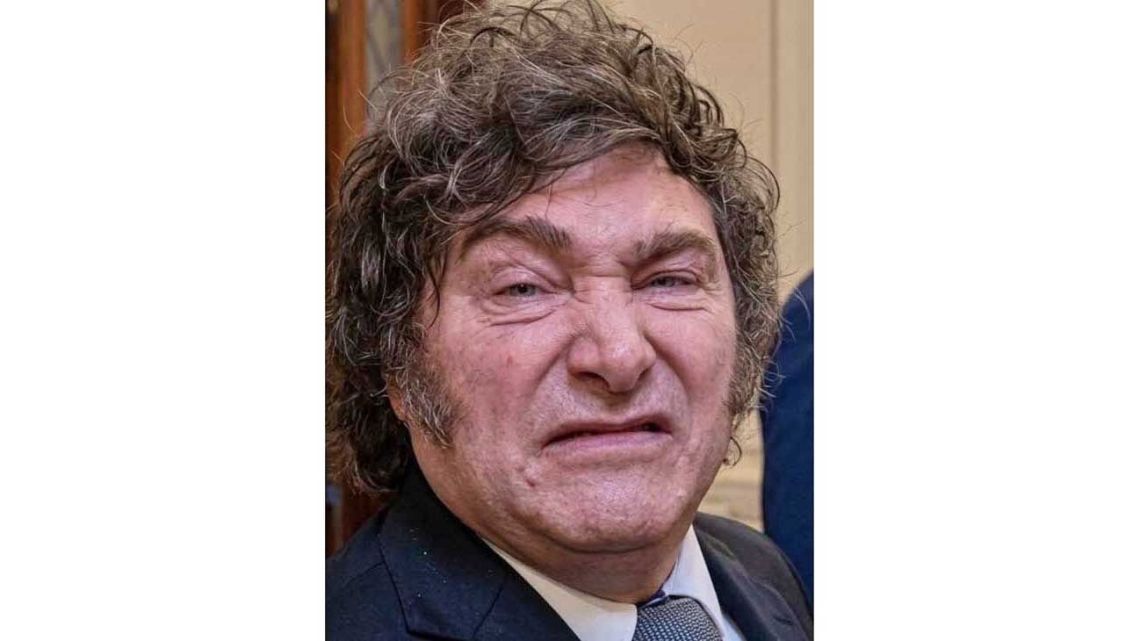
As if anything more were needed, the President when leaving Congress after the first part of Adorni’s presentation – upon being asked by accredited journalists whether his official’s explanations were sufficient – shouted at them: “Thieves!”
There is no going back now. Milei, like the genies that, once released from the lamp, cannot be put back inside, has a life of his own. All that remains is to wait, democratically, for him to be defeated at the ballot box and for his term to end. But what matters most is having learned the lesson.
It does not matter if a government implements economic ideas with which one fundamentally agrees; if those ideas run counter to democratic values, sooner or later they will end up devouring even those who benefited from them. There is no economy in a laboratory flask; there is no economy outside the political, cultural and moral ecosystem.

If Milei ends up teaching us what we failed to learn from the dictatorship and we correct course in 2027, we may at least take comfort in the fact that the experience left us with a lesson. Journalists are those who have the most to learn, given our double responsibility of having in part created the creature and then becoming victims of the result of that monstrosity.
The image circulating on social media, which illustrates this column, says it all: the moment President Javier Milei leaves Congress and shouts “Thieves!” at journalists. The best demonstration is that face, and that word fused into a single expression of hatred and rejection. It is worth looking at it again and again; it is a mirror of what we managed to build. That is what governs us, and we cannot stand apart from that outcome.
It is our monstrosity. Let us not look away. Let us return our gaze to that face again and again, and remember that word: “Thieves!” We, the journalists – 95 percent of us, apparently.









Comments