

Next Tuesday’s 50th anniversary of the 1976 coup is one of those occasions when people try to remember what they were doing at the time, like the Kennedy assassination or 9/11 for younger generations. My own memory is vivid enough – dining at an Indonesian restaurant in the southern Dutch town of ‘s-Hertogenbosch (historically Bois-le-Duc) en route to a long weekend perusing art museums in Amsterdam together with Cambridge fellow-postgrad pals when the overhead television insistently showed images of a helicopter over the Casa Rosada and news of a coup in Argentina.
While then having zero direct relationship with Argentina, the news was not entirely lost on me as an active member of a Latin American focus group at the Fisher House chaplaincy. I was vaguely aware of a previous coup in 1966 (far from the first) and had also come across some typically forthright words from the Duke of Edinburgh about Argentina being a rum place because he had gone there to play polo in 1962, only for his host (then-President Arturo Frondizi) to be whisked away from the breakfast table by military thugs. Since already specialising in psephology ahead of future work on comparative electoral systems for the then European Community, I also had firmly engrained in my head the figure of over 62 percent for the Perón-Perón landslide of 1973 (a world record for free elections, at least to the best of my knowledge) and, in my ignorance of what had happened since, was baffled by how such a huge mandate could evaporate.
Yet there seemed no reason to consider this coup to be any worse than the previous (there at least far from the only such reaction) and certainly less significant than Chile’s 1973 entry into military dictatorship, derailing democracy for what looked like a long haul with the atrocities later to be documented by the Costa Gavras film Missing already known to the world. “Missing” to be translated into Spanish as desaparecidos in Argentina’s case.
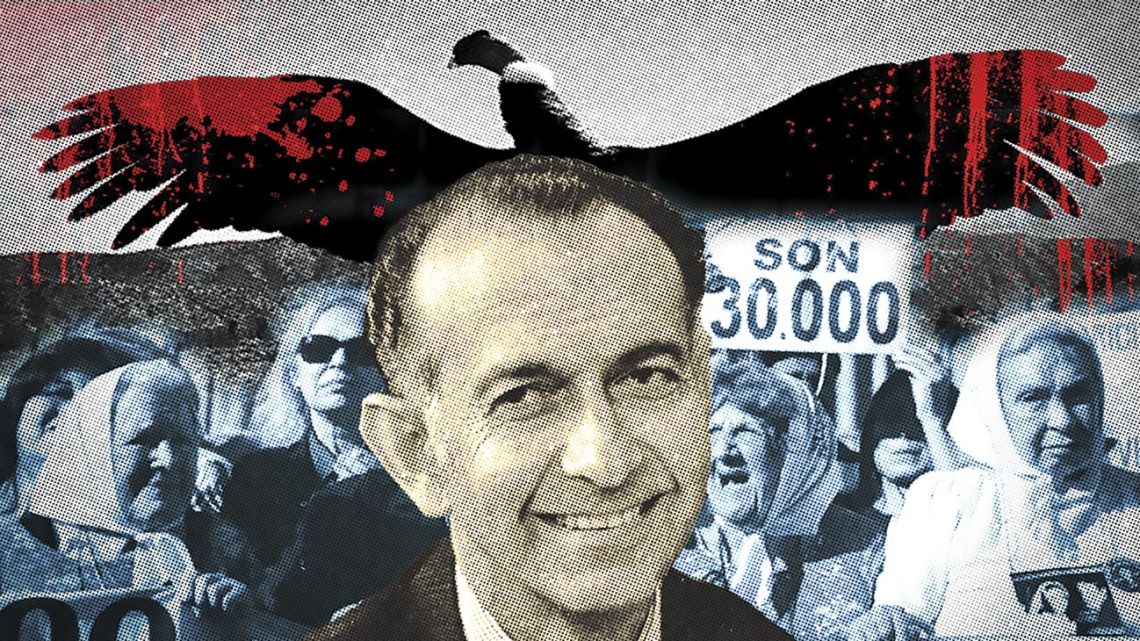
Next Tuesday the number “30,000” will feature prominently in the commemorations of the coup and not to be challenged lightly as the consensus of human rights organisations. And nor will this column challenge that figure – advancing such alternatives as the almost 9,000 of the CONADEP report, the total of 15,000 reached by the investigations of the Carlos Menem presidency or the 22,000 from a secret military report revealed around the time of the 30th coup anniversary – but rather challenge the numbers game as such.

The Bible tells us that when King David took a census of Israel (the world’s first?), he was cursed by Jehovah for seeking to place a number on a spiritual entity like the chosen people – quality should not be quantified, according to the divine perspective. By the same token this columnist sees what happened here under the military dictatorship as an evil of spiritual dimensions and thus almost obscene to give it a number. And even entering into the numbers game, is the difference between even 9,000 and 30,000 anything more than merely numerical – Chile’s “missing” are numbered without too much discrepancy at around 3,000 but does anybody imagine that this turns Augusto Pinochet into a good guy?
No arguments with “Memory, Truth and Justice” either but it is also important to look at 1976 on its own terms and within its own century rather than through any anachronistically modern prism. Looking beyond this country in the 1970s, there was a terror of terrorism in a wider world – this columnist was briefly detained at Holyhead in 1977 as an IRA suspect (due to such circumstantial evidence as having the Sinn Fein, 1918-1920 thesis of a fellow-historian from the aforementioned Amsterdam jaunt in his suitcase) with Baader-Meinhof, Brigate Rosse, Weathermen, etc. elsewhere. There is also a need to understand that governance was then seen as an either/or proposition between electing runaway populism and military rule – Margaret Thatcher and Ronald Reagan came to office via the ballot-box only a few years later, while this region has since grown used to the idea that not only can the centre-right win elections but even the far right with Javier Milei and José Antonio Kast on both sides of the Andes today, but all that came after 1976.
Yet this does not excuse the 1976 coup. People may not have known it then but they should have known and kept their faith in elections as the only legitimate corrective mechanism with Isabel Perón and Salvador Allende sure to lose. Yet an impatient civil society failed to imagine any alternative to a military coup. This columnist resists the label of “civic-military dictatorship” so often tagged onto junta rule because underlying it is often the Marxist notion that the military were almost innocent tools of international capitalism centred in Washington with Economy Minister José Martínez de Hoz as the real local head, not General Jorge Videla, when in reality Martínez de Hoz had an even harder time pushing his liberal ideas against military corporate state-run nationalism than Paulo Guedes much more recently in Brazil’s Jair Bolsonaro presidency. Yet in another sense the “civil-military dictatorship” tag is justified because the 1976 coup arose not only from military action but also from a civil society passively abdicating its responsibilities.

Also underlying the term of “civic-military dictatorship” is the notion of all those crimes against humanity stemming from a master plan hatched by the likes of Henry Kissinger and implemented top-down by the Videla junta. To this day, this columnist has been unable to decide whether the “Process of National Reorganisation” was more a case of dictatorship or anarchy. Plenty of evidence for the Condor Plan, of course, but this columnist has lingering doubts whether the death squads were simply obeying orders from above or taking the law into their own hands after losing low-ranking colleagues to the fight against subversion and seeing Peronist Interior Minister Esteban Righi freeing the terrorists who had been convicted by due process of law in 1973. But regardless of whether the deaths and disappearances of the dictatorship were fault or default, the 1985 Juntas trial was entirely justified.
This column inviting people to recall their own memories of the 1976 coup excludes around 85 percent of the population, of course – the latter will have to steer a tricky course between dogmatic echo chambers and broader perspectives also carrying the risks of a dangerous relativism losing sight of a fundamental evil.










Comments