

The jigsaw puzzle that is Argentina is never complete without the data periodically published by researchers from the Observatorio de la Deuda Social poverty watchdog researchers at the Catholic University of Argentina (UCA).
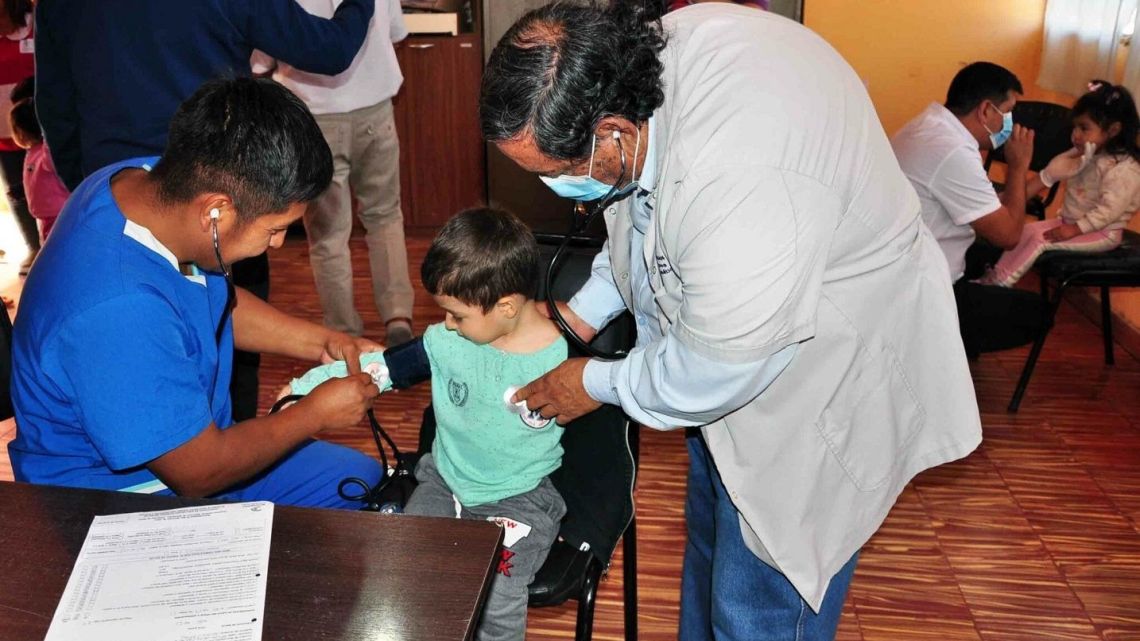
In its latest report, presented last week, the watchdog found that “19.8 percent of all children and adolescents did not see a doctor or dentist all last year for economic reasons, as reported by the adults in their families or households.”
This figure leads to more sad details: over a tenth of children aged under five (11.3 percent) and almost a third of teenagers have had no consultation about their health. In the particular case of dental care, the number climbs to 17.4 percent of kids who have no access to a dentist for the same reason: lack of money.
The ODSA-UCA report was published by a team of researchers coordinated by sociologist Ianina Tuñón from the Observatorio Barómetro de la Deuda Social de la Infancia, along with her assistants Valentina González Sisto and Lucrecia Freije.

Speaking at a presentation of the report attended by Perfil, Tuñon revealed that "almost one of every five Argentines aged under 17 stopped going to the doctor or dentist or both during 2025 due to economic problems."
She said the reasons were not lack of time or family indifference, but rather a lack of money. Even when there is such a thing as a free public health system, going to the doctor can cost money and can also mean skipping work for their parents, which can also impair family finances.
Inability to go to a doctor rises to 27.5 percent among adolescents.

“The lack of dental care is around 17 percent and thus continues taking a back seat in the framework of health policies, despite its impact on nutrition, self-esteem and the quality of life," warned Tuñón.
It is also worth reporting that, from the analysis of the series of data in recent years, it emerges that 2025 showed marked improvements on previous years. Figures are way up on 2020, at the peak of Covid-19 pandemic lockdown, with higher numbers of children consulting health professionals.
More kids were submitted last year to medical controls than in 2023 and 2024. That occurred in a context where the number of families not covered by either union-run or private prepaid healthcare schemes rose to 61.2 percent.

Finally, another confirmed figure: last year, just 4.1 percent of children were identified by their parents as being overweight or obese. This low percentage is important, since it strongly contrasts with reality: according to the latest National Survey on Nutrition and Health, up to 41.1 percent of children between five and 17 have excess weight.
Mental health

Another finding from the survey is that 18.1 percent of the children aged between five and 17 presented “symptoms of sadness or anxiety,” according to the perception of their parents or those responsible for them.
Incidence of these symptoms indicates that it rises up to 21.2 percent during adolescence with girls more at risk than the males (24.7 as against 18 percent).
This situation also has concrete consequences for the learning process. The probability of children with these symptoms "not learning much" in school is 46 percent.

Another detail with impact from the new report is that it reveals indirectly another educational problem: 30.6 percent of the children attend schools where the teachers “are frequently absent or where classes are habitually suspended.” This implies almost a third of pupils, a figure rising to 44 percent among children in the lower socio-economic strata and in Greater Buenos Aires.
"The data compiled indicate that absenteeism and the suspension of classes are two situations mainly concentrated in state schools, clearly attended by the more socially vulnerable sectors," noted Tuñón.
Enjoyment of school is also in crisis. In 2025, one child out of every 10 affirmed that they “do not enjoy going to school” (10.5 percent). This incidence increases proportionately to age, reaching 15.6 percent among adolescents. Such “rejection” is particularly high among the lower social strata (15.8 percent).
The report –based on the Encuesta de la Deuda Social Argentina 2025 survey, scrutinised this situation via interviews with 2,200 children and their families, resident in urban conglomerates nationwide. It marks the first time these problems have been systematically measured in these dimensions.

What these numbers show is that Argentina’s social debt is not just a question of income. It is a debt to health and education which the state could manage better, even although there is no money.













Comments