

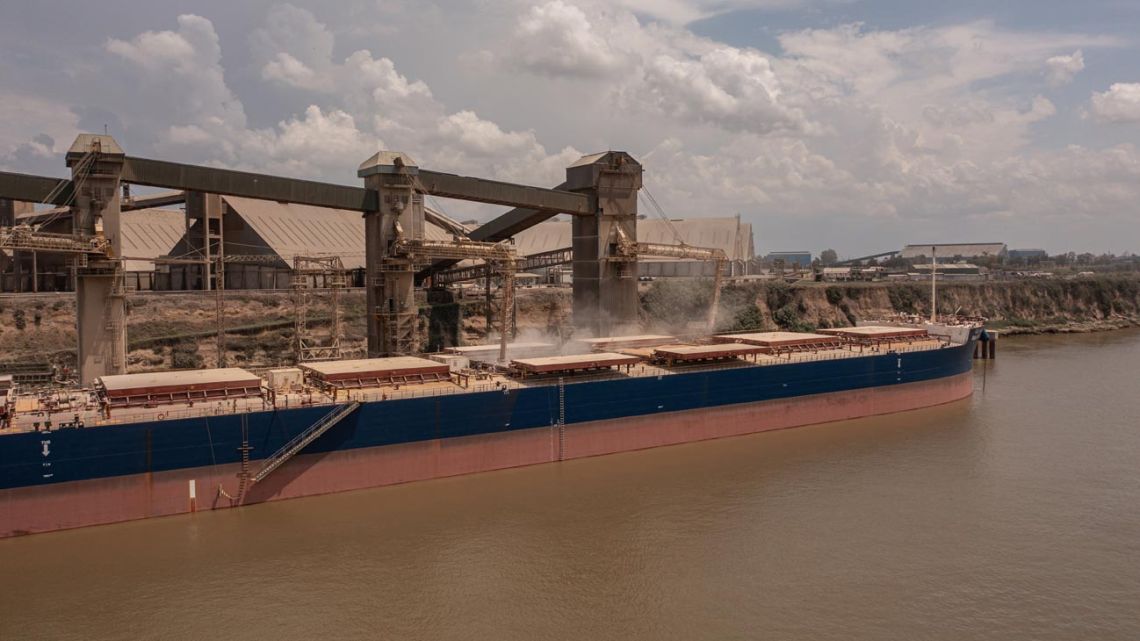
Argentina is beginning to receive a flood of hard currency that analysts see around US$30 billion over the next six months, giving President Javier Milei his best chance to build up international reserves.
The Central Bank’s depleted cash stockpile is a perennial concern for investors and the International Monetary Fund. The lack of reserves has kept Argentine yields high and pushed out Milei’s return to international capital markets. A rush of dollars could begin to resolve some of those concerns.
Surging oil production and a strong crop harvest are driving exports and underpinning the Argentine peso’s newfound strength against the dollar even as inflation picks up. Milei’s policymakers are seizing the moment as Central Bank Governor Santiago Bausili starts picking up the pace of dollar purchases to accumulate an extra US$8 billion of reserves – a new condition of Argentina’s IMF programme.
Milei has long predicted the wave of dollars to come into Argentina. He’s also semi-jokingly warned Bausili that he shouldn’t rebuild reserves too fast for fear that it could pump pesos, and therefore inflation, into the economy.

“Santiago, dollars are going to be coming out of your ears,” Milei said at JPMorgan’s headquarters in New York in March, with Bausili in the crowd. “Be careful with the purchases” Milei added, “may they not go to inflation.”
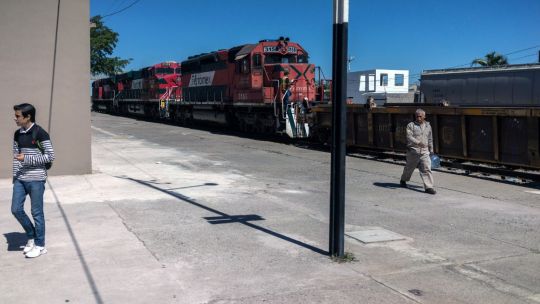
Trucks carrying grain in Santa Fe Province. Argentina’s trade surplus hit a two-year high in March, driven by strong agricultural and energy exports.
Whether Milei fully takes advantage of the moment is less clear. His government, as well as previous ones, has missed the IMF target for reserve accumulation, and needed a waiver to get board approval in Washington.

Still, signs of the dollar downpour are already emerging. The peso, a persistent loser for years, is now one of the best-performing currencies in emerging markets so far this year. Over that time, Bausili’s Central Bank has bought around US$6 billion. However, debt payments abroad have watered down those gains.
Argentina’s trade surplus hit a two-year high in March, currency traders see a lower chance of a peso devaluation and companies in Buenos Aires are issuing dollar debt in the local market at rates below or only slightly above comparable US Treasury yields.
“The planets are aligning,” said Guillermo Ruso, an analyst at Novitas SA, an agribusiness consultancy that expects good corn and soy harvests adding onto exports from a record season for wheat.

The war between the US and Iran has pushed international crude prices above US$90, which means production from the Vaca Muerta shale patch will generate a larger export surplus than in recent years, said Julián Rojo, an economist at the University of Buenos Aires.
The dollar deluge, however, is less positive news for Argentine farmers and agricultural exporters, who may be more reluctant to sell their crop all at once with an exchange rate some see as overvalued. Argentina’s strict currency rules still require exporters to bring those dollars into the country and sell them on the official market. Meanwhile, input costs are rising because of the effects of the war, higher operating expenses under Milei and persistent inflation.
“Farming is a game of chess,” said Juan Félix Rossetti, a 60-year-old farmer in Santa Fe province. “You have a sales strategy, but every day the government and the weather move a piece, and you have to rethink your own.”

The flood of dollars is so large that even if producers decide to hold on to their grain, the supply in Argentina’s small foreign-exchange market will still be felt. Economists surveyed by the Central Bank estimate that the peso will depreciate 17 percent in 2026, compared with inflation levels close to 30 percent. Farmers broadly agree too.
“There is nothing to suggest that the dollar has to depreciate in the coming months,” said Francisco Perkins, who farms 5,400 hectares in Buenos Aires Province. The Central Bank “could buy more and the exchange rate would still be stable.”
* ‘Shock Therapy’ is a weekly analysis column focused on finance and markets in Argentina.
related news



by Ignacio Olivera Doll, Bloomberg







Comments