

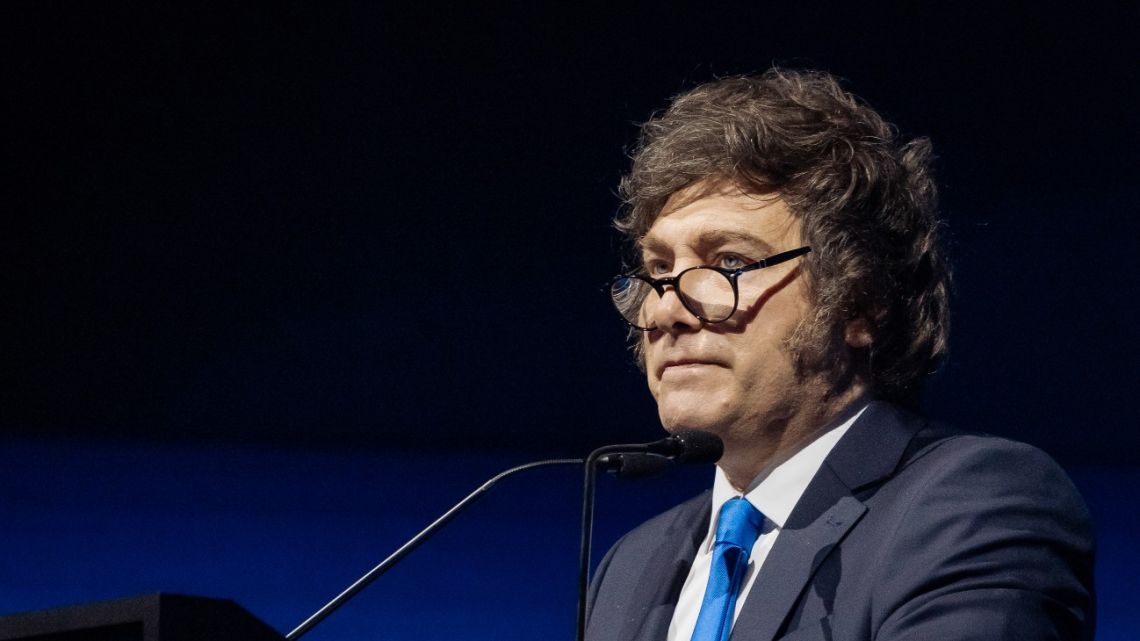
The US war with Iran threatens to upend one of Javier Milei’s most emphatic promises: monthly inflation below one percent by the middle of this year.
Argentine consumer prices accelerated to 3.4 percent in March, the highest level in a year, according to data published Tuesday. The President conceded it was a bad result, and investors are now expecting a tougher slog to rein in prices. The rise in energy costs triggered by the war is forcing a revision of inflation forecasts in coming months.
For “August this year, consumer inflation may start with zero,” a more enthusiastic Milei had said in a speech in March, ticking off a series of conditions for it to happen. In a separate appearance, he said, “by the middle of next year, Argentina’s inflation problem will be over.”
The government is still holding onto that script. Economy Minister Luis Caputo said this week that April inflation should slow down, a common trend in Argentina as March has many seasonal factors. The administration is betting that inflation will cool off if the energy impact from Iran dissipates and the local economy stays on course.

For now, the market is moving the other way. Inflation break-evens implied by Argentina’s fixed-rate peso bills and inflation-linked debt have jumped to 31 percent in April from 25 percent in January, according to calculations by Banco de Valores, Argentina’s main financial trustee. Investors are now demanding protection against a much higher inflation path than the one they were pricing only weeks ago.
“The price of oil is not going back to pre-conflict levels, and that will have an impact on energy, both directly and indirectly,” said Fernando Marengo, partner at BlackToro, an Argentina-focused investment and advisory firm with operations in both Argentina and the United States.
Oil’s impact could sting worse in Argentina than some countries – from petrol to logistics to fertiliser costs – because agriculture still anchors exports and economic activity, especially during the peak harvest currently going on. Beyond the immediate impact, there’s also second-round effects that are more difficult to assess, such as food and supply chain costs.

Another factor that’s harder to forecast is Milei’s standing with voters, which has hinged largely on his battle against inflation over his first two-and-a-half years in office. While he successfully brought price hikes down from triple-digit territory to more familiar levels by Argentine standards, monthly inflation has gradually ticked up over several months. Milei’s approval rating fell to 36 percent in March, the lowest level of his Presidency.
Expected inflation for full-year 2026 rose to 29.1 percent in March from 22.4 percent in January, according to the Central Bank’s monthly survey. They also forecast August monthly inflation to be around 1.8 percent, a notch higher than their previous forecast.
“The risks of revisions are skewed to the upside,” said Rodrigo Park, chief economist at Santander in Argentina. The bank’s annual inflation estimate has jumped to 26 percent by the end of this year from 16 percent previously. “We had numbers above what was expected in the first quarter for domestic reasons, but now we also believe fuel-price increases will have an impact.”
“Shock Therapy” is a weekly analysis column focused on finance and markets in Argentina.
related news


by Ignacio Olivera Doll, Bloomberg








Comments