

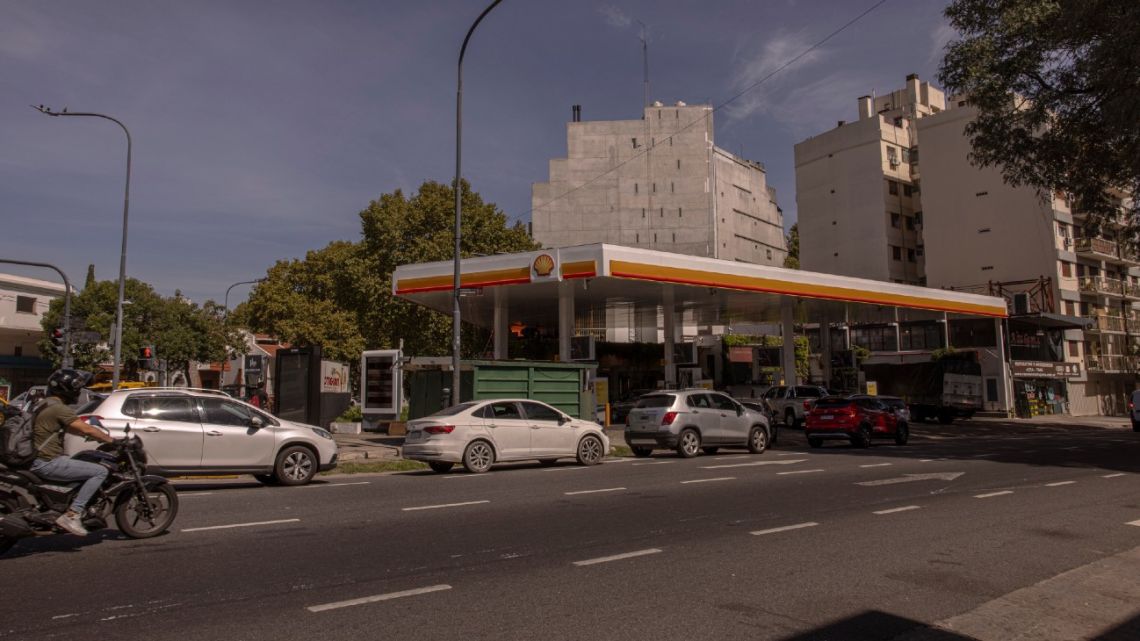
Argentina’s inflation picked up more than expected in March as prices at the pump rose sharply on the Iran war and as education costs surged on annual tuition adjustments.
Consumer prices rose 3.4 percent last month compared with February, above the three percent median estimate of economists surveyed by Bloomberg. From a year ago, inflation slowed slightly to 32.6 percent from 33.1 percent, according to data published Tuesday by the INDEC national statistics bureau.
Economy Minister Luis Caputo warned earlier Tuesday that inflation had likely come in above three percent during a panel interview.
Education prices rose the most on the month at 12.1 percent, followed by transport at 4.1 percent, according to the government report. Food and beverages weighed the most on the index, which rose 6.9 percent in the Greater Buenos Aires area.

Since the start of the conflict in the Middle East at the end of February, local fuel prices have jumped roughly 23 percent, according to Buenos Aires-based consultancy firm Eco Go. That’s despite state-owned YPF SA CEO Horacio Marín pledging to keep prices steady through mid-May, a strong signal from the company that controls just over half the motor fuels market. At the same time, the Economy Ministry suspended a fuels tax hike in April.
Milei has struggled in his bid to keep a lid on monthly inflation since it touched a seven-year low of 1.5 percent last May, down from a peak of 25.5 percent when the libertarian took office in December 2023.
In the panel interview, Caputo attributed the persistently high consumer price index to turbulence surrounding last October’s midterm election. Hedging against a possible negative outcome for the government triggered a surge in demand for US dollars, which bleeds into inflation. He added the trend would begin to reverse this month.

“I think that beginning in April we will see an important deceleration in inflation,” Caputo said. “We will definitely see a disinflation process with greater growth.”
Economists surveyed by the Central Bank in March forecast a 2026 year-end inflation rate of 29.1 percent, revised up three percentage points from the February survey, and growth of 3.3 percent in 2026, revised down 10 basis points.
by Manuela Tobias, Bloomberg











Comments