

The labour reform drive pushed by President Javier Milei’s government was presented as a tool to encourage hiring registered employees. But initial data after the bill’s approval and passage into law shows formal jobs have declined, a growth of informal employment and the closure of further private companies.
Deregulation & State Transformation Minister Federico Sturzenegger has recognised that he is not happy with the response of business to the approved changes.
Law 27,802, Milei’s “Labour Modernisation Law” was approved last March. Since then, registered jobs have diminished by 0.9 percent, according to the data tracked by Argentina’s SIPA (Sistema Integrado Previsional Argentino) pension system.
Last June, newly hired workers represented barely 1.6 percent of the total employed, the lowest rate ever. Last August, the indicator showed a pick-up, reaching 1.8 percent, according to Labour Department data, but still below the two percent registered in February before the reform was approved.

In addition, the INDEC national statistics bureau recently published data showing that informal employment increased 1.8 percentage points to 45 percent of the overall workforce between the second quarter of 2025 and the same period this year.
Continued decline

A Labour Reforma Monitor report issued by the Instituto Argentina Grande (IAG) think-tank warns that registered private-sector employment has been dropping for 13 consecutive months. Since the start of the Milei administration in December 2023, the accumulated loss has reached 241,200 jobs.
At the same time, over six million people are currently working on an informal basis with an estimated 348,000 such jobs added in the past year, mainly among the self-employed, said the IAG.
IAG experts reached the conclusion that the measures incorporated into the reform, such as longer trial periods and the hours bank, do not seem to have fulfilled the objective of encouraging formal hiring, said the institute’s report.

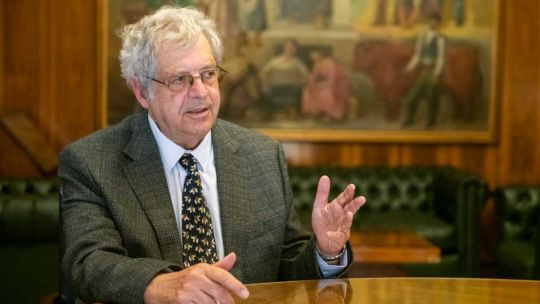
For Sturzenegger, the brains behind the reform push, firms and employers are to blame. “I’m not happy with the business response to the labour reform,” he said in a recent interview.
He also regretted the “ultra-actividad” mechanism, whereby the clauses of a collective bargaining agreement remain in force beyond their deadlines, until replaced by a new agreement.
“Now all the agreements signed are the same because nobody wants to fight, everybody wants the state to solve the problem for you,” he complained.

Sturzenegger, a former Central Bank governor, also noted the profound changes in the labour market left by the Covid-19 pandemic.
“The labour market has changed and many people opt for much more flexible systems,” he observed.
Unemployment creep
Argentina is also experiencing increased unemployment. In the second quarter of this year, the rate reached 7.9 percent, as against the 7.6 percent registered in the same period last year, according to INDEC data.
Unemployment also rose over the previous quarter, reports INDEC, to its highest level since Milei entered the Casa Rosada.
In the private sector, formal employment has also regressed, according to a report by the Instituto Interdisciplinario de Economía Política (IIEP) think tank. It recorded a loss of 12,700 jobs in the last quarter analysed, equivalent to a fall of 0.2 percent.
Since November 2023, the sector has lost around 266,000 jobs, a reduction of 4.2 percent. According to the study, the number of workers is now at a similar level to May 2014.
related news

by Juan Pablo Kavanagh, Noticias Argentinas








Comments