

Pope Leo XIV on Monday urged Argentina's branch of Catholic Church to “strengthen unity, heal divisions and embrace diversity,” while calling on bishops to stand alongside people living in poverty and those without decent housing.
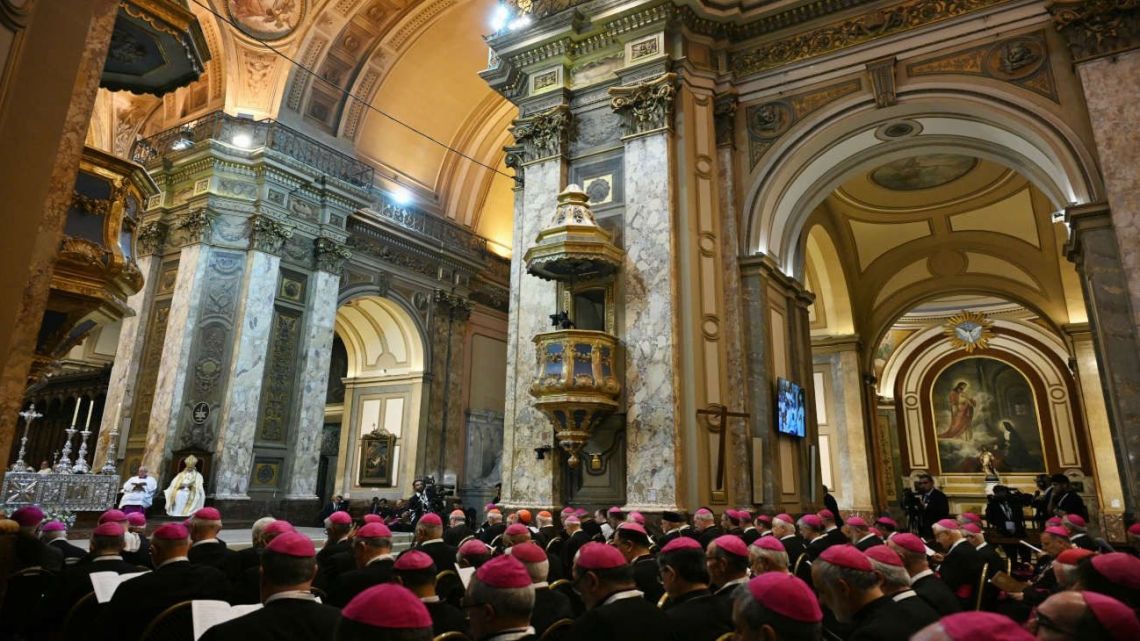
The pontiff led a celebration of Vespers at Buenos Aires Metropolitan Cathedral, alongside Argentina's bishops and synodal teams. During the service, he paid tribute to his Buenos Aires-born predecessor, the laate Pope Francis, and recalled his pastoral legacy.
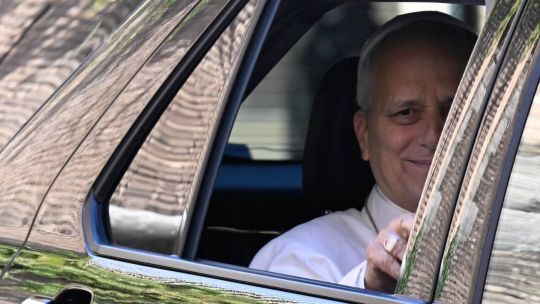
On arrival, Leo XIV knelt in prayer before the Blessed Sacrament before approaching the coat of arms and memorial dedicated to Francis. He prayed in his predecessor's memory, accompanied by a group of children.
The City's Metropolitan Cathedral was where the late Jorge Bergoglio served as Archbishop of Buenos Aires before his election as Pope.

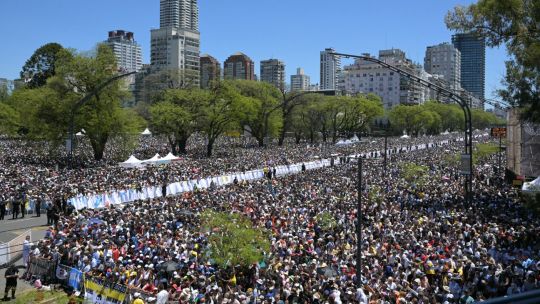
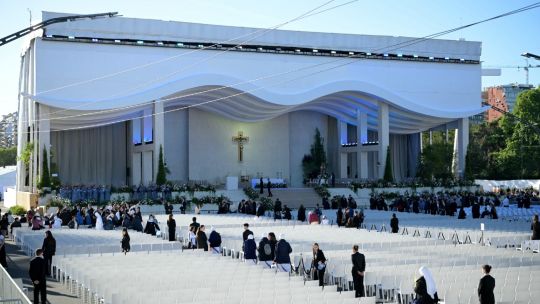
A large crowd gathered outside to follow Leo's arrival.
In a welcoming address on behalf of the bishops, he was told of “the affection of our people, who have been moved by this visit.” They also paid tribute to Francis's years as Pope, highlighting his efforts to include “the most forgotten and discarded brothers and sisters,” and his calls for justice, peace and reconciliation.
Following the liturgical greeting, Leo was presented with a commemorative medal marking his apostolic journey to Argentina, Uruguay and Peru.
Journey through Argentina
In his homily, Leo invited those gathered to make an imaginary journey across Argentina's different regions, reflecting on the country's varied landscapes and religious traditions.
“I would like us, at this moment of prayer, to travel together in our thoughts through the different regions of this beautiful country. In each of its provinces, our faith has taken root among diverse peoples and cultures, giving rise to distinctive expressions of Christian life, without losing the unity that comes from Christ,” he said.
He evoked the north-west, with its “simple faith and deep devotions”, the coastal region with its great rivers and fields “sown with the future,” and the north-east, with its spectacular waterfalls and extensive yerba mate plantations.
He also recalled Cuyo, “where the vineyards bring joy to man's heart,” the Pampas and “the wisdom of those who work the land," and the hills and the south, “where the cold and deserts do not prevent the warm welcome of faith."
Amid this variety, he said, there was also a “maternal presence” – that of the Virgin Mary, to whom Argentines express their devotion through processions and pilgrimages, journeys of faith and promises made on foot or horseback, as well as poems, prayers and songs.
The Pope said this diversity was also reflected in the country's different dioceses, each with its own traditions and pastoral practices.
“This diversity finds its unity in the same faith, in the sacraments and in ecclesial communion,” he said.
“Let us safeguard communion, welcoming our legitimate differences with charity and cultivating fraternity, so that our unity may make the love of Christ visible and help many people find him.”
Leo also recalled Francis's contribution to the Fifth General Conference of the Bishops of Latin America and the Caribbean, held in Aparecida, Brazil, in 2007.
He evoked Bergoglio's reflections at the gathering on pilgrims who travelled to the shrine to entrust their lives to the Virgin Mary, urging the Church to continue drawing on those teachings in its pastoral work across Latin America.
Tribute to Esquiú, Angelelli and Pironio
In his appeal for reconciliation, Leo singled out three Argentine bishops as examples of those who had worked for unity and peace: the Blessed Mamerto Esquiú, Enrique Angelelli and Eduardo Pironio.
“Their lives show us that the same mission can take different forms,” the Pope said, describing them as “a school of pastors born of our ecclesial history”.
“Saints continue to form saints,” he added.
The reference to Angelelli carried particular significance. The Bishop of La Rioja was killed on August 4, 1976, on Route 38 at Punta de los Llanos, while returning from Chamical, where he had paid tribute to two priests murdered days earlier.
Argentina's brutal military dictatorship initially presented his death as a road accident. It was not until 2014 that the courts established that he had been murdered, sentencing military officers Luciano Benjamín Menéndez and Luis Fernando Estrella to life imprisonment.
In 2018, Pope Francis recognised Angelelli's martyrdom, and he was beatified in La Rioja in April 2019.
The mention was a direct nod to the crimes of the military dictatorship.
Work and the common good
Focusing on the modern day, Leo urged the bishops to accompany people living in poverty and those without decent housing, while addressing the problem of unemployment.
He encouraged them to support initiatives that contribute to the development of their communities, with particular attention to the most vulnerable.
“Dear brothers, support initiatives that benefit the people entrusted to your care, rejoice in everything that promotes the life of your people: honest work, care for those most in need, and institutions that responsibly serve the common good. Accompany those working for the integral development of every person,” he said.
The Pope reaffirmed the Church's preferential option for the poor and its responsibility to care for creation, two central themes of Francis's pontificate.
He also called on bishops and synodal teams to deepen listening, collective discernment and collaborative work within the Church as they seek to respond to the challenges facing contemporary society.
– TIMES/PERFIL








Comments