


President Javier Milei’s government has seen off union action, demonstrations and opposition politicians and hopes to secure final passage of his controversial Labour Modernisation bill by the end of the month.
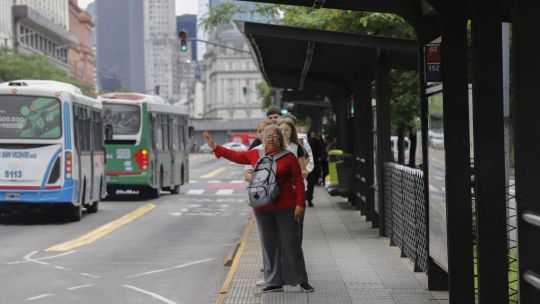
Amidst a general national strike that paralysed much of the country, demonstrators took to the streets outside Congress on Thursday to protest the flagship reform package.
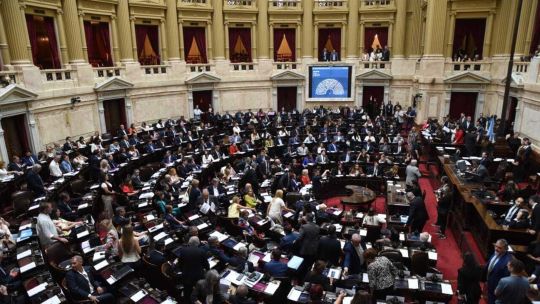
Meanwhile, lawmakers in the lower house Chamber of Deputies – after 10 hours of debate and a few tense moments – voted to back the government’s proposals by a clear majority.
In a vote at half-past midnight on Friday morning, lawmakers approved the reform bill by 135 to 115 with no abstentions.

The initiative was backed by the ruling La Libertad Avanza party with the support of deputies from Fuerzas del Cambio (UCR, MID, and PRO), Producción y Trabajo, Innovación Federal, Provincias Unidas, Independencia, and Neuquinidad.
The negative votes were cast by the opposition Peronist caucus, the majority of Provincias Unidad deputies, four left-wing lawmakers and single votes from Marcela Pagano and Jorge Fernández, who are in single-member caucuses.
Following the bill’s passage through the lower house, it must return to the Senate for final approval, likely to take place next week.

The ruling party plans to speed it through committee tomorrow, in the hope that it can be addressed by the upper house next Friday, February 27.
The reforms, described as "regressive and unconstitutional" by Argentina’s leading labour federation, the CGT, would reduce severance pay, extend the working day to a potential 12 hours and limit the right to strike, among other measures.
Milei’s government says the reform will help reduce informal unemployment and create jobs by reducing the tax burden on employers.

Expressing their rejection of the proposed changes, trade unions and left-wing organisations gathered in front of Congress to demonstrate peacefully, despite the lack of a call for an official rally.
During the afternoon, tensions rose and clashes were seen between protesters and police. Several people were injured and around a dozen were arrested.
The lower house began discussing the bill shortly after 2pm with 130 lawmakers present – one over the threshold to ensure quorum.

The ruling party's 93 lawmakers were joined by 11 from PRO, six from the UCR and two from MID. Provincial spaces and caucuses linked to regional governors provided the rest of the support.
In the run-up to the debate, officials from Milei’s party were optimistic about the approval of the bill, given the exclusion of the controversial ‘Article 44’ that sought to introduce new rules for sick pay.
The clause would have established that, in the case of accidents or illnesses unrelated to work obligations, only 50 percent of a salary would be paid to the injured party, rising to 75 percent if the worker had dependents.

La Libertad Avanza sources said they had secured the agreement of key allies and were above the threshold for approval.
"We have the numbers, over 129 for the general vote," a member of Milei’s inner circle told the Noticias Argentinas news agency.
The session opened amid high political tension, with heated exchanges inside the chamber and demonstrations outside Congress.

While the ruling party sought to move quickly on the bill, opposition groups questioned both the content of the reform and the legislative process, extending the debate.
Congress sources said they expected a vote shortly before midnight.
The government said it could be defeated on contentious articles. However, the ruling party was confident it would see off challenges with the support of its allies.

Shortly before voting, a furore emerged when the opposition Peronist alliance sought to suspend the session, noting that there was no quorum in the Legislature. The motion did not come to pass.
Peronist lawmakers predicted during the debate that a "waterfall" of legal challenges on the grounds of unconstitutionality would follow. Banking union leader Sergio Palazzo, a deputy for Unión por la Patria, accused the Milei administration of "liquidating the right to strike."
He called the reform “the most brutal regression in the history of workers' rights.”

“This is not just another law: we are facing a phenomenal transfer of wealth that will cause pain and misery to millions of Argentine workers,” warned Unión por la Patria deputy Vanesa Siley.
The ruling party generally avoided responding in order to speed up the debate, though Lisandro Almirón – the president of the labour legislation committee – complained that the current "regulatory framework does nothing but push people out of the formal sector."
– TIMES/AFP/NA/PERFIL








Comments