

Since the end of the 2026 World Cup, in which Argentina’s national football team made it all the way to the final with an extraordinary Lionel Messi leading the way, the nation’s political ecosystem has been in flux. No single narrative has managed to take hold. Momentum is distributed. Though next year’s election is on the distant horizon, there's still movement as different organisations are trying to win society’s attention, seeking to position themselves. The backdrop is the economic situation: from a macroeconomic point there are multiple positive signs, but at the household and individual level, there are major concerns. Both in politics and economics, those on opposing sides of the spectrum are painting a radically different picture. The group that sympathises with President Javier Milei believes he will handily win re-election next year, with the economy firing on all cylinders; those against him, whether it is Peronists or centrists, believe the President is destroying the social and economic fabric of the country and that he will be easily defeated at the ballot-box. While humans like to rationalise things into binary outcomes, reality appears somewhat more complex.
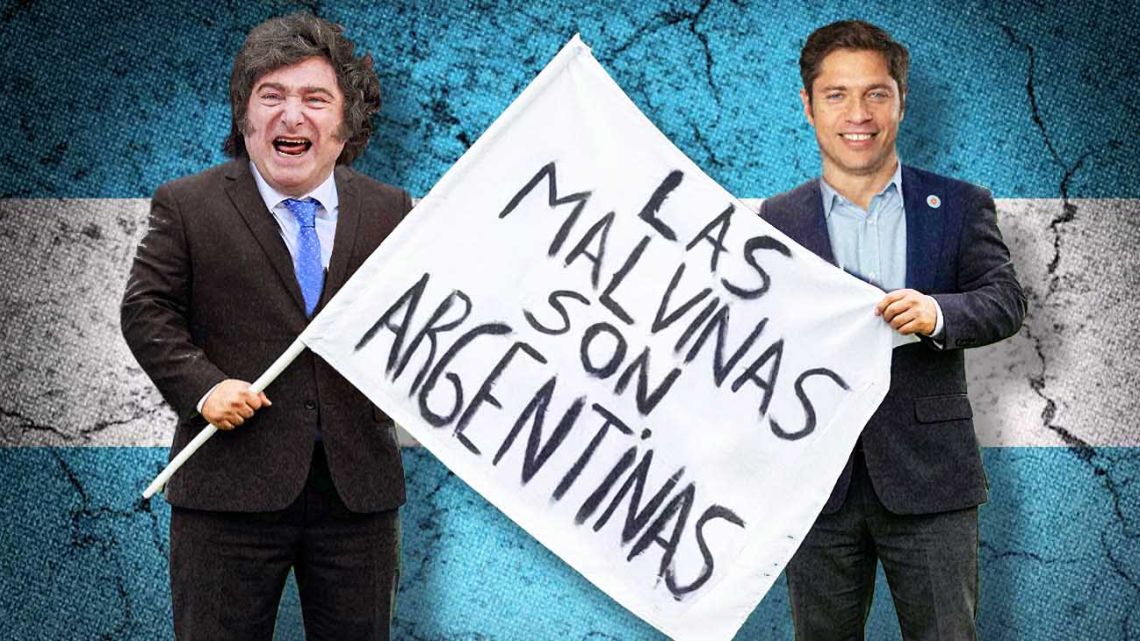
The World Cup gave society a much-needed rest from the intensity of the political agenda. Yet one of the defining moments of the tournament was the now famous banner that bore the handpainted legend: “Las Malvinas son Argentinas.” Held up by some players in the aftermath of the epic Argentine victory against England in the World Cup semi-finals, it struck a deep nerve and awakened a nationalistic feeling that had been somewhat numbed. Football has a capacity to rekindle dormant emotions, particularly in the country of Diego Maradona and Messi, and especially so when Argentina and England face off.
The players holding up the banner a group of fans had thrown at them quickly became a political symbol, particularly given the Milei administration’s relatively cold posture towards Argentina’s historical sovereignty claim. Indeed, the President is an admirer of former British PM Margaret Thatcher (Noticias magazine revealed the self-proclaimed anarcho-capitalist libertarian has a picture of the former British Prime Minister in his office in the Casa Rosada) and National Security Minister Alejandra Monteoliva agreed with authorities from FIFA and FBI in the lead-up to the match that Argentine fans were barred from entering the stadium with shirts and fans referencing the sovereignty claim. “We’ve defined that neither hate speech nor political content [should be expressed during the match], and ‘Malvinas son argentinas’ is a political message,” she said ahead of the clash. Asked after the encounter about the banner, Milei indicated it had been an “error” and that football shouldn’t be mixed with politics. The Argentine national football team was ultimately sanctioned by FIFA’s Disciplinary Committee for showing the banner, among other things.
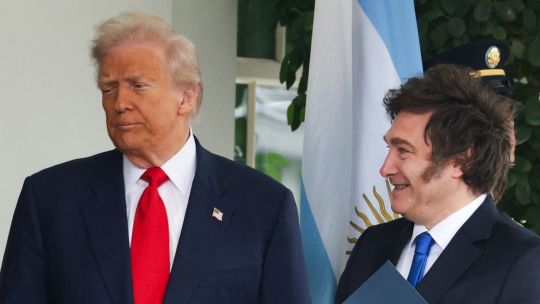
The Milei administration is now trying to own the Malvinas issue and is counting on the support of US President Donald Trump, who indicated this week that he is revising his country’s position on the matter. The remark came in the aftermath of a leaked internal memo from the Pentagon where it was suggested that the sovereignty issue could be used to pressure Great Britain in the context of Trump’s complaint that they raise their defence expenditure. Trump is directly tying his annoyance to the UK, given its lack of support for his military campaign against Iran. Milei noted that these were the most significant advances in Argentina’s sovereignty claim – ever – in his usual hyperbolic fashion.

It’s clear that Milei’s political team, whether it is controversial political strategist Santiago Caputo or those who respond to Presidential Chief-of-Staff Karina Milei, identified that their vague posture on Malvinas could become a major weak spot. As usual, they seek to appropriate the narrative in order to “flood the zone,” as Trump’s former strategist Steve Bannon once put it. Milei also has ample international noise to continue to position himself domestically. Since he took office, multiple Latin American countries have been “flipped” by the right, including Chile, Colombia, and Perú. The big prize is Brazil, with elections coming up and incumbent Luiz Inácio Lula da Silva seeing his lead fall into slim territory as Flávio Bolsonaro catches up. Milei, like Trump, are doing whatever they can to prop up Bolsonaro in an election that will likely go down to the wire.
The same thing could be said about next year’s presidential election in Argentina. At this juncture, the field is divided into five potential segments: the right, which has Milei’s libertarians and his frenemies in the former Juntos por el Cambio sector mainly led by Mauricio Macri; the Peronists, Buenos Aires Province Governor Axel Kicillof’s movement and Cristina Fernández de Kirchner’s jarring dissidence; and the spot reserved for a potential outsider who hasn’t yet managed to emerge.
This fragmentation could be resolved with the PASO primaries that Milei is looking to eliminate. Recent experience shows the PASO mechanism effectively works as a first-round vote, where fragmentation could lead to surprising results attained by a few percentage points. Indeed, the civil war between Horacio Rodríguez Larreta and Patricia Bullrich within Macri’s PRO party cost them a guaranteed spot in the run-off in 2023, eroding the force’s strength as they went into the first vote. In the 2023 PASO, Milei led the field with 29.86 percent of the vote, followed by PRO’s 28 percent (Bullrich had 16.8 percent compared to Larreta’s 11.2 percent), and the pan-Peronist coalition’s 27.28 percent (Sergio Massa took 21.43 percent and Juan Grabois, 5.85 percent). Milei went on to snatch second place in the first-round vote, and then beat Massa, the economy minister at the time, in the runoff.

Eliminating the primaries would help Milei ensure his opposition remains fragmented and save him from effectively facing a consequential vote ahead of time. Macri’s poor results in the 2019 PASO precipitated a run on the peso and the ticket of Alberto Fernández and Cristina Fernández de Kirchner went on to beat the incumbent by 15 percentage points. It could also allow Milei to show off his electoral strength and become the most popular single individual, particularly if he manages to ink a deal with Macri’s PRO, which would likely mean La Libertad Avanza withdrawing its candidate for Mayor of Buenos Aires City, where Jorge Macri will seek re-election. The Peronists would probably see their infighting stretched to the wire, as happened in the 2025 midterms, further eroding the value of their unity. Yet, it is difficult to imagine that Milei will conjure the support of circumstantial allies to achieve an absolute majority in both chambers of Congress. So the most probable scenario includes PASO primaries.
One hypothesis would put Milei leading the presidential ticket with some level of support from Macri’s PRO, facing off against Kicillof, who would be forced to carry a Kirchnerite on his ticket. The left could be represented by Myriam Bregman, whose support has grown in recent opinion polls into the double digits, potentially taking her into third place. Because she represents an opposition to Milei, Bregman could harm Kicillof in the first round but her votes would almost certainly fold into the Peronist’s in the run-off.
Will there be another horse in the race? Whether it’s an outsider like banker Jorge Brito or evangelical pastor Dante Guebel, or a political figure like economists Hernán Lacunza or Carlos Melconian, their more centrist approach could eat into the political base Macri is negotiating with Milei. In a run-off scenario, those votes could be divided. Is there space for the unexpected? Could someone even further to the right of Milei emerge? It’s unlikely, but the possibility should not be discarded.

Uncertainty is the name of the game, as we’ve said in this column before. Milei has the advantage of being the incumbent and having the resources of the state to seek re-election. Kicillof has a similar, albeit much more limited platform from the governorship of the nation’s most-populous province. And both of them promise to be genuine, meaning their rejection rates will be one of the defining factors, particularly if they both make it into a run-off against each other. The Malvinas sovereignty claim is just one of many tricks politicians will try to pull out of the proverbial magician’s hat.








Comments