

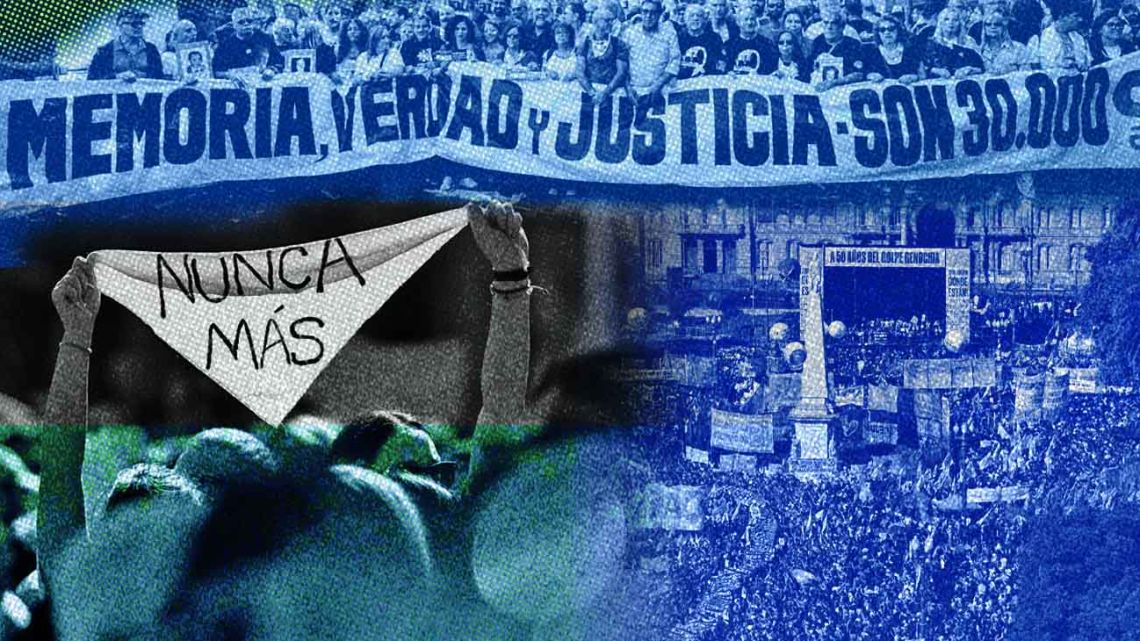
All that really needs to be known about the 50th anniversary of the 1976 coup is that around a million people gathered in Plaza de Mayo last Tuesday to repudiate the greatest tragedy in this nation’s history, a human concourse only eclipsed by celebrations of the 2022 World Cup – everything else is missing the point. People of all classes and ages, often in family, to confirm that democracy is alive and well despite the wear and tear of over four decades – one consensus still intact despite the increasing polarisation and fragmentation of the political scenario.
All this does not exclude politics raising its ugly head, including the polarisation and fragmentation. Far from any political component being absent from the march, the partisan manifestations were way too many although also generally less numerous than in some previous years, despite the special occasion. The 1976 coup overthrew a Peronist government and yet there was no Peronist march as such – instead there were columns of La Cámpora Kirchnerite militants, followers of Buenos Aires Province Governor Axel Kicillof and backers of 2023 presidential candidate Sergio Massa all coming from different directions. Nor did the organised labour spine of the Peronist movement get its act together with its CGT and CTA umbrellas marching separately. The far left typically split up into three columns. Only a few centrist parties like the depleted UCR Radicals were united while the ruling La Libertad Avanza gave the march a wide berth, even if libertarian ideology should by all rights be diametrically opposed to dictatorship.
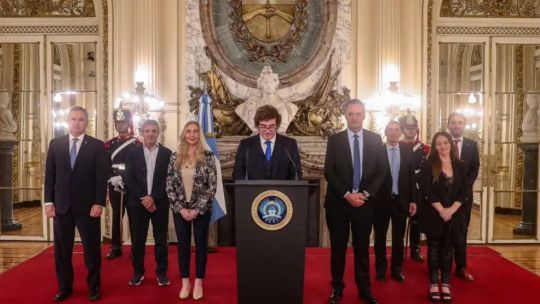
So much for the fragmentation but even worse was the polarisation striving to usurp this historic landmark. Perhaps the worst offender here was the government with its obtuse video insisting on making a flawed Kirchnerite interpretation of recent decades the heart of the issue instead of the coup itself, jockeying for electoral advantage instead of facing up to a continuing trauma so fundamental to this country’s decline.
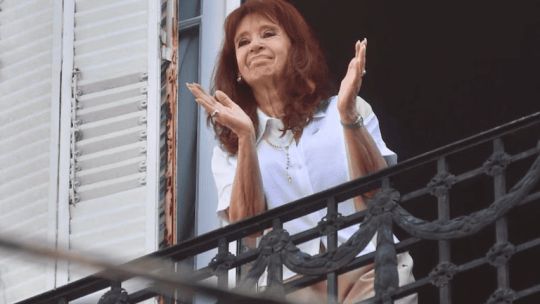
But almost everybody else was guilty of missing the point. At the other end of the polarisation the La Cámpora column making a detour in every sense of the word to ex-president Cristina Fernández de Kirchner’s flat (with one Greater Buenos Aires mayor obscenely equating her house arrest with the abduction and torture suffered by the dictatorship’s concentration camp victims) while some banners carried the photo of her son Máximo, born after the coup. Taking another example, workers of the doomed FATE tyre plant also sent a column to Tuesday’s march – their plight is genuine and the dilemma they pose between a protectionism leaving Argentina trailing the rest of the world and a free trade destroying employment is absolutely crucial for the country’s future but all this still has nothing to do with the coup and the 1976-1983 military dictatorship.

Everybody straying from this central theme should be denounced without fear or favour. The government’s insistence on “complete memory” serves some purpose in drawing attention to the victims of guerrilla violence often airbrushed in recent decades yet it could hardly go about “complete memory” more incompletely – placing them at the centre makes them exclusive instead of inclusive. Moreover, while estimates place such pre-coup deaths on either side of 1,000 (with a somewhat higher toll inflicted by the far right Triple A), this is numerically insignificant compared with the almost 9,000 desaparecidos listed by the CONADEP truth commission, never mind the emblematic 30,000 of the human rights organisations. In more qualitative terms, the preceding terrorist bomb attacks might serve to explain the coup, but no prior atrocity can ever justify it – far less the state terrorism which followed.
Nevertheless, none of the government’s perplexing failures to wave libertarian banners against dictatorship can excuse the widespread criticisms of President Javier Milei at the march (with the 1976 coup and its sequel the issue, not his administration) nor the paid ad signed by some 1,000 intellectuals equating Milei with the dictatorship, a sentiment echoed by many of Tuesday’s marchers – Milei came to power elected with a run-off vote of 56 percent in 2023, endorsed by over 40 percent in last October’s midterms, not via a coup.
Last Tuesday’s march was an occasion to look back in anger – not only to 1976 but also to the country beforehand with minimal poverty, a solid public education and a majority of homeowning and motorised middle-class households, all destroyed by the violence of the 1970s – but also ahead to see how the consensus underlying Tuesday’s march can overcome political abuse of the same landmark.









Comments