

For more than two decades, European farmers’ fears about South American competition held up negotiations over one of the world’s biggest free-trade deals.
Now that the pact is finally in effect, some producers in Mercosur nations Brazil, Argentina, Uruguay and Paraguay are starting to share those worries.
The deal between the European Union and Mercosur marked a dramatic shift for a quartet of countries known for aggressive protectionism. Since it took effect in May, industries accustomed to that shelter have started to reckon with the fact that access to the EU market comes with a sizeable trade-off: fiercer competition from European goods at home.
Safeguards included in the deal, which created a free-trade zone of 780 million consumers, may help many sectors cope.

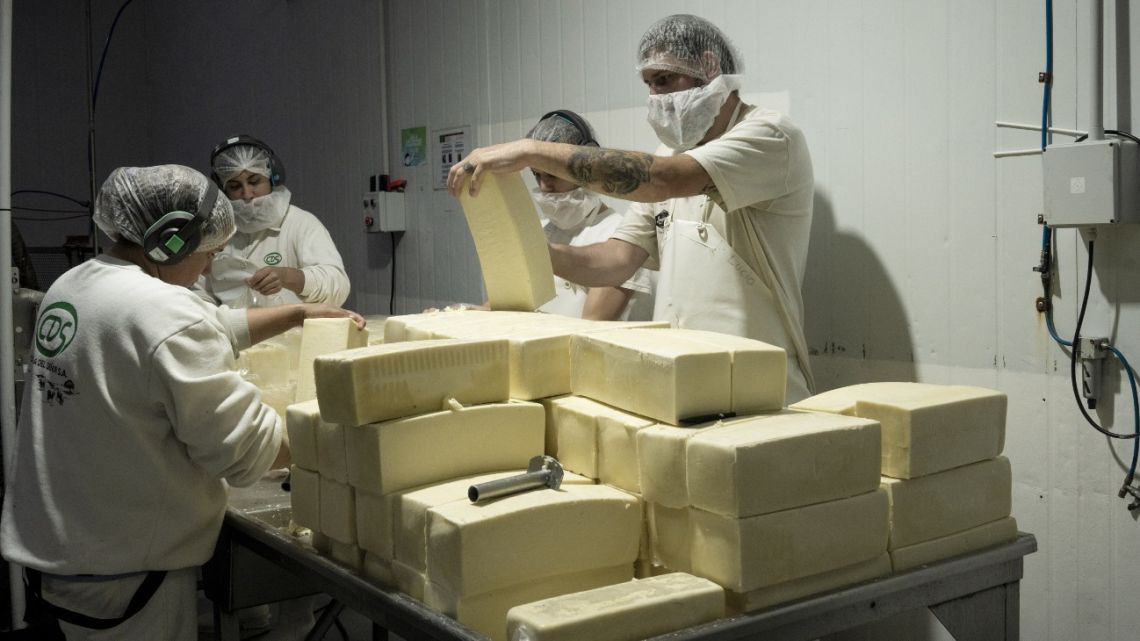
But producers of goods like wine, cheese, honey and chocolate are bracing for a flood of new foes. Some will also have to abandon famous product names – like Grana Padano, an Italian cheese – due to rules restricting their use on goods produced outside of Europe, although certain prior users will be allowed to continue.
“The premium cheese sector will be hit hard,” said Angelo Sartor, chief executive officer of RAR Agro & Indústria in Brazil. “Competition with Italian cheeses is already intense. Our Grana Padano will be at a clear disadvantage.”
Eager to get the deal done, Mercosur negotiators deliberately focused on the upsides for exporters in an effort to avoid the sort of backlash that erupted from angry farmers in France, Poland and other European nations, according to government officials familiar with the talks who requested anonymity.

Angst among producers that feel left out, however, could quickly complicate Mercosur’s attempts to build on the momentum. The bloc is now in talks about subsequent deals with Canada, Japan, the UAE and others.
Supporters argue the broader benefits of the EU-Mercosur accord outweigh any downsides for a customs union that had diminished in importance thanks to internal disagreements and growing trade with China that eclipsed internal commerce.
“It creates the opportunity for a common agenda, not only among member countries, but for the bloc as a whole,” said Marcelo Elizondo, chairman of the Argentine chapter of the International Chamber of Commerce. “Mercosur has to become more agile internally to compete with the EU.”

Brazil’s Luiz Inácio Lula da Silva, one of the pact’s fiercest champions, has similarly touted the deal as a victory for multilateralism in the face of Donald Trump’s global trade upheaval, and it’s already opened the door for separate talks over European investment into critical minerals.
Critics, though, say it risks cementing the Mercosur nations’ status as mere suppliers of raw materials, while gains will flow to powerful business interests.
“The deal benefits large-scale agribusiness at the expense of small family producers,” said Rodrigo Valério, marketing and sales director at Cooperativa Vinícola Aurora, a Brazilian wine brand. “What we want are measures that improve our competitiveness.”

The first test of Mercosur’s ability to adapt is underway, as members haggle over how to share the bloc’s duty-free quotas for products like honey and rice.
They’re currently operating under a first-come, first-serve system. But that setup weakens bargaining power of Mercosur exporters and favours those with established EU ties over newcomers, said Juan Labraga, a senior trade negotiator for Uruguay’s Finance Ministry.
Change would require the four members to agree on a new system in time to notify the EU by September for implementation next year. That will prove difficult with Brazil, by far the bloc’s largest economy, focused on October presidential elections, Labraga said.

Navigating the accord has proven a challenge even for seasoned exporters like Urimpex, an Uruguayan honey exporter that has sold to Europe for more than 50 years.
Christophe Lheritier, who runs Urimpex with his brothers, said he was surprised to learn the entire duty-free honey quota had been filled by mid-July. European importers already had tons of honey, primarily from Argentina, sitting in warehouses when the deal took effect.
He expects the agreement to help revive a struggling sector if it’s able to gain more access at current prices. Uruguayan exporters filled 18% of the quote this year but are pushing the government to seek a 25-percent share in Mercosur talks, he said.

Others are focused on opportunities the agreement offers to uniquely South American products.
Argentine dairy group APYMEL expects its 220 small and medium members to adapt and sell products like dulce de leche – a caramelised milk spread popular in the four nations – to European customers, Chairman Pablo Villano said.
“Companies aren’t going to close or fire people due to geographic indication rules for the simple reason that the cheese is still going to sell even if it’s called something else,” he said. “We are also going to try and get our products into the European Union.”
related news
by Beatriz Reis & Ken Parks, Bloomberg










Comments