

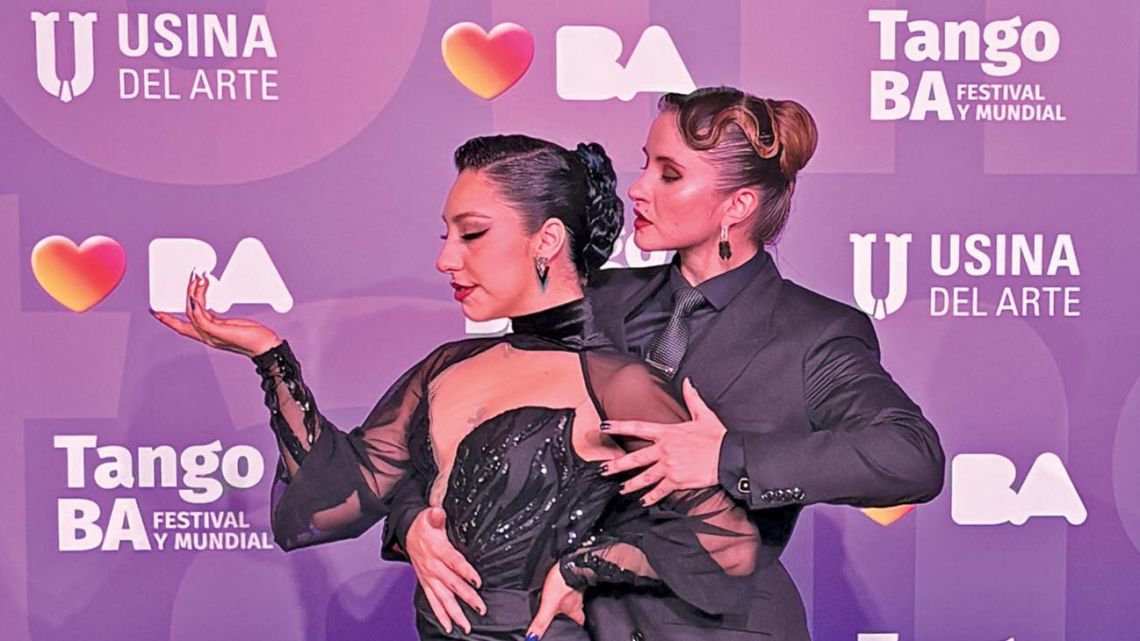
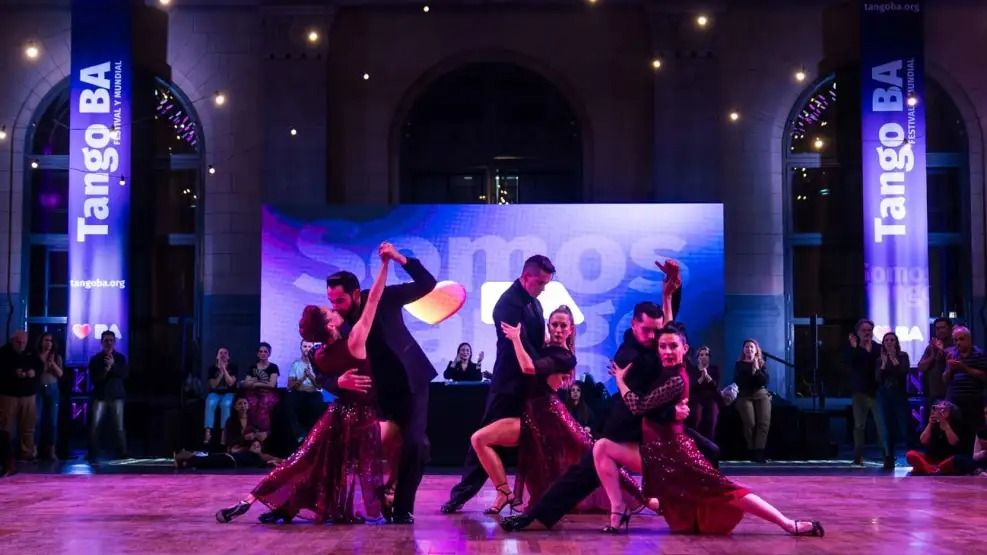
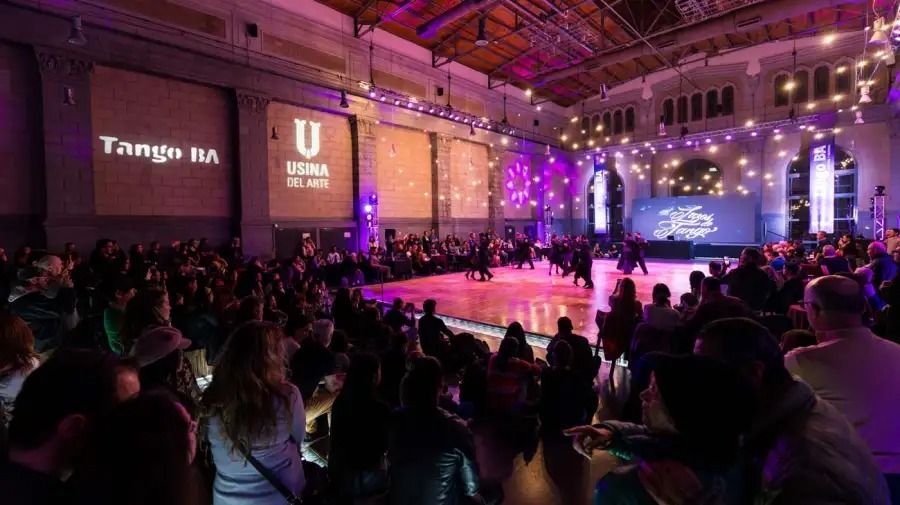
More than 800 couples from over 50 countries have converged on Buenos Aires for Tango BA Festival y Mundial 2026, transforming the nation’s capital into the epicentre of an international tango community whose influence now extends far beyond the dance floor.
For Martín Frosio, general producer of Tango BA Festival y Mundial since its first edition in 2003, that circulation between Buenos Aires and the rest of the world has become one of the clearest measures of the event’s evolution.
“What excites me most is seeing that the Mundial continues to grow without losing its essence,” Frosio said. “Every year more dancers arrive, more countries and more public, but what’s important is that tango continues to be at the centre of everything. The real growth is measured when a competition stops being only an event and becomes a cultural and tourism phenomenon with international reach.”
That balance, expanding the competition and festival’s international footprint while protecting its identity as an unmistakably porteño institution, is increasingly defining the event’s future. “The Mundial is not only a competition,” Frosio explained. “It is a celebration of Buenos Aires, of our identity and of a culture that today belongs to the world.”
International exposure
Contestants from over 50 countries are registered across the Tango de Pista and Tango Escenario categories, turning the competition floor into a snapshot of just how far Argentine tango has travelled.
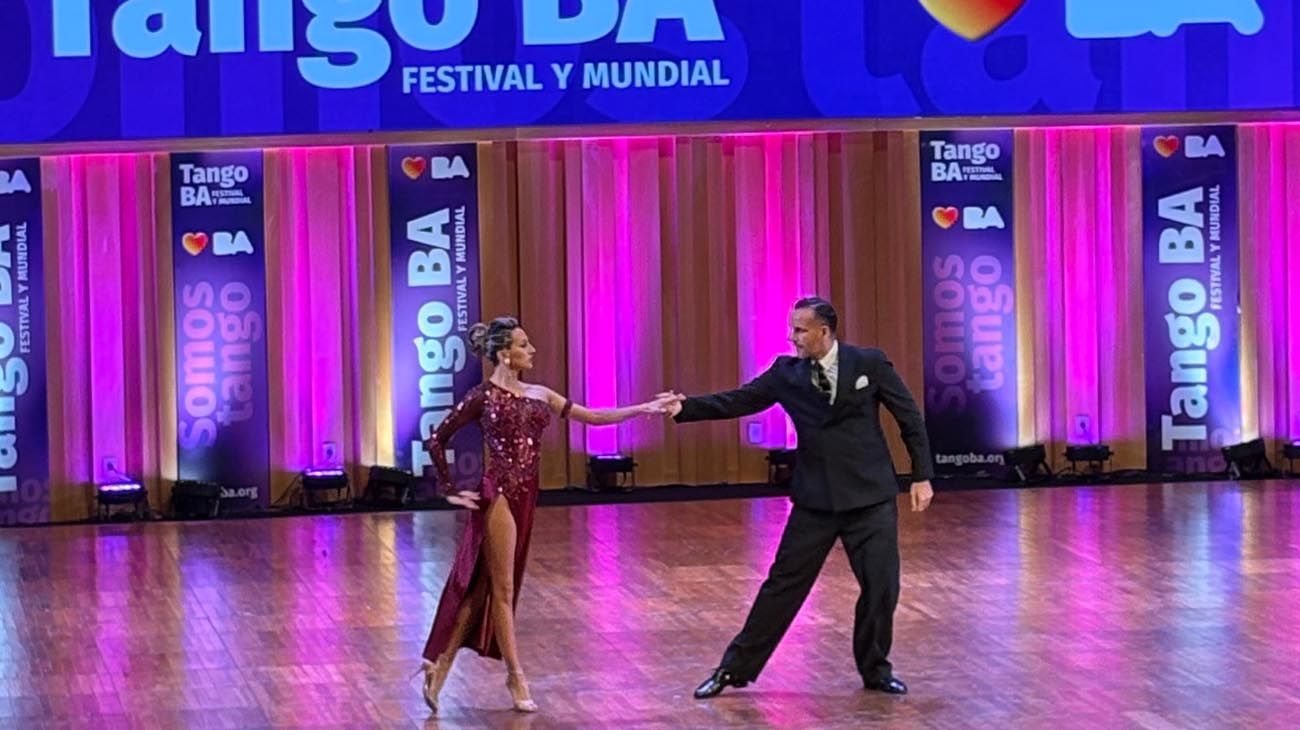
For the dancers, that international scale is palpable. Argentines Juan Cupini and Erica Rossi describe competing in the Mundial as both an enormous responsibility and an artistic opportunity. “Dancers come to this competition from all over the world with an extremely high artistic level, and being able to share the floor with them is a unique experience,” they said.
Even reaching the final rounds reflects how demanding the championship has become: dancers advance through the quarter-finals and semi-finals before attempting to earn a place in the final. “It is a moment of enormous excitement, but also of a great deal of work and learning,” Cupini said. “The entire process of preparing for the Mundial makes us grow enormously as artists, beyond the final result.”
The additional rounds are part of a broader effort to professionalise the competitive structure. Introducing quarter-finals for the Tango de Pista category is one example of how organisers are adapting to the Mundial’s ever-larger size, said Frosio.
Fourth-time entrants Federico Paleo and Lu Turka see visibility as one of the Mundial’s biggest benefits. “Competing opens many doors – it’s important that people see you and see that you’re part of it,” Paleo said.
The Mundial also gives audiences and the wider tango community to discover the people behind the performances. “They get to know us not only as artists, but also as people,” said Federico.
For Turka, that exposure is inseparable from the artistic process. “That’s what I like most about the competition, the growth and the process of arriving at something we like and showing who we are, our essence, our own style,” she said. “What matters most is the path travelled.”
Cupini and Rossi also see the Mundial as a platform with an impact that extends far beyond Buenos Aires. “The Mundial represents a great showcase for us, both nationally and internationally,” they said. “It is an opportunity for our work and our way of interpreting tango to reach different organisations, festivals and stages around the world.”
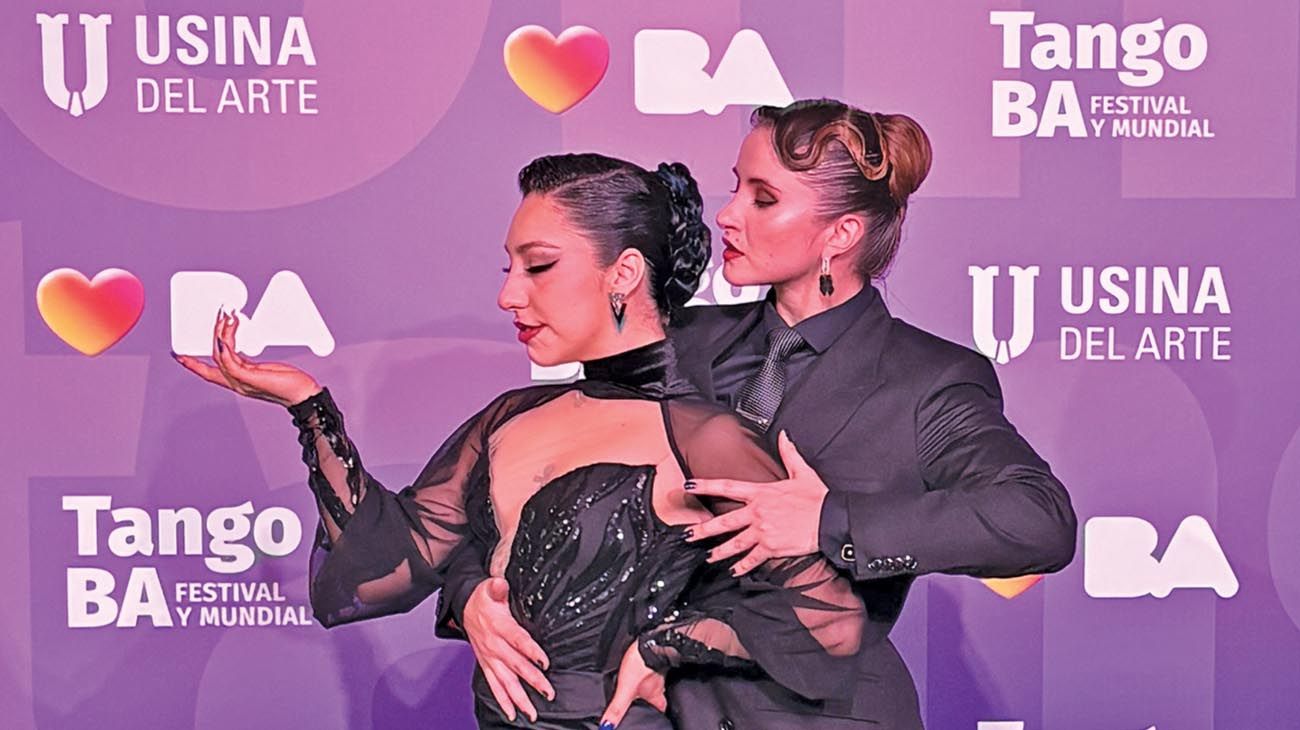
Preparation itself has become an artistic undertaking, from choreography and musical interpretation to costumes, hair and make-up. “We try to preserve and transmit the essence and roots of traditional tango in every detail, while also contributing our own identity and our own way of dancing,” Cupini explained.
For Frosio, that’s why the Mundial’s influence cannot be measured only by who ultimately lifts a trophy. “The Mundial does not only reward the champions,” he said. “It also generates work, circulation, training and new relationships for thousands of people who form part of tango culture.”
Road to Buenos Aires
Tango competitions take place around the globe. But there is one element of the Mundial that cannot easily be exported: Buenos Aires itself.
Polish dancers Jakub and Patricia Grzybek regularly travelled from their homeland to Argentina’s capital before eventually deciding to compete. By then, they had already danced around 50 shows in some of the city’s iconic milongas. In true BA-style, locals began dubbing them ‘los polacos.’
The couple deliberately chose the Mundial because of both the calibre of its dancers and its place in tango history. “Coming to compete feels very personal,” said Jakub. “We are not simply visitors for a competition. It is much more meaningful to test ourselves here, among the strongest, than simply to collect many other trophies.”
For Uruguayan dancer Tiziana Silva, Buenos Aires mattered enough that she chose to live in the city “purely and exclusively” because of tango. “Living here accelerates the learning process,” Silva said. “Buenos Aires has tango everywhere, 24 hours a day!”
The education she describes is not confined to steps and technique. “The people here are very emotional, just like tango, and that introduces you to a level that is very necessary for tango: sensitivity,” she said. “Your own dancing is nourished by the experience of other dancers – the best are here, and it’s inspiring.”
The championship’s globalisation means the road to Buenos Aires increasingly begins elsewhere. Throughout the year, official preliminaries create pathways to the Mundial in cities across Argentina and internationally. In 2026, that network extends to roughly two dozen cities, turning the championship into a year-round development platform. “The preliminaries are a way of taking the Mundial far beyond Buenos Aires and, at the same time, bringing the tango world toward our city,” Frosio said. “Throughout the year there are couples preparing, competing and dreaming of reaching Buenos Aires.”
Asia is one of the regions where Frosio sees particularly strong potential for growth. He singled out South Korea as a market where the Mundial is beginning to establish an increasingly important presence. But the ambition is not to export the competition. “My objective is to continue expanding that network,” Frosio said, “always taking care that international participation maintains its connection with Buenos Aires and with the original spirit of the Mundial.”
Tourist destination
Global reach also delivers a measurable impact on tourism, explains Fernando Amer, director of tourism promotion at Visit Buenos Aires, a public-private agency that promotes the capital. He says the event is especially valuable because it gives the city a strong international draw during a traditionally quieter period.
“Tango BA Festival y Mundial is an important tourism asset because it gives Buenos Aires a highly distinctive international reason to visit and helps concentrate demand around the city’s tango season, particularly in August, which is in our low season,” Amer said. “The destival helps the destination by breaking its seasonality.”
The audience is not exclusively international. Amer said the festival also attracts porteños and visitors from across the country, broadening its impact beyond foreign tourism.
What makes tango tourism particularly valuable, he said, is that visitors do not experience the Mundial as a single event isolated from the city around it. “Tango tourism is different because the event is not simply something visitors attend; it is an entry point into a living cultural ambience that exists throughout Buenos Aires all year round,” Amer said.
That distinction shows up in how long visitors remain in the city. According to Amer, attendees typically stay for more than 10 nights, using the trip to participate in other tango experiences, including visits to milongas and classes at the city’s many tango academies.
The extended stay also carries a much broader tourism footprint. The Mundial itself unfolds over 12 days, but spending associated with it trickles down through accommodation, restaurants, transportation, nightlife, tango schools, private lessons, clothing and footwear businesses and much more. “When a foreign dancer arrives, they don’t only participate in a competition,” Frosio said. “They need accommodation, transportation, food, they consume in shops, take classes, go to milongas and very often extend their stay.”
Many visitors structure their trips around more than the championship: private instruction by day, social dancing by night, performances, restaurants and the broader experience of the city. “Tango functions as an enormous gateway into the city,” Frosio said. “For many people, getting to know Buenos Aires also means getting to know the place where the culture they love was born and developed.”
For Visit Buenos Aires, that relationship between tango and destination is unusually powerful. “Tango is one of the most powerful cultural identifiers of Buenos Aires internationally,” Amer said. “It is not simply one attraction among many; it is part of the city’s identity and one of the few cultural experiences that can be immediately associated with Buenos Aires around the world.”
Tango was inscribed on UNESCO’s Representative List of the Intangible Cultural Heritage of Humanity in 2009. Global recognition gives the Mundial particular value as a tourism-marketing platform, said Amer. “The event turns an abstract brand association – ‘Buenos Aires, the city of tango’ – into a concrete international reason to travel,” Amer said. “It provides a platform that connects the city’s cultural heritage with contemporary performers, dancers, teachers, venues and audiences from around the world.”
Yet one part of the Mundial’s economic story remains less clearly quantified. Frosio acknowledges that organisers do not yet have a comprehensive measurement capturing all of the economic activity generated.
“One of the challenges we have going forward is precisely to measure that impact better,” he said, “because tango generates very broad economic activity that is often invisible in traditional statistics.”
Ecosystem
The Grzybeks’ experience illustrates precisely what statistics struggle to capture. “Embracing in milongas, listening to the live orchestras here, feeling people’s vibe and understanding the way tango exists in everyday life changes our awareness of the dance,” Jakub said. “Every time we return, we discover something new – and we take that experience back to Poland, to our students and to our own artistic work as dancers or choreographers.”
International dancers consume the city’s tango culture while they are here, but they also become transmitters of it when they return home. That less visible economy begins with the people behind the dancers: teachers and academies preparing competitors, orchestras and DJs supplying music, photographers documenting performances, producers creating shows, designers constructing costumes, shoemakers, venues and milongas sustaining tango’s social infrastructure throughout the year.
“The Mundial is only the visible tip of an enormous ecosystem,” said Frosio. “When it grows, that entire ecosystem has greater visibility and greater opportunities.”
That ecosystem extends well beyond Argentina. In Los Angeles, Tanya Spektor and Dennis Cante – who run the Gavito Tango Festival and monthly Milonga Gavito – describe returning to Buenos Aires as a way of reconnecting with tango at its source.
“This is where tango lives and breathes,” they said. “Being on the floor alongside couples from more than 50 countries feels bigger than a competition – it’s a celebration of the culture we have dedicated so much of our lives to. There is an energy and emotion here that simply cannot be replicated anywhere else.”
That cultural exchange could become increasingly significant as Los Angeles prepares to host the 2028 Olympic and Paralympic Games. Frosio sees LA28 as a potential opportunity for Buenos Aires and Argentine tango. “Los Angeles could be a very interesting city for developing activities connected with tango,” he said.
The concept matches Frosio’s vision for the next five years: a more international competition, supported by stronger preliminaries, and a festival with greater educational and artistic exchanges with cities where tango communities are thriving.
But there is one thing he does not want it to become. “I don’t imagine a Mundial that loses its identity to simply become an international franchise,” he said. “On the contrary, I want more and more people around the world to want to come to Buenos Aires because they know that the great global celebration of tango is here.”
Proximity and ritual
The more successfully tango travels around the world, the more important that distinction becomes. Buenos Aires offers something beyond learning the steps: proximity to tango as a living culture.
Silva finds it in a city where tango exists 24 hours a day. The Grzybeks find it in its milongas, orchestras and everyday rituals. Spektor and Cante carry it home to their Los Angeles community. Cupini, Rossi, Paleo and Turka find it on a competition floor where Argentine dancers encounter an increasingly formidable international field, forcing them to up their game.
Together, their experiences help explain why the Mundial’s growing internationalisation has not diminished the city’s importance, but increased it.
For Frosio, the evolution is also deeply personal. He has produced the event since its first edition in 2003, giving him a perspective spanning more than two decades of its transformation. “My greatest pride is being able to see the growth and evolution of this wonderful event,” he said. “I have been the producer since its first edition in 2003, and seeing it grow year after year only confirms that when you put love into what you do, you see the results.”
For all the scale of the 2026 event, his own definition of success is strikingly human. He wants dancers to feel they competed in an increasingly fair and professional championship. He wants international visitors to feel welcomed. And he wants Buenos Aires to demonstrate over and again why it is the world capital of tango.
Most of all, he wants Buenos Aires to exert the same pull that brought so many dancers to the Mundial in the first place. “I will feel that 2026 was a success if we manage to have someone who arrived in Buenos Aires for the first time leave thinking about coming back,” Frosio said.
Listen to the competitors and that cycle is already underway. The statistics show how big the Mundial has become, but the dancers reveal why Buenos Aires still matters. Perhaps that is the most important measure of the Mundial’s global success: not simply that Buenos Aires can bring the world here for 12 days, but that when the world leaves, it carries a piece of Buenos Aires with it – and wants to come back.
related news

by Michelle Edgar, Buenos Aires Times
Image Gallery







Comments