

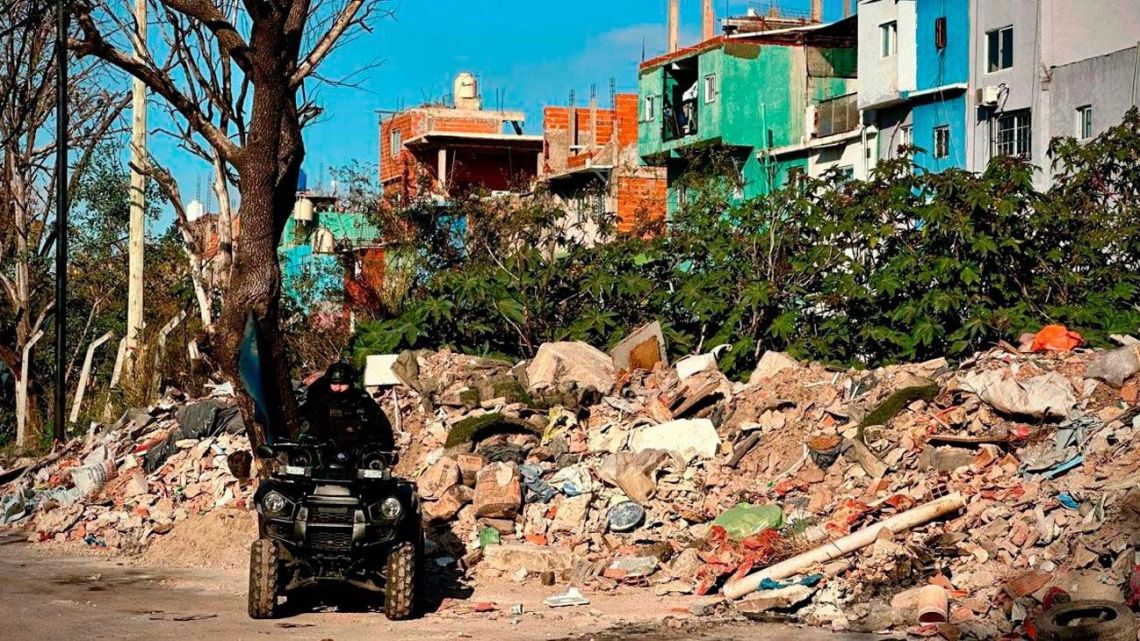
Six in 10 residents of Argentina’s low-income neighbourhoods have borrowed money to buy food, while more than four in 10 say they have gone days without eating because they lacked the money, according to a new survey..
The findings, taken from a report by the Instituto Periferias, highlight growing pressure on household finances in Argentina as families increasingly rely on debt to cover basic needs.
Of those consulted, 59.8 percent of residents in the poorest areas have had to go into debt to buy food, while 43.7 percent said they went days without eating because they lacked the resources to buy food.
The survey found that 75.4 percent of households in low-income neighbourhoods cannot cover their basic expenses, while 61.8 percent have taken on some form of financial debt.

"Debt has become a chronic pattern," said Daniel Menéndez, director of the Instituto Periferias and a leader of the left-wing Barrios de Pie social organisation.
The survey, conducted in August among 4,742 people across 15 Argentine provinces, found that debt is increasingly being used not for exceptional expenses but to meet everyday needs, including food and basic services.
"In the past, debt was associated with a girl turning 15, a wedding, an unexpected expense, the car breaking down, a funeral – a situation in which you would borrow from neighbours and go into debt," Menéndez said. "Now the level of indebtedness is absolutely extraordinary and cannot be explained separately from the broader context."

Access to healthy food has also declined among low-income sectors. The survey found that 73.4 percent of people living in these neighbourhoods cannot afford healthy and nutritious food.
Menéndez linked the figure to the loss of purchasing power among informal workers and said that "the problem linked to income, food and nutritional quality is emerging."
More than half of those surveyed, 53.8 percent, said their household had at some point run out of food. A more serious situation was reported by 43.7 percent, who said they had gone days without eating. Meanwhile, 26.5 percent of households reported moderate food insecurity, in which the quantity or quality of food available had been compromised.

Food insecurity is closely linked to the normalisation of debt, with 59.8 percent of respondents saying they had borrowed money to put food on the table.
Some 61.8 percent of families in low-income neighbourhoods are carrying debt, spread across different types of financial obligations. Credit card was the most common, accounting for 44.8 percent of responses; loans from family members or friends ranked second, reported by 31.9 percent of households. Loans from private individuals accounted for 27.3 percent of mentions, while loans provided through fintech apps accounted for 23.9 percent.
Overdue payments for basic services accounted for 21.9 percent of cases. The survey also recorded informal loans from loan sharks, affecting 11.6 percent of those consulted.

Asked about the country’s main problems, six in 10 residents (61.2 percent) of low-income neighbourhoods identified hunger and poverty as their main concerns. Fears over loss of employment was reported by 49.4 percent.
"You can see how, under this economic model, the destruction of industry has a greater impact in the urban outskirts and peripheral areas," Menéndez r
Menéndez stressed that such concerns are linked to an increase in mental health problems, with 58.2 percent of those surveyed experiencing anxiety or sadness because of their economic situation.
– TIMES/NA
















Comments