

`
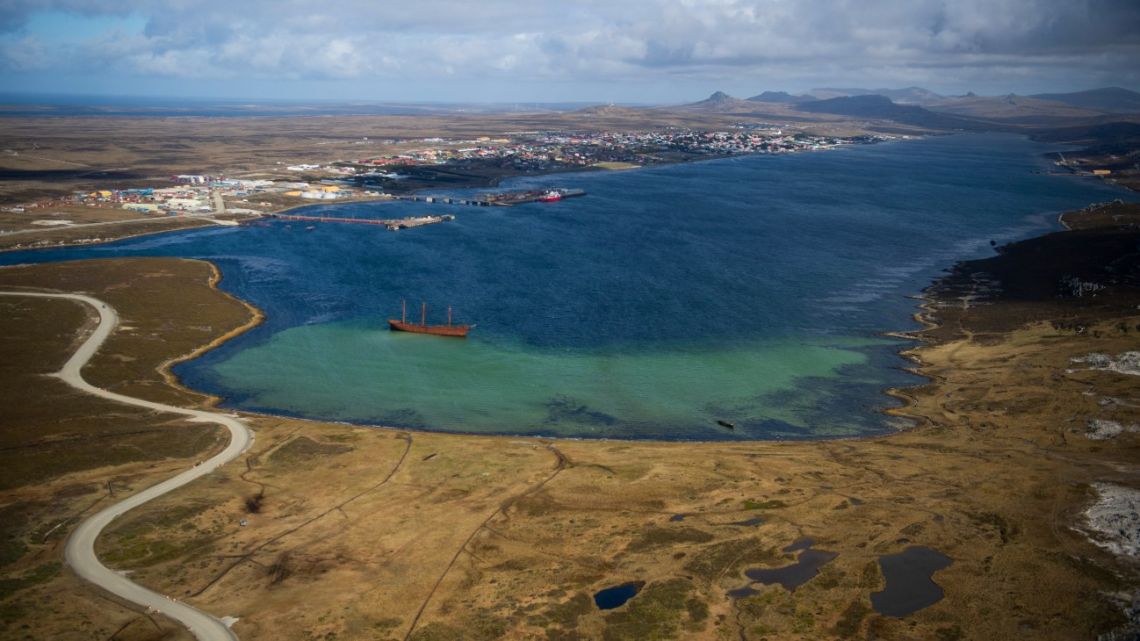
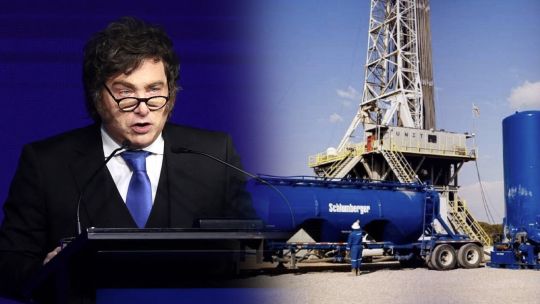
President Javier Milei's national government sought to turn the page and retake control of the political agenda with this week’s national television address, in which the President announced decrees and bills to be sent to Congress toughening penalties for the unilateral exploitation of resources in the Malvinas (Falkland) Islands, alongside the creation of a National Security Council modelled on its US counterpart, the National Security Council (NSC).
In doing so, Milei’s government managed, at least momentarily, to recover the initiative. To reclaim political centre stage and land a blow that puts the opposition on the back foot. Even, to put the internal tensions between Presidential Chief-of-Staff Karina Milei and top adviser Santiago Caputo on ice.
After the speech, which began at 9pm on Thursday and lasted around 15 minutes, there was "renewed optimism" inside the Casa Rosada. This followed weeks in which the President's style and the economy's weak results had taken a heavy toll on his administration's approval ratings and on his personal image in every opinion poll consumed by the ruling camp.

The wing aligned with Karina Milei recognises the work done by adviser Caputo, who managed to "bring order to the discourse" and allow the government go on the offensive in the public arena, with rhetoric considerably tougher in theory than the sanctions are likely to prove in practice.
The speech was also well received by legislative caucuses, which listened with "enthusiasm" to the prospect of debating tougher penalties in Congress,, particularly with an eye on the Sea Lion offshore project mentioned by Milei, in which British firm Rockhopper and Israeli company Navitas Petroleum are partners. Their shares plunged this Friday.
According to sources close to the ruling party, intelligence provided by Argentina's Secretariat of Intelligence (SIDE) was key to confirming that the start of drilling was imminent, a development that would represent a setback for Argentina's sovereignty claim.

There was also internal friction caused by Senate ruling party caucus leader Patricia Bullrich, who in a radio interview spoke of an "invasion" when referring to the recovery of the islands carried out by the last dictatorship, then led by Leopoldo Galtieri, a phrase that aligns her with the British position.
While there were voices within the ruling party's own ranks who did not let the communications misstep pass unnoticed, it is also worth noting that most preferred to focus on the positive impact of Milei's announcements. Within the ruling party themselves, it is acknowledged that the words carried more of an "emotional" component than a "practical and material" one.
There was also talk within ranks of having made Vice-President Victoria Villarruel uncomfortable, overshadowing part of her own message and a key item on her agenda. This was probably not part of the original calculation, but it ended up being one of the positive side-effects of the national address.

The recording of the address, filmed in Casa Rosada’s Salón Blanco (White Hall), also produced some colour. Defence Minister Carlos Presti walked away with the presidential speech, autographed by Milei with the phrase "Viva la libertad carajo,” a moment captured on social media. Does Presti still believe, as he said back in April, that the sinking of the ARA General Belgrano did not constitute a war crime?
The mastermind behind the national address and the chief architect of the President's words was adviser Santiago Caputo who, perennially under siege internally from the head of state’s sister, managed to regain ground and extend his influence.
The so–called "Kremlin wizard" quickly grasped that the banner displayed by the national football team's players at the World Cup after beating England, reading "Las Malvinas son Argentinas," had activated a latent sentiment within society: "the sacred cause," as he himself called it on social media in a post.

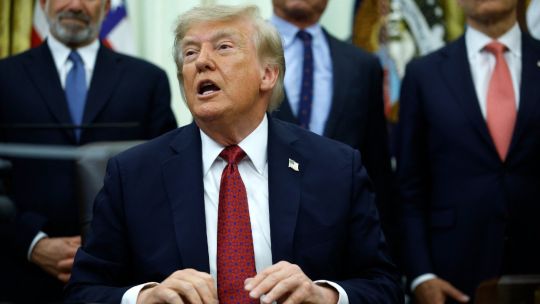
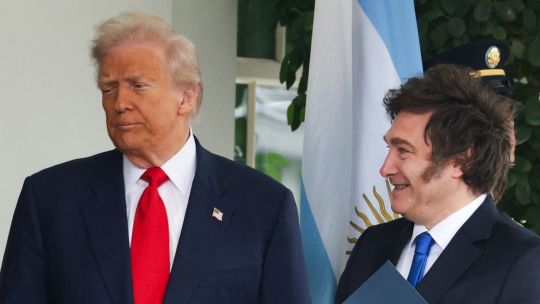
There was another central factor: timing, and a sense of opportunity. Milei made his announcements just as Donald Trump publicly stated he was open to revisiting the United States' position on the Malvinas sovereignty claim.
Regardless of the address's internal fallout, Milei and his administration also strung together some diplomatic wins on Thursday that added further shine to the announcement.
During his visit to Chile, the President held a meeting with Sarah Rogers, US Under Secretary of State for Public Diplomacy, after speaking at the Madrid Forum. It was a suggestive encounter given Trump's recent comments on the Malvinas.

He also brought back from across the Andes a reaffirmation of support from Chilean President José Antonio Kast for the sovereignty claim, which prompted a joint statement from both countries' foreign ministries.
In practice, this amounts more to a gesture than to concrete support, given that Chile is set to open a trade route between Punta Arenas and the Argentine archipelago.
Beyond the satisfaction over the address, Milei has relaunched his government and his presidential career by appropriating an issue that, until a few days earlier, had not been on his agenda.

There was also the announcement of an integrated naval base to be built in the city of Ushuaia. The plan raises doubts, however, given the project's budgetary difficulties.







Comments