


Of Latin America’s main economies, Argentina received the least foreign direct investment (FDI) in 2025, according to a new report.
Despite the incentives offered through President Javier Milei’s RIGI investment incentive scheme, the country attracted just US$3.134 billion and ranked behind smaller economies such as Costa Rica.
The finding, drawn from a report prepared by the Misión Productiva NGO and based on data from the Organisation for Economic Co-operation and Development (OECD), reflects the persistent difficulties in creating an attractive business climate for long-term capital inflows, even despite specialist incentive schemes.
According to OECD data, Brazil was by far the leading recipient of foreign direct investment in the region, attracting US$76.877 billion during 2025. Mexico ranked second with US$40.871 billion, followed by Chile with US$13.152 billion and Colombia with US$11.462 billion.

Further down the list came Costa Rica, with US$5.733 billion, while Argentina occupied the final position in the ranking with net FDI of US$3.134 billion.
The report highlights that even considerably smaller economies have managed to attract larger inflows of foreign capital, underlining the structural difficulties faced by the Argentine economy in attracting sustained productive investment.
“The contrast reflects Argentina’s persistent difficulties in establishing itself as a destination for long-term productive capital, even in sectors where the country possesses competitive advantages and strong regulatory incentives,” the report states.

One of the central points of the analysis is that Argentina’s poor performance continued despite the implementation of the RIGI investment incentive scheme – one of the Milei’s government's flagship initiatives for attracting foreign capital, particularly in sectors linked to energy, mining and natural resources.
However, Misión Productiva warned that projects associated with RIGI are not sufficient to generate a broad-based investment process across the wider economy.
The report stressed that the ability to attract investment does not depend solely on regulatory or fiscal incentives, but also on factors linked to the overall functioning of the economy, such as the level of economic activity, access to credit, macroeconomic stability and growth prospects.

Among the main factors explaining Argentina’s poor performance in attracting foreign investment, Misión Productiva cited the sharp decline in consumption and domestic demand, halt in public works projects, scarcity of productive credit, currency appreciation and the deterioration in the competitiveness of tradable sectors.
The report also mentioned the high degree of uncertainty surrounding the future sustainability of the macroeconomic framework, given that President Milei will face re-election next year, and the weakness of the SME sector, together with the decline of labour-intensive industries.
“Foreign investment is unlikely to expand in a sustained manner in a context of depressed domestic demand, idle installed capacity and the absence of long-term financing,” the report noted.

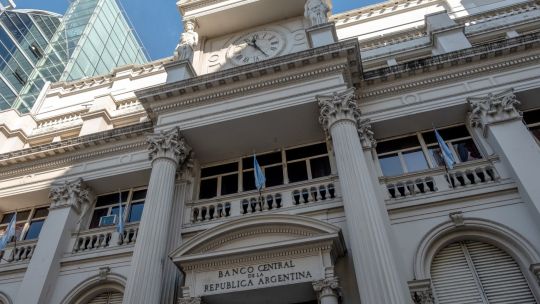
According to the latest quarterly Foreign Direct Investment (FDI) balance report produced by the Central Bank, the fourth quarter of 2025 recorded net FDI outflows of US$4.687 billion, mainly as a result of the repayment of commercial debt between related companies.
According to the official report, FDI investment income reached US$1.436 billion during the period analysed. More than half of this figure came from the manufacturing industry and mining and quarrying sectors, which accounted for 26 percent and 25 percent of the total respectively.
The total stock of foreign direct investment in Argentina had reached US$181.037 billion by the end of 2025, according to the OECD. Of this total, US$126.618 billion corresponded to equity holdings and US$54.419 billion to debt instruments.

The manufacturing industry continued to be the main destination for FDI, with holdings totalling US$61.235 billion, followed by mining and quarrying with US$50.921 billion. Together with wholesale and retail trade, these sectors accounted for 71 percent of the total amount of foreign investment in the country.
By country of origin, the United States remained the principal source, with holdings of US$32.060 billion, equivalent to 18 percent of the total. Spain followed with US$25.715 billion, and the Netherlands with US$21.580 billion.
– TIMES/NAw













Comments