

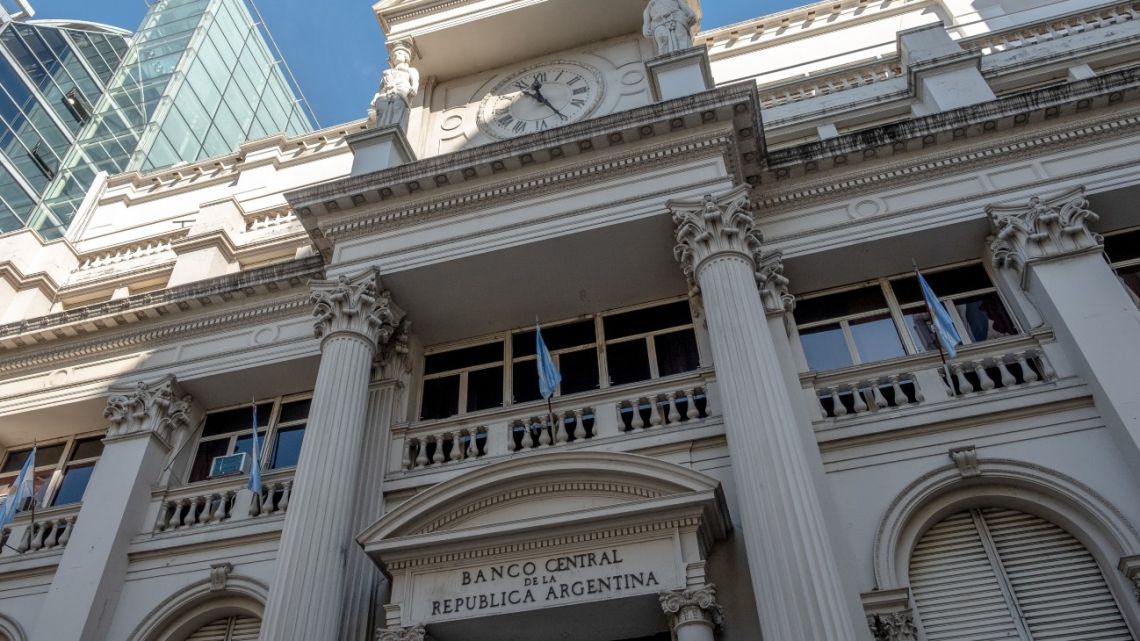
A wave of dollars flowing into Argentina is giving President Javier Milei room to let the peso trade more freely, as the Central Bank’s once depleted foreign reserves have hit the highest level since 2019.
Despite Milei’s affinity for free markets, he’s kept a tight grip on the currency since he took office as bringing down inflation shored up his support among voters. Some capital controls are still in place but other tactics are starting to ease.
The Central Bank’s position in dollar futures – a tool policymakers use to strengthen the peso – has fallen to US$2.1 billion, about a third of the level it had reached around last October’s midterm elections and the lowest since June 2025, according to official figures published last Friday on the Central Bank’s website.
The drop marks a sharp pullback from the heavy presence authorities had maintained last year to contain a peso sell-off, including selling dollars, futures and FX-linked securities. Beyond those moves, the US Treasury even bought the Argentine currency last October to shore up Milei’s party before crucial midterm elections that they went on to win.

“This is the moment of least intervention,” said Juan Manuel Truffa, an economist at Outlier. “There is a very strong flow of dollars, and it is not explained only by the main harvest season, as it usually is every year. That allows the government to avoid being as present as it has typically been to keep the exchange rate in check.”
The Central Bank has not only moved away from the dollar sales it resorted to before the October midterm vote, but has also been rebuilding its cash coffers. Argentina’s foreign reserves have risen to US$47.9 billion – more than double the level Milei started with – in part due to this country’s campaign to beef up its stockpile this year. Another US$1 billion also arrived this week as part of Argentina’s programme with the International Monetary Fund.
The increasingly hands-off approach is also seen in declining sales of FX-linked bonds, an asset denominated in pesos that the government had used to meet demand from investors seeking to hedge against the currency’s losses while absorbing excess pesos. Policy-makers also see a deeper change underway in Argentina’s notoriously volatile currency, which is down 99 percent over the past decade. Once tied to the boom and bust of crop harvests, the economy is receiving a more consistent flow of dollars year-round due to rising oil production, as well as provinces and companies tapping global markets.

“We see that this economy, fortunately, is reducing its dependence on seasonality,” Central Bank Governor Santiago Bausili said at a press conference last week. “That’s because it’s reducing its dependence on agriculture and because we are seeing growth in sectors that are not as cyclical, such as energy and mining.”
Although local markets may not swing as much on crop yields, a strong harvest this year has added to Argentina’s momentum of dollar flows, which are expected to total US$30 billion over the next six months. That windfall should let the Central Bank unwind its positions in an FX market where investors aren’t looking to hedge as much anymore, according to Mariano Calviello, head of trading at Banco Galicia.
“The market is pricing in very strong dollar supply in the coming months, which should allow the Central Bank to keep accumulating reserves,” Calviello said.

The risk, analysts warn, is whether Argentina’s economy – and local demand for pesos – genuinely picks up momentum before next year’s election cycle stokes market jitters again.
“What we still do not know is whether money demand is actually recovering,” said Juan Manuel Pazos, chief economist at consulting firm One618. While he does not expect Argentina to run short of dollars in the second half of the year, he warned there will be fewer than in the first. “If money demand does not improve, sooner or later seasonality and demand for hedges will come back.”
by Ignacio Olivera Doll, Bloomberg









Comments