

The future of Argentina's economy lies buried under the ground at over 3,000 metres (9,843 feet) in the Andes, according to President Javier Milei.
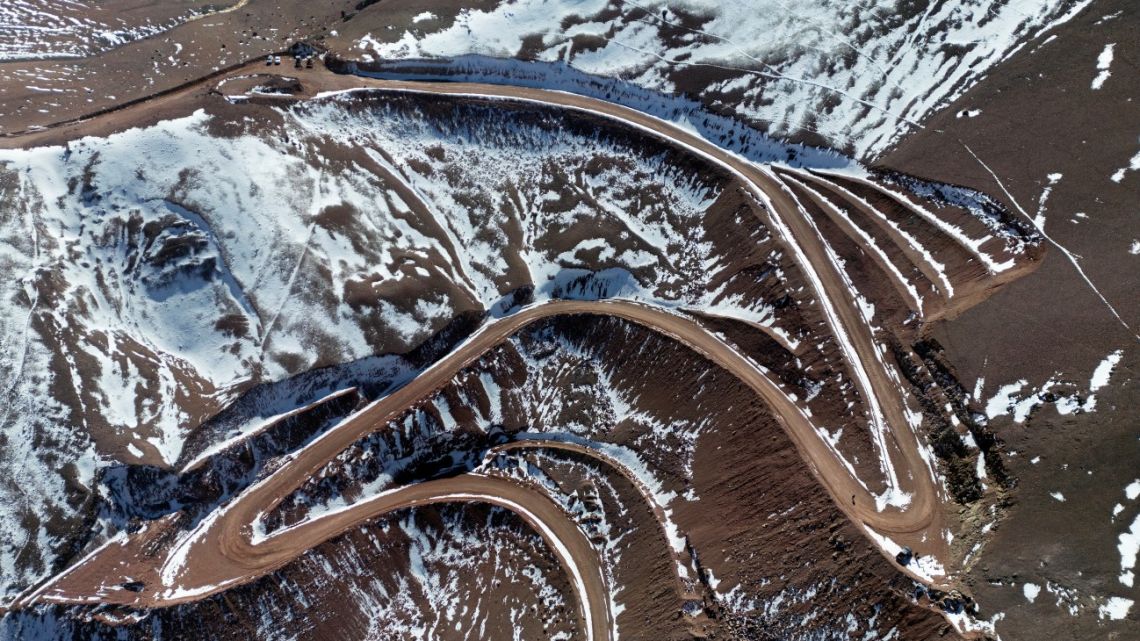
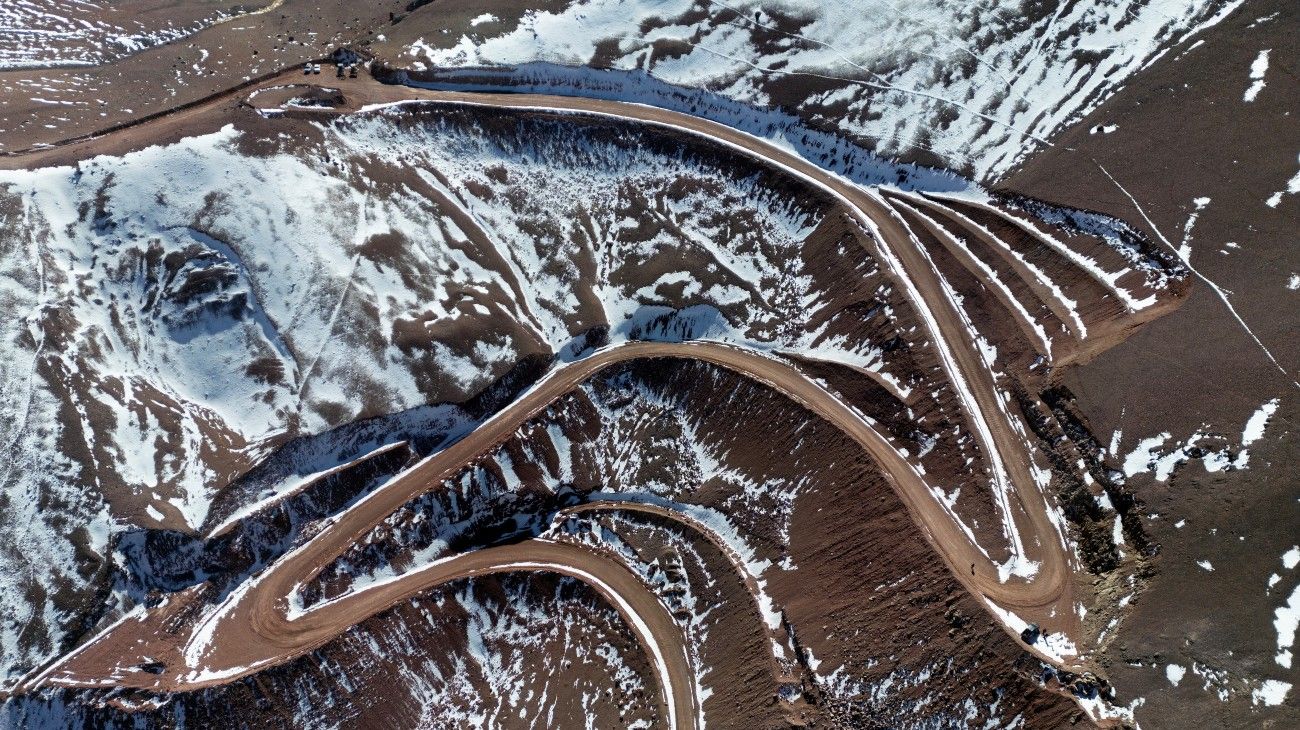
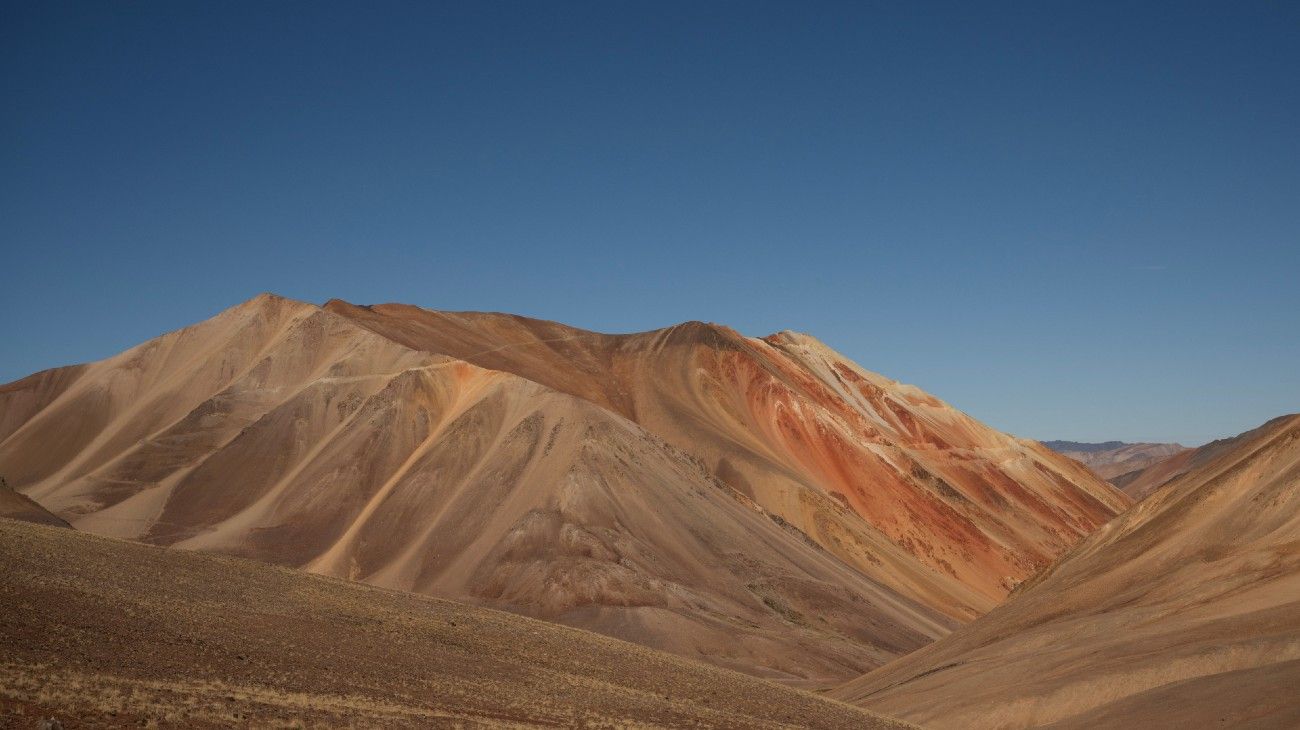
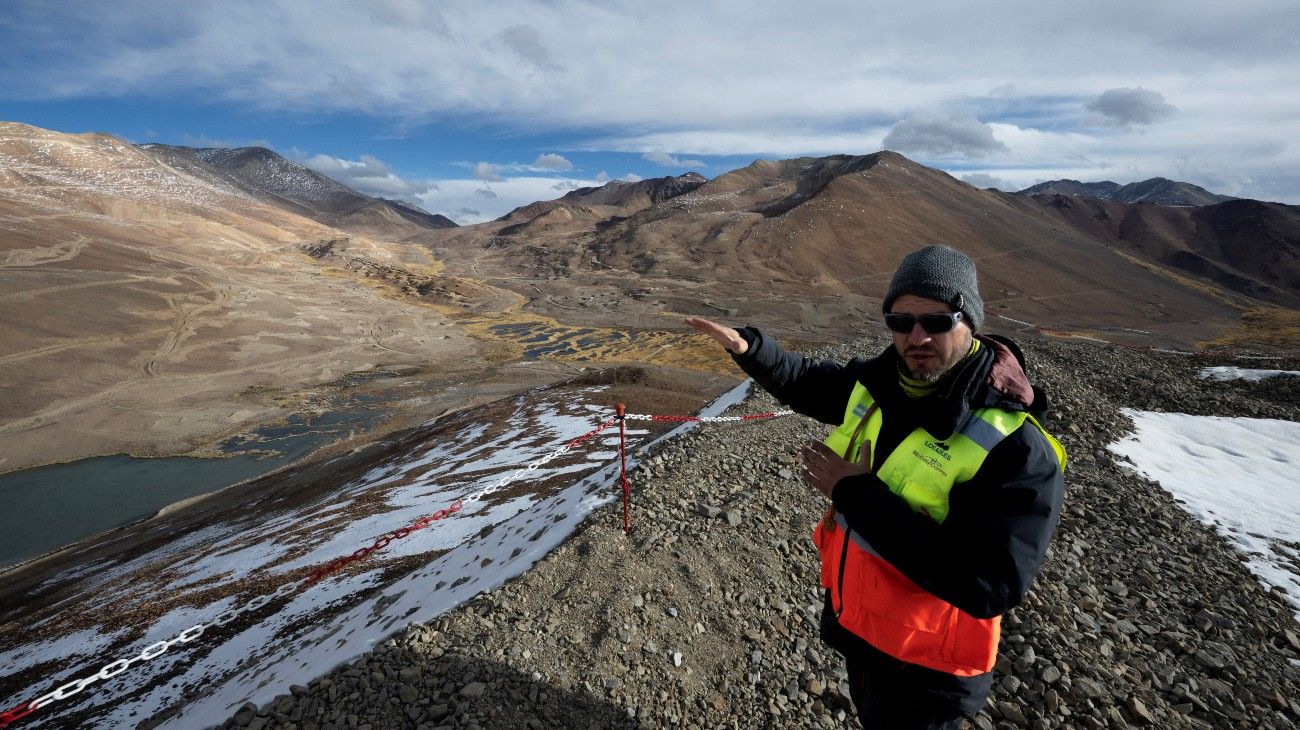
Up here, in a starkly beautiful landscape of snowy peaks, glaciers and mountains streaked with oxidised minerals, excavators are carving huge chunks out of the Andes in search of copper and other minerals.
Aldana Ramírez tries to warm up beside a brasero, a type of local heater, on a freezing night at Los Azules copper project in San Juan Province, the epicentre of Milei's mining “revolution.”
The 27-year-old technician supervises drilling work through the night at the remote camp, located at 3,500 metres above sea level near the Chilean border.

Construction of the mammoth open-pit mine, slated to begin production in 2030, has taken Ramírez away from her seven-year-old son, who lives down the mountain in her hometown of Villa Calingasta.
Hours of dirt roads surrounded by glaciers and streams lined with guanacos separate the camp from the town.
She misses her son, whom she sees every two weeks, but insists "it's worth the sacrifice."

"I love this job, I fell in love with it the first time I came up here," she declares above the din of excavators working round the clock.
Many of Calingasta's 11,000 residents depend directly or indirectly on mining for a livelihood.
Ramírez's father and three brothers also work in the industry, while many other local residents rely on agriculture and worry about the impact mining could have on scarce water supplies in the Andean region.
Jobs versus conservation
Since taking office in 2023, Milei has sought to boost mining in Argentina, a country famous for farming but which also has vast reserves of copper, gold, lithium and uranium.
In 2024, his government introduced the Major Investment Incentive Scheme (RIGI), a sweeping package of tax, customs and currency breaks designed to attract billions of dollars in mining and energy investment.
"Mining will take place across the Andes, generating hundreds of thousands of jobs," Milei told Congress in March.
Shortly afterward, lawmakers amended the country's glacier protection law to relax restrictions on mining in permafrost areas and allow provinces to authorise new projects.
Environmental groups challenged the changes in court, arguing they could endanger vital water supplies and glacier ecosystems, while the resulting legal uncertainty has alarmed investors.
The debate has deeply divided local communities, caught between hopes of jobs and fears over water security.
"People have to choose: either we protect water or we eat," said Alejandro, a gas station attendant in the mining town of Jáchal, two hours east of Calingasta.
He said he was not opposed to mining, but believed there were "too few controls" over major projects.
Memories remain fresh in Jáchal of a major 2015 spill at a Barrick Gold mine, where more than one million litres of cyanide solution leaked into waterways.
Massive reserves
Canadian company McEwen Mining, carmaker Stellantis and mining giant Rio Tinto are investing billions of dollars to develop the sprawling Los Azules mine, which is expected to yield 148,000 tonnes of copper a year over two decades.
Los Azules CEO Michael Meding said RIGI "had sent very important signals to international investors."
So far, nearly 40 projects have been submitted to the scheme, of which 16 have been approved for an estimated US$20 billion in investments.
In 2025, mining exports grew 27 percent to US$6 billion, driven largely by gold and lithium. Argentina is already the world's fifth-largest lithium producer.
The government expects mining exports to exceed US$20 billion annually by 2035, while Argentina’s Central Bank forecasts exports from the sector could triple by 2030.
Economist Nicolás Gadano said "the export matrix is being transformed" by mining and hydrocarbons, as Argentina seeks to overcome its historic shortage of foreign currency.
More than half of projected mining exports are expected to come from copper, which is essential for construction, the energy transition and artificial intelligence technologies.
South America's second-biggest economy has produced almost no copper since 2018 but has massive untapped reserves that could eventually place it among the world's ten largest suppliers.
Scramble
The boom has caused alarm among environmentalists who fear the scramble for critical minerals – and the precious dollars they inject into Argentina's economy – could endanger fragile water supplies.
In the northwest of the country, where mining activity is concentrated, glacial reserves have shrunk by 17 percent in the last decade, mainly due to climate change, according to glaciologists.
The mining pit at Los Azules, when completed, will cover an area equivalent to 840 football fields and plunge more than 300 metres deep, roughly the height of the Eiffel Tower.
To create it, part of a high-altitude wetland known as a vega will be removed. The marshy ecosystem acts as a natural sponge, regulates water flows and provides habitat for local wildlife.
Los Azules has pledged to become carbon neutral by 2038 and says its extraction method minimises water use.
Beyond environmental concerns and social acceptance, Argentina's mining boom also faces major infrastructure and energy challenges.
Back at the isolated camp, where cumbia music drifts through the relentless mountain wind during dinner breaks, drill operator Andrés Carrizo says workers must adapt to life together in harsh conditions.
"People are not always in the same mood," the 27-year-old said.
Still, he remains optimistic. "I hope this will all continue so that we all have work and can get ahead."
related news



by Tomás Viola, AFP
Image Gallery









Comments