

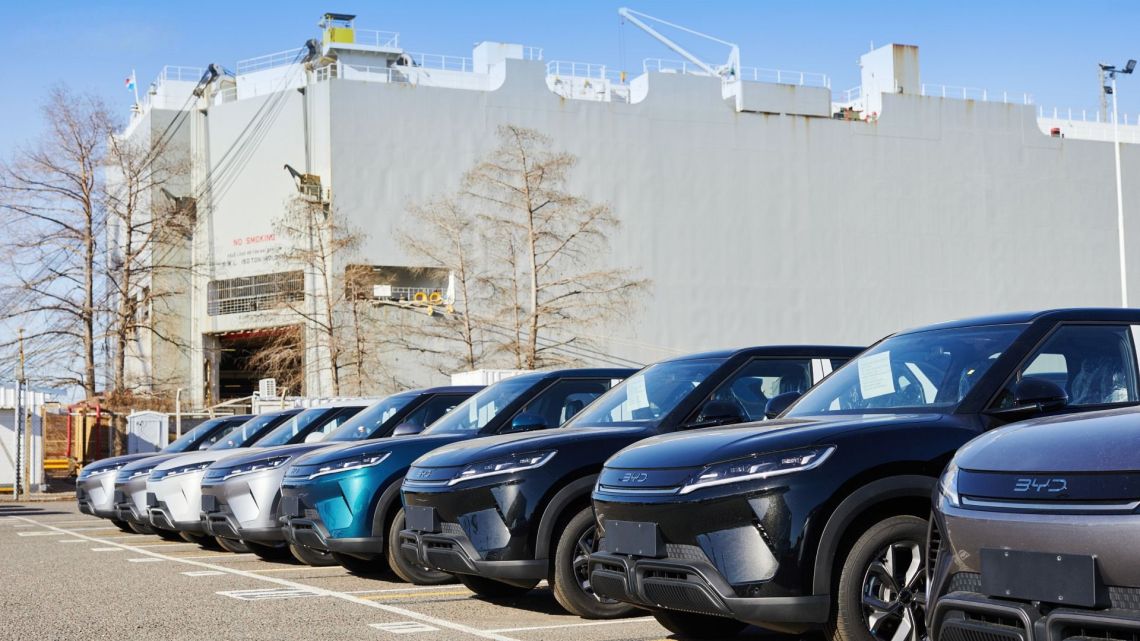
A surge of Chinese electric vehicle sales in Argentina is playing right into President Javier Milei’s strategy to crush inflation even as it runs counter to a push by US officials to draw Buenos Aires away from Beijing.
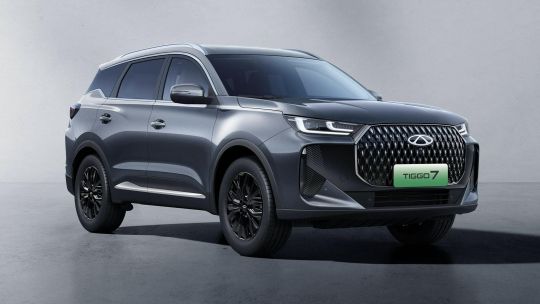
BYD Co has vaulted into the top 10 car sellers this year in South America’s second-largest economy after arriving just last September. Brightly lit BYD dealerships are popping up nationwide as part of a broader wave of new showrooms emblazoned with names like BAIC, MG and Chery.
The scene would have been difficult to imagine last year when US President Donald Trump threw Milei a US$20-billion lifeline to help his party win midterm elections. At the time, US Treasury Secretary Scott Bessent said on TV that Milei was “committed to getting China out of Argentina,” though he didn’t single out autos.
Instead, Chinese cars are driving right in thanks to Milei’s moves to open up Argentina’s protectionist economy and their presence underscores the two nations’ flourishing trade relationship. Milei’s foreign minister added Wednesday that the libertarian leader plans to travel to Beijing at some point.

His government implemented an annual tariff-free import quota of 50,000 electric vehicles – or about 10 percent of the market for new-car sales. The rub is that, as part of the new quota, Milei imposed a low ceiling on car prices to qualify, effectively giving Chinese automakers an inside lane.
“When it comes to trade with China, the US hasn’t drawn a red line,” said Patricio Giusto, a local university professor who runs the Sino-Argentine Observatory. “So as Milei progressed with his vision to open up the economy, one of the players in line to take advantage was Chinese EV makers.”
So far this year, BYD alone has sold over 8,200 cars in Argentina, already ahead of Jeep, Honda and Nissan, albeit well behind other established brands like Toyota and Volkswagen, according to the nation’s dealership association ACARA. When combined with other Chinese brands, that sales figure more than doubles.

Tesla, led by Milei ally Elon Musk, doesn’t yet have its own dealership in Argentina, though it’s hired a country manager to get operations going.
China has surpassed Argentina’s neighbour, Brazil, as the top importer into Milei’s economy so far this year. In 2025, Chinese imports hit the highest level in at least five years, Argentine government data shows.
To be sure, BYD is already a major player in many Latin American countries, manufacturing cars in Brazil and dotting the streetscape from Mexico City to São Paulo. Argentina is catching up to that regional trend as Milei opens up the economy to more foreign competition.

His strategy is also working. The relative cost of buying a car has dropped 26 percent since he took office, and monthly car prices actually fell in the Buenos Aires area in June – a rare feat for a country not far removed from 200 percent inflation. Even as political rivals have blamed Milei for the decline of Argentina’s local auto industry – which mostly makes trucks – his government says the arrival of Chinese sedans and SUVs is more the solution than the problem.
The EV import quota “allowed Argentines to be able to choose between a greater variety of autos, with different technology and cheaper to maintain,” Economy Minister Luis Caputo shot back in January at a critic, adding that a network of battery-charging stations would incentivise local production of EV trucks. “It’s a measure that has benefitted all Argentines.”
Milei’s willingness to work with China, though a political reality, contrasts with his financial lifeline from the Trump administration and constant praise for Washington. Even as a candidate in 2023, when asked about commerce with China, Milei replied, “would you trade with an assassin?”

As president, the answer is increasingly yes. While he prefers to publicise his meetings with US business leaders, like tech billionaire Peter Thiel and oil tycoon Harold Hamm, he’s also publicly praised China as a trade partner. China remains a top export market for Argentina’s commodities, and Beijing gave Argentina’s Central Bank a lifeline more than a decade before the US stepped in.
When it comes to cars, BYD’s debut is upending Argentines’ traditional views after decades of buying US, European and Japanese brands.
“We’ve gone from being a country where Chinese cars were viewed with prejudice, a hallmark of poor quality, to one that’s discovered that for a lot less money you get an impressively modern car,” said Carlos Cristofalo, a local auto expert who runs the website Autoblog Argentina. “Old perceptions have been shattered.”

Iker Rosales, a salesman at a BYD dealership in the upscale Buenos Aires neighbourhood of Puerto Madero, said 10 to 15 potential customers are coming in every day.
Most are hesitant at the outset, running their hands across the bodywork to gauge build quality. “And then they do the test drive and you see their eyes light up,” he said.
Rosales himself was laid-off by French automaker Peugeot before getting work with BYD in January.

“I think these Chinese models are here to stay,” he said. “They’re going to dethrone the old established names.”
by Jonathan Gilbert, Bloomberg












Comments