

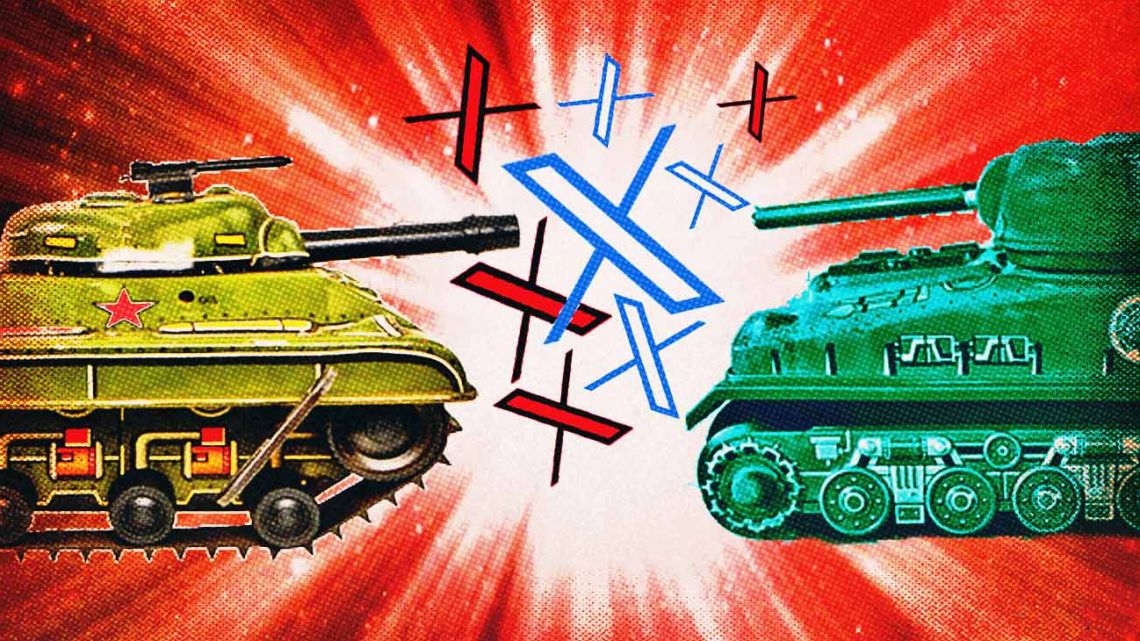
With the World Cup quickly fading into memory, the global “culture wars” have gone on hyperdrive. Not that they eased during the World Cup, hijacking the most important global sporting event to drive its narratives, as it did with the anti-Argentina rhetoric analysed last week. Once the attention libido of the world found some sort of vacuum in the aftermath of the total excitement and engagement generated by the major men’s national football competition, particularly in obsessed countries like Argentina, the political discourse stepped up to fill the void. This phenomenon is not domestic or Argentina-centered, neither is it the patrimony of countries governed by members of the so-called new-Right as exemplified by Donald Trump. It is truly an international trend that increasingly dominates the political discourse in Western countries. The ideological divide is being weaponised in the information ecosystem that is mainly digital, and in some sort of level trickles down to the real world, ultimately setting the stage for the political discussion. At this degraded level, said discussion—which matters to a minority of the population of these countries—takes over the narrative as electoral cycles come along, and the political fate of nations depends in great part on what happens in that digital information ecosystem. The decisions, and positions, taken by these leaders have a real world impact on the geopolitical, economic, and cultural situations and outcomes of these countries and their populations.
Argentina, under Javier Milei, has taken a turn towards a particular brand of right-wing populism that is shaping its international relations. First and foremost is total alignment with the United States led by Donald Trump, and Israel under Benjamin Netanyahu. This has led to extravagant votes at the United Nations, in many cases leaving the country isolated and exposed. It’s a gamble that Milei is willing to take. Voting against a resolution condemning the slave trade as a crime against humanity presented by Ghana, aligned only with the US and Israel and effectively against African nations that traditionally support Argentina’s sovereignty claim in the Malvinas cause. At the same time, the US indicated “it could seek to punish Britain for its lack of support on the Iran war by reviewing its position on London’s claim,” according to “an internal Pentagon email described to Reuters by a US official.” The same thing could be said about the financial support given by the Trump administration during the 2025 midterm electoral campaign. At the time, Treasury Secretary Scott Bessent indicated the US could cough up US$20 billion in funds and that banks could raise another US$20 billion, to support Argentina. Only if Milei wins, Trump added. The Milei administration continues to play Trump’s game, switching the long-term view of foreign policy for shorter, transactional tactics.
It is in this light that Milei is putting in the hours to become the Latin American leader of the new-Right. One of his main rivals in this race could be Nayib Bukele, who was given the most prominent position—to the right of Trump—in the “family picture” taken after signing the “Shield of the Americas” agreement earlier this year. Milei, in the second row, could be seen between the shoulders of Trump and Bukele. It was an agreement among right-wing leaders of Latin American countries and the US supposedly to counter drug trafficking, target border security and immigration issues, and assert the US sphere of influence in the hemisphere. From a geopolitical perspective the strategy is aimed at pushing back at Chinese progress in the region over the past decade while politically it sought to align the right and isolate the left, especially Brazil, Mexico, and Colombia at the time (leftist Gustavo Petro’s candidate lost this year’s presidential elections against a Trump-Milei style right-wing outsider, Abelardo de la Espriella).
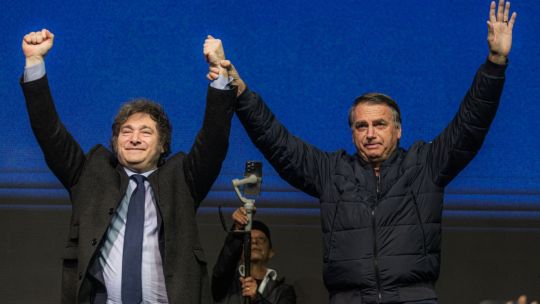
Following that train of events, Milei had a very public falling out with Brazilian President Inácio Luis “Lula” da Silva this week. He attended a political rally in Sao Paulo where he spoke in support of Jair Bolsonaro’s son, Flávio, while calling Lula a “crook.” The Argentine president also attacked Supreme Court Chief Justice Alexandre de Moraes for blocking his attempt to visit the former Brazilian president who is currently serving time in house arrest after attempting a coup d’état to remain in power in 2022. Brasilia responded by recalling its Ambassador to Buenos Aires over Milei’s insults. The war of words will continue to escalate ahead of the October 4 presidential elections in the country, where most polls show a slight advantage for Lula over Bolsonaro in what will almost surely be a runoff situation. For Milei, and Trump, flipping Brazil from progressive to far right would almost certainly become the biggest political victory of their space given the size of the booty.

They are pursuing total war on the cultural-political front. The “culture wars” Milei is so fond of are the cornerstone of his political construction. That is why Milei also made his way to Peru this week for the inauguration of Keiko Fujimori. Much like in most of the elections across the hemisphere, the results were very tight between the right and left-wing exponents, indicating deep polarisation and a marked winning streak for those on Milei’s and Trump’s side. It is also the prime explanation for the signing of an emergency decree (DNU) in Argentina indicating the expulsion or denial of entry to foreigners who incite hatred against Argentina. The wording suggested it was a response to the anti-Argentine rhetoric which erupted during the World Cup but its textual ambiguity indicated the decree is one more brick in the wall of the culture war. It is destined to put Argentina firmly in the camp of those countries where the immigration debate is the political battlefront between right and left, in which many of the anti-immigrant hardliners are winning. From the US to many countries in Western Europe, the issue of immigration is front and centre, whether it is Latin Americans trying to cross Trump’s wall or Africans making their way into the European Union’s Schengen Zone through Lampedusa or Ceuta. While it is a non-issue in Argentina, fearmongering and ideological posturing, particularly in the aftermath of the anti-Argentina wave during the World Cup, will make it a hot topic in this political cycle.
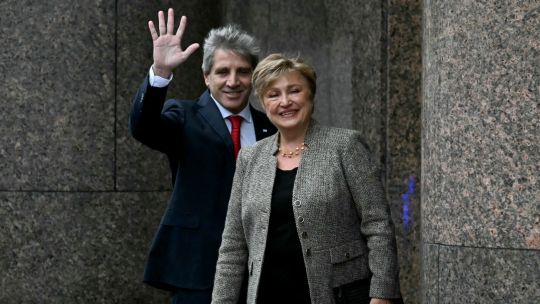
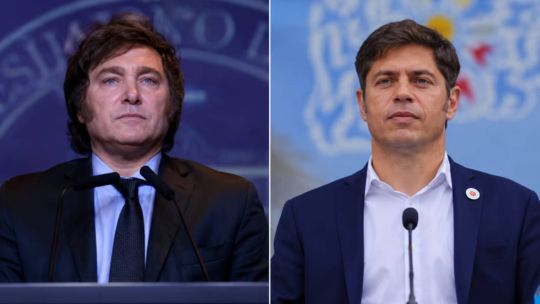
The root cause of this sudden explosion of activity for Milei is that his re-election campaign has already begun. The World Cup, and Argentina’s deep run into the final, gave the Casa Rosada a much-needed reprieve in the aftermath of the scandal surrounding Manuel Adorni, together with a difficult situation on the economic front at the individual level, as wages lag behind inflation, formal job destruction continues and macro-economic growth is concentrated in a few sectors which are not labour-intensive. Now, Milei must play offence. Presidential chief-of-staff, Sister Karina, appears to have signed a truce with controversial political strategist Santiago Caputo. The Casa Rosada appears unified in its strategy to pursue total culture war on its path to re-election. Talk of potential alliances with Mauricio Macri’s Pro, individual governors and local political movements is ongoing and in the background and will drag out. The economy will continue its current trajectory, with macro-economic growth pleasing the International Monetary Fund’s Managing Direct Kristalina Georgieva, who lauded Economy Minister Luis “Toto” Caputo’s performance in her recent visit to Buenos Aires. She will no doubt be supporting Milei’s re-election bout. In the Peronist opposition, Buenos Aires Governor Axel Kicillof faces the resilience of Cristina Fernández de Kirchner, in home confinement and barred from holding office (like Bolsonaro), she insists on trying to assert some level of control over the movement. This means fragmentation will remain, which plays into Milei’s hands.
The global political war between the new, far-right and the progressive left has a major battleground in Latin America, which Milei is seeking to make Buenos Aires his sector’s second headquarters (after Mar-a-Lago). Progressively they’ve flipped most of Latin America and have a concrete chance in Brazil, where Lula has emerged as a major antagonist for the Argentine and his leader, Trump. The battle rages on, in the US where Trump will face midterms in November, and Argentina next year during the presidential election. Until then, expect the heat to be turned up to the maximum, globally.












Comments