

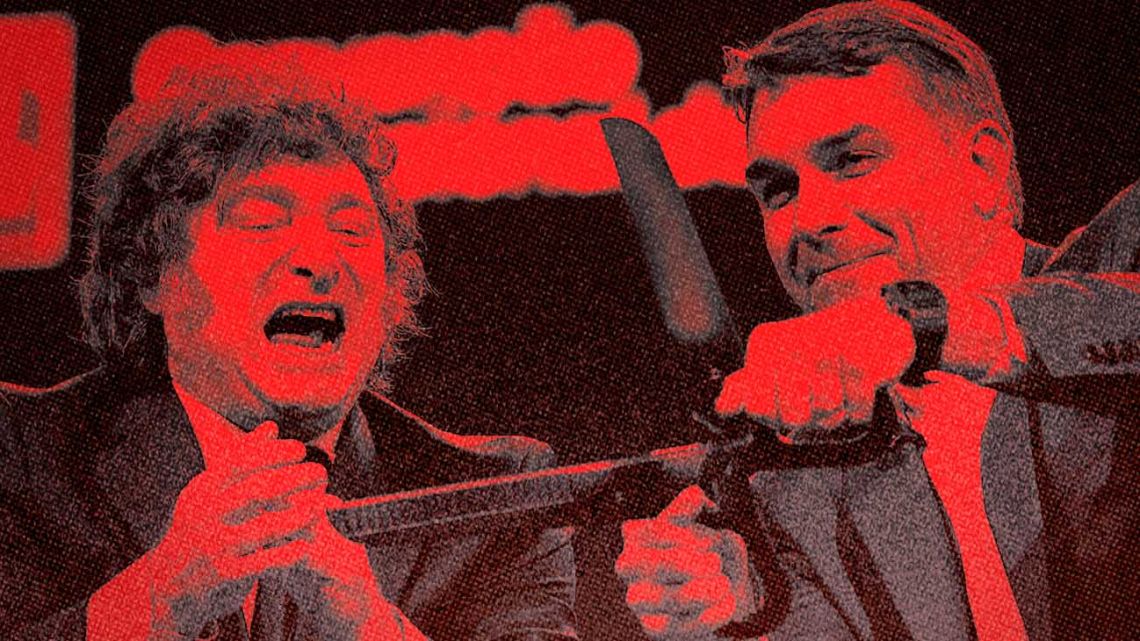
Within a couple of days Javier Milei has given an object lesson in what an Argentine president should and should not be doing – the former consists of respectfully attending the inauguration of a new colleague with Peru’s Keiko Fujimori sworn into presidential office in Lima last Tuesday and the latter the insults spouted against Brazil’s political and judicial helm in Sao Paulo in the previous weekend, triggering a diplomatic crisis with Argentina’s leading trade partner. Magnified into the biggest crisis in half a century by some media avid for some bombshell news after all the World Cup dramas or dictated by Donald Trump according to some theories injecting this spat into a vast global context of geopolitical conflict but it all basically boils down to Milei being Milei – not really doing anything not done before.
What makes this squabble anything different is the proximity of Brazil’s presidential elections now only a couple of months away. Milei was in Sao Paulo for the launch of the Liberal Party presidential candidacy of Flavio Bolsonaro, son of the now imprisoned previous president Jair Bolsonaro, while the unusual vigour of the Brazilian reaction probably stems from the instinct that Argentine support for President Luiz Inácio “Lula” da Silva’s opponent might well aid his re-election, given the traditional rivalry between South America’s two biggest countries (not helped by Argentina advancing much further than Brazil in last month’s World Cup).
Spanish premier Pedro Sánchez has also been insulted in depth by Milei during his periodic forays to Madrid for the campaigns of the far right Vox but, since recalling his ambassador here early in 2024, has shown little reaction, apparently feeling that these egregious interventions only help his struggling government. Much like his idol Trump’s efforts to change the governments in Canada and Australia last year, Milei’s electoral interference thus shows every sign of being counterproductive – even if not adding injury to insult by slapping tariffs like Trump on Brazil along with dozens of other countries (including even an allied Argentina). Milei’s insults are widely (and rightly) criticised for their vulgar impropriety well below the dignity expected of a president but perhaps more attention should be given to their counterproductive impact – a mistake as much as a crime.
It might well also be asked whether meddling in the domestic politics of other countries belongs in any presidential work list (not that it can be denied that Lula has been doing as much in every Argentine election for the last decade at least, although without insult) – the Vox-related trips to Spain seem especially unnecessary. Presidents are supposed to use external relations to advance national interests abroad, not party causes.

Milei might argue that waging his “cultural battle” worldwide also advances the national interest since it makes for a friendlier planet but his crusade in the region has not been as effective as he claims. It is true that, apart from Uruguay, the Latin American pendulum has generally shifted right of centre in recent years (no wonder Nicaragua’s Daniel Ortega has disavowed any future elections) but if we look at the four most recent South American elections in the last year (Bolivia, Chile, Peru and Colombia in that order), the far right did not fare so well. Ultra-liberal ex-president Jorge Quiroga at least reached the run-off in Bolivia where he polled 45 percent but libertarian Johannes Kaiser garnered less than 14 percent of the vote in Chile while former Lima mayor Rafael López-Aliaga (“the Bolsonaro of Peru”) obtained under 12 percent and was narrowly squeezed out of the runoff by leftist Roberto Sánchez. Only in Colombia did Abelardo de la Espriella (Milei’s next inauguration next weekend) reach the presidency – a kindred spirit to the libertarian lion as an outsider.
Not such good news for Milei’s re-election as might seem on the surface but to assess those prospects more fully, we also need to look beneath the surface. The spat with Brazil or ex-president Cristina Fernández de Kirchner’s appeal to the United Nations against her conviction for corruption might grab the main headlines but perhaps the most important news ítem of this week is the University of Buenos Aires report showing that a third of youth under 30 neither works nor studies nor seeks a job. International Monetary Fund (IMF) Managing Director Kristalina Georgieva visiting here was only repeating what has been said inside and beyond the government, in and beyond Argentina when she spoke of the need for macro-economic advance to reach the people – the real battle.










Comments