

Investors from T. Rowe Price Group Inc. to TCW Group Inc are embracing a strategy that’s rapidly becoming the norm in emerging markets: pour money into Latin American countries aligned with US President Donald Trump.
Money managers at the firms are favouring government bonds from nations such as Ecuador and Argentina, whose leaders have forged close ties with the US administration, in what JPMorgan Chase & Co calls a “new reality” for the region.
The trade has been playing out since Trump returned to office last year, and gained traction after the United States detained Venezuelan leader Nicolás Maduro in early January. Instead of shying from the ensuing political risks, money managers poured into Venezuela’s bond market, sending prices to levels not seen since before the country’s 2017 default.
“We should expect the US to remain increasingly interventionist in Latin American politics,” said Thys Louw, a portfolio manager on Ninety One’s emerging market fixed-income team. “This is a double-edged sword for markets: it is likely to benefit politically-aligned countries, while in left-leaning administrations the US could use policy tools to apply pressure with resulting market volatility.”

The incursion into Latin America – dubbed the Donroe Doctrine by some, who have likened it to Trump’s version of the Monroe Doctrine that shaped US foreign policy two centuries ago – brings material implications for sovereign credits in the region and the Caribbean, according to Gramercy Funds Management.
“Governments in the Western Hemisphere should be prepared to face stronger pressure from the Trump administration to ‘pick sides,’” Gramercy Chief Investment Officer Robert Koenigsberger wrote in the firm’s first-quarter outlook.
In Ecuador, President Daniel Noboa has won Trump’s favor by praising his foreign policy decisions and ordering his security forces to work with the US in combating drug and weapons smuggling. Its debt handed investors a return of about three percent in January, outperforming peers. Last week, the country returned to global debt markets for the first time since its 2020 restructuring, completing a record US$4-billion deal.

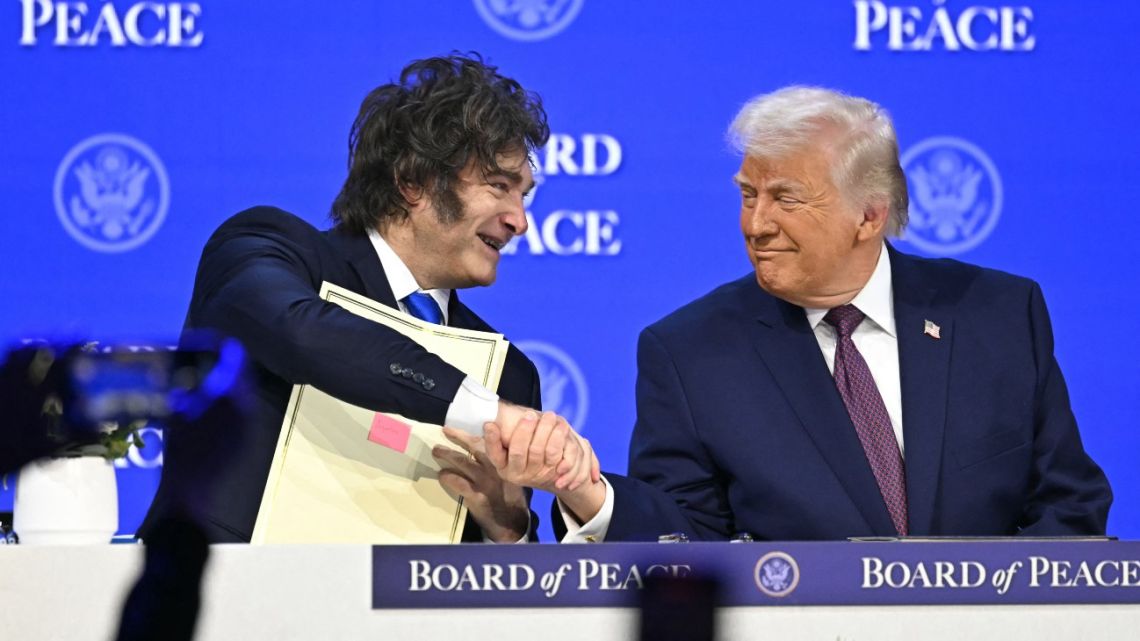
In Argentina, President Javier Milei – one of Trump’s most vocal backers globally – received unprecedented US financial support ahead of a pivotal vote last year. Its bonds, which have soared for most of the past two years, have delivered around 3.6 percent so far in 2026. Bonds from other Washington allies, like El Salvador, have outperformed too.
“The operation in Venezuela signals a fundamental shift in US engagement with Latin America,” JPMorgan economists including Cassiana Fernández wrote in a note last month outlining what they call “a new reality” for the region. “Economic relationships, infrastructure ownership, and access to US markets are now explicitly tied to geopolitical alignment.”
Still, while US-aligned countries can “clearly be rewarded” and those that push back against Trump are at risk, that’s only one dimension of the decisions, said Graham Stock, senior emerging-markets sovereign strategist with RBC Bluebay.

“We do not envisage a market where whole regions become uninvestable because of the evolving geopolitical fault lines,” Stock said.
Proximity with Trump has also not always translated to gains elsewhere. India, often characterised as a friend of the United States, is yet to clinch a trade deal with the nation. That has led to outflows from the stock market – with foreigners having sold off over US$4 billion in January after a record exodus last year. The currency is one of the few in emerging markets to decline against the dollar over the past 12 months, and it’s down more than five percent.
Even as investors are forced to adjust constantly to tariff threats and geopolitical shifts under Trump, emerging-markets had been off to a stellar start to the year, at least until Friday. Stocks had the best January since 2012 and most currencies are up for the year – though the greenback bounced Friday on speculation that Trump’s pick to be the next chair of the Federal Reserve won’t cut interest rates.

The sell-off that started on Friday intensified on Monday, with the MSCI emerging-market equities index falling by as much as 2.9 percent in early trading, the most since April. Gold and silver plunged along with oil, raising risks for economies that are more dependent on commodities exports.
Adding to the nervousness were jitters over Iran, whose supreme leader warned of a regional war after Trump sent an aircraft carrier strike group to the Middle East.
TCW is among firms analysing news geopolitics more closely to prepare for different possibilities under Trump. That helped the Los Angeles-based asset manager develop overweight calls on countries like Argentina.

“As we see this shift from unipolar to multipolar world evolve, we can identify winners and losers,” said Christopher Hays, a portfolio manager at the firm, which is a bit more cautious on debt from Mexico, where a trade pact with the US is up for renegotiation this year.
At T. Rowe, Aaron Gifford has cooled on Panama bonds in part due to the risk of Trump ramping up pressure over the canal.
The ultimate test of the thesis, though, may reside in Venezuela. Defaulted bonds from the sovereign and state oil company PDVSA have rallied sharply on hopes of significantly higher recovery rates. David Robbins, co-head of TCW’s emerging-markets group, sees ultimate recovery values as high as 60 cents on the dollar, from around 40 cents now.

The process of restructuring around US$60 billion worth of debt is rife with hurdles. But the odds increased sharply after the raid on Caracas, on expectations the US will play an outsize role in the process.
“When you incorporate geopolitics into the mix, things change,” said Mauro Favini, a senior portfolio manager at Vanguard. “You have to use a more fluid playbook.”
by Vinícius Andrade & Zijia Song, Bloomberg
) argentina, venezuela, investment,







Comments