

President Javier Milei’s administration is targeting investment-grade status for Argentina by the end of a potential second term in 2031, while continuing to shun international debt markets.
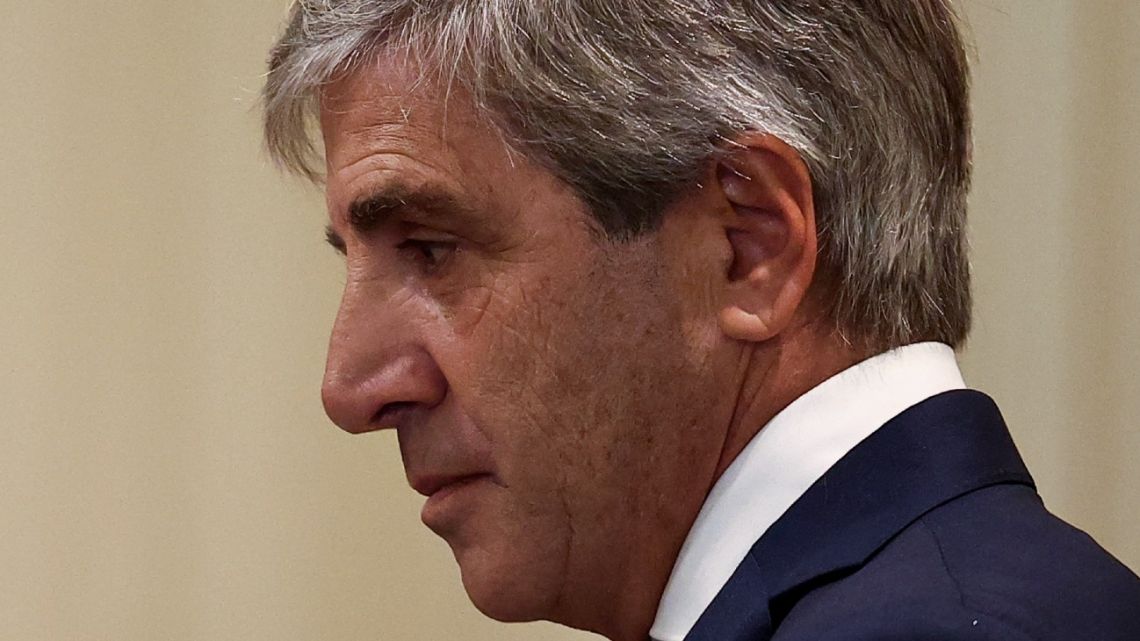
Economy Minister Luis Caputo, speaking at a press conference Monday outlining the government’s financing strategy, said two of the three major ratings firms believe such a path is plausible. The country recently received sovereign upgrades to 'B-' from Fitch Ratings and S&P Global Ratings, lifting it out of the 'CCC' category.
Milei’s economy czar said tapping international markets is just one option for refinancing debt as the South American nation relies on other funding sources to meet upcoming obligations. The government didn’t include any international bond issuance in its financing plan for this year and next – the final two years of Milei’s first term.
“Going to the market is just another option, not an objective,” Caputo told reporters in Buenos Aires. “Our goal is to refinance maturities at the lowest possible rate.”

Argentina’s bond yields have fallen substantially in recent months, with the spread over US Treasuries narrowing by nearly 80 basis points after the latest ratings upgrade in June and reaching their lowest level of the Milei administration. Still, yields on the benchmark 2035 bond stand at about 8.6 percent.
Caputo nonetheless left the door open to a potential sale if borrowing costs become “reasonable” and no cheaper alternatives are available. He said Argentina has largely stayed out of international markets because of interest rates, adding that the government is seeking lower-cost alternatives to Wall Street.
While he didn’t specify the threshold rate at which the government would consider tapping markets, the economy minister pointed as a minimum to the 6.3 percent interest rate of a US$2 billion, World Bank-guaranteed facility.

During the presentation, Caputo and his deputies laid out several financing sources to cover the remainder of this year as well as roughly US$25 billion in dollar debt payments due next year. The government expects to finance itself largely through local dollar-denominated debt placements, after successfully issuing about US$4 billion so far this year.
Caputo expressed confidence the country would be able to navigate any market volatility in the 2027 election year. The US$20-billion swap line extended by the US Treasury during last year’s congressional midterms remains on the table, he said, but reactivation would require renewed talks.
Officials expect to raise an additional US$2 billion before year-end and another US$5 billion in 2027. Other sources include multilateral-backed loans, like the one from the World Bank. The government also recently announced the refinancing of a US$6-billion repurchase agreement at rates closer to 7.5 percent.

The government expects this year’s financing program to generate a surplus of about US$3.7 billion that will be carried over and used next year.
by Manuela Tobias & David Feliba, Bloomberg










Comments