

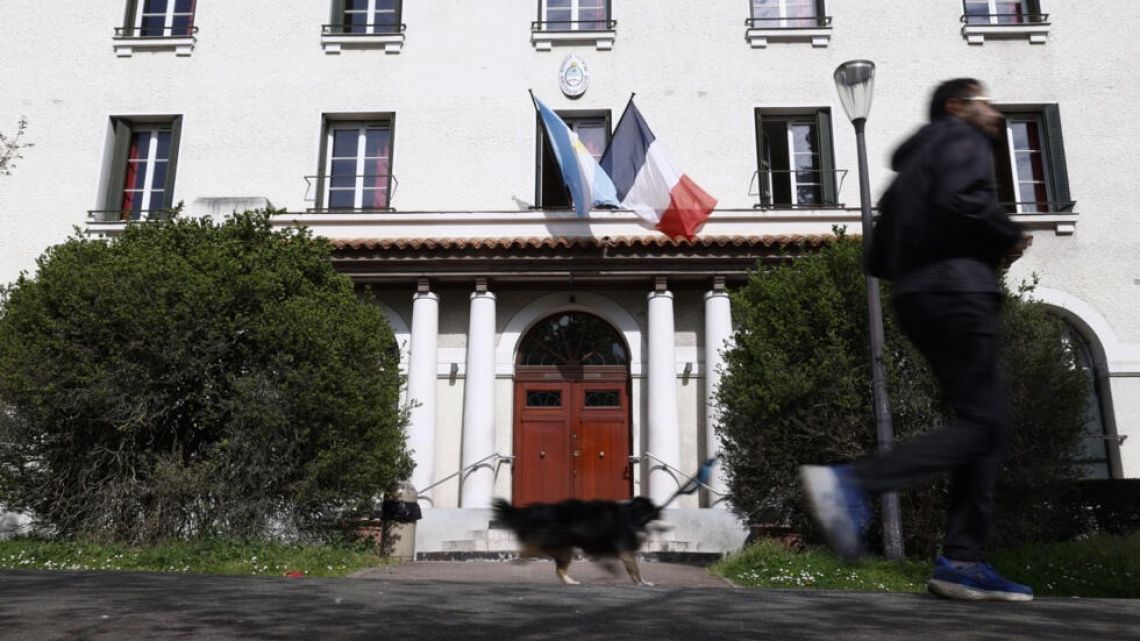
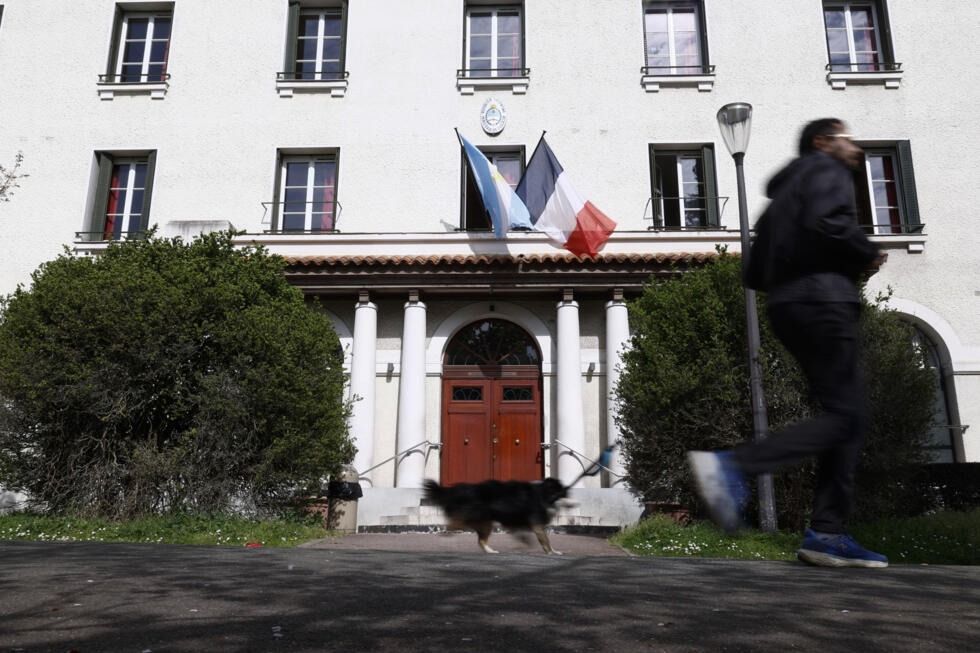
Weeks before President Javier Milei visits France, scrutiny is growing around an Argentina-run student residence in Paris, where residents allege restrictions on their freedoms and campus officials have raised concerns over meetings involving European far-right figures.
Paris City Hall has called on the French government to investigate Casa Argentina, one of dozens of residences run by foreign countries or institutions at the prestigious Cité Internationale Universitaire de Paris.
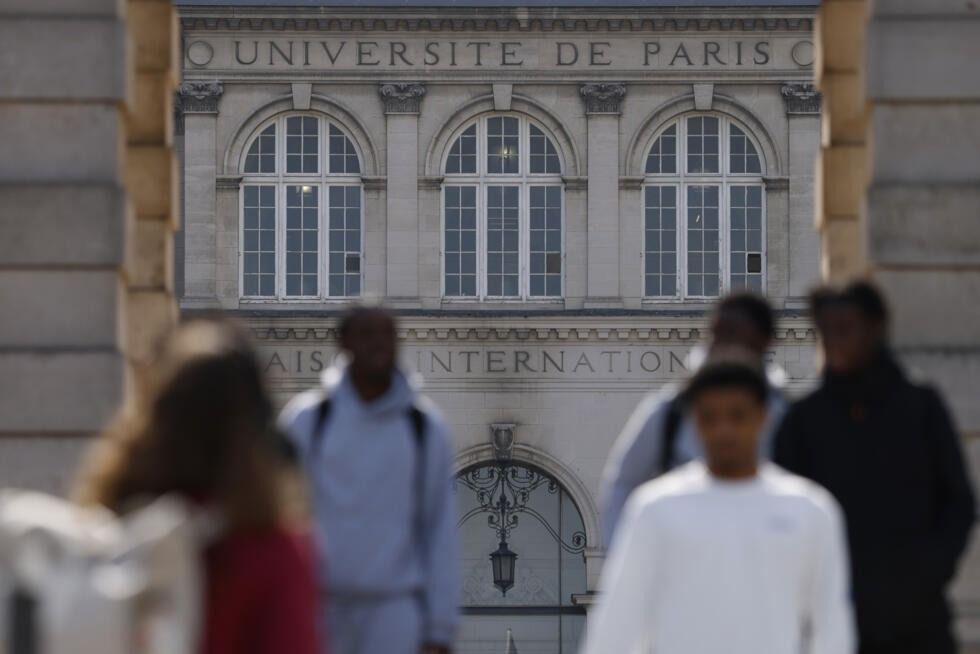
The Cité U was founded after World War I as a place where young people from around the world could live together and forge lasting connections, with the aim of helping "contribute to building a world of peace".
But residents and campus figures, many speaking anonymously for fear of repercussions, say Casa Argentina has become a source of controversy since the Milei government appointed fervent Catholic Franco-Argentine lawyer Santiago Muzio as its director in 2024.

"It’s a mini-dictatorship," said one student who lived there during the 2025-2026 academic year, describing a climate of "constant fear" and "no freedom of expression.”
"The house used to be a space for community, culture and art. Today it’s a space of fear, control, surveillance, cameras," said another resident from the past academic year.
Residents told AFP that their access to common areas, including the lounge and outdoor barbecue area – an important hub of social life in Argentina – had been restricted.

They said the atmosphere of fear had at times led them to speak in "whispers" inside the residence.
Muzio previously headed the Madrid branch of the Institute of Social, Economic and Political Sciences (ISSEP), a private university founded by French far-right MEP Marion Maréchal.
Far-right meetings
Concern over Casa Argentina extends beyond its residents.
"The trust has been broken," said Laurent Schneider, president of the conference of residence directors.
"We promote an attitude of openness towards others among students, and we don’t know what he says inside his residence," he added.
The director of another residence was more direct.
"Can you imagine me sending someone there [through the ‘brassage’ system] and them finding a far-right meeting at the Casa?" he said, referring to the campus practice of encouraging residences to host students of other nationalities.
In November, two think tanks linked to the far right in Poland and Hungary presented a plan at Casa Argentina calling for the European Union to be dismantled or for its current scope to be reduced, according to the independent left-wing outlet Basta!.
In May, the residence hosted a debate entitled "Let’s protect human dignity at the end of life: enough with euthanasia in Europe.”
France is due to hold presidential elections in April and May 2027, with far-right politician Marine Le Pen leading opinion polls and concerns growing over the risk of foreign interference.
Neither Casa Argentina, its director nor Argentina’s Human Capital Ministry, which oversees the residence, responded to AFP’s questions.
Blandine Sorbe, general delegate of the foundation that runs the Cité U, said she was working to ensure the issue was "addressed" at a diplomatic level ahead of Milei’s planned visit to Paris in late September and early October.
Paris City Hall asked French Foreign Minister Jean-Noël Barrot on July 30 to launch an "investigation" and discuss the situation with Buenos Aires.
"We are holding ongoing discussions with the Argentine authorities," Barrot said at a press conference on Tuesday, without providing further details.
LGBT rights
The Cité U hosts around 12,000 students, researchers and artists from 150 nationalities each year.
Casa Argentina opened in 1928 and has welcomed generations of students, researchers and intellectuals, including Argentine writer Julio Cortázar. It has capacity for around 80 residents, who currently pay between 620 and 1,210 euros a month (US$720-US$1,400).
Life at the residence, like elsewhere on the campus, is supposed to be governed by the Cité U’s Charter of Values, which upholds respect for human rights and private life and prohibits discrimination based on gender or sexual orientation, among other provisions.
But Muzio was one of the first residence directors not to sign the charter.
When asked why, he replied that he could not, "in good conscience", sign a document recognising equality of gender and sexual orientation, Schneider told AFP.
A source familiar with the residence also said the director had removed posters defending LGBT rights.
‘Political persecution’
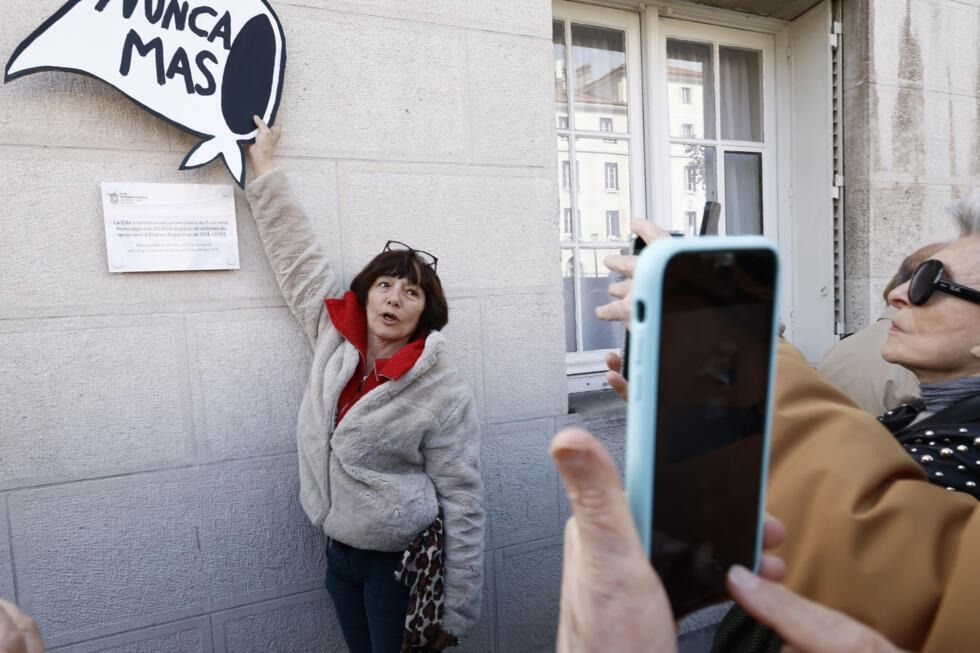
For some residents, however, the turning point came in February when Casa Argentina removed a plaque "in tribute to the 30,000 disappeared and victims of State Terrorism (1974-1983)", citing renovation work.
Residents organised a tribute to the disappeared at Germany House, while the foundation that runs the Cité U installed a similar plaque elsewhere on campus.
Months later, 13 residents who had taken part in the tribute or questioned the removal of the plaque were unable to remain at Casa Argentina during the university holidays, as had previously been customary, Salvador Calanni, one of those affected, told AFP.
Calanni, then vice-president of the residence’s residents’ committee, described the decision as "political persecution."
Sorbe said around a dozen students were accommodated at other residences in July and August.
Calanni, despite holding a prestigious European Union Marie Skłodowska-Curie research fellowship, was later among 42 applicants who failed to secure a place at Casa Argentina for the 2026-2027 academic year.
The residence opened and closed its application process in August, rather than in its usual May and June period, leaving less time for unsuccessful applicants to find accommodation elsewhere in Paris.
Six of the rejected applicants challenged the decision before Argentina’s Human Capital Ministry, arguing that they had been excluded "by discretionary decision" rather than on merit, according to a document seen by AFP.
The residence's room for manoeuvre appears limited.
‘Diplomatic discussion’
Casa Argentina reports directly to Argentina’s Human Capital Ministry and, unlike almost all other residences at the Cité U, has no board of directors including campus representatives.
The Cité U has sought since the 2010s to regularise the situation, but "it does not depend solely on us, it is really a matter for bilateral and diplomatic discussion", Sorbe said.
More than 1,600 people have meanwhile asked the Paris Council to declare Milei "persona non grata," partly because of the situation at Casa Argentina.
But City Hall told AFP that only the French state has the authority to do so.
related news



by Toni Cerdà, AFP
Image Gallery













Comments