


ARGENTINA IN RECESSION
Economic activity fell off 1.2 percent in the third quarter of the year as against the same quarter last year, the INDEC national statistics bureau reported last Tuesday, thus placing the economy technically in recession with two consecutive negative quarters even if there is still one percent growth for the year as a whole. Only five of the 16 economic sectors advanced with mining and quarries (11.1 percent), electricity, gas and water (four percent) and construction (3.5 percent) in the forefront. Sectors in the red included agriculture (minus two percent), manufacturing industry (-1.8 percent) and fisheries (down 48.6 percent). Presidential spokesman Adrián Ravier denied the technical recession, saying that it could not be confirmed until the end of the year while adding that the underground economy was being underestimated. Ravier further ruled out the bad numbers as spelling the exit of Economy Minister Luis Caputo, calling him “one of the most important ministers.” On Wednesday the government pointed out that September was still 1.1 percent up on August while the economy had grown 6.1 percent since Javier Milei came to power.
CONGRESS IN SESSION
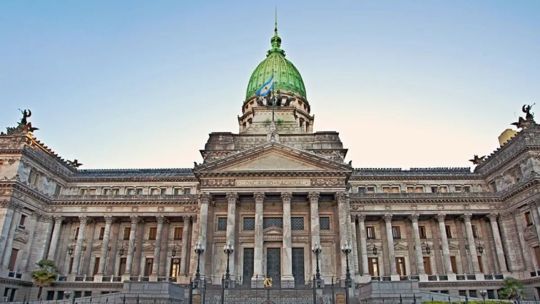
The Senate began debate on bills to suspend the PASO primaries and restrict online betting last Thursday but had yet to vote at press time. Early in the session a long list of nominations to diplomatic posts and judicial benches included promoting Mariana Plaza (in charge of the Belgrave Square Rmbassy for the last 30 months) to full Ambassador to London, despite the objections of war veterans and Peronist senators who view her as subordinating Malvinas sovereignty claims to rapprochement with Britain.
D-DAY FOR SEA LION
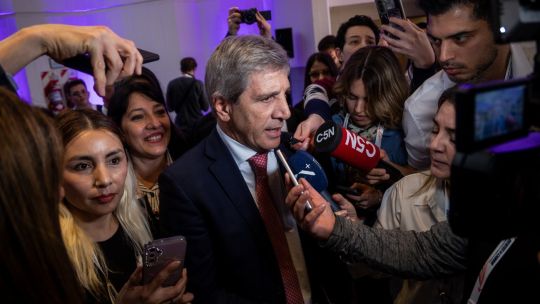
In a Tuesday report Cabinet chief Diego Santilli informed the Senate that the International Tribunal for the Law of the Sea (ITLOS) in Hamburg would be ruling today on the Argentine request to halt offshore oil exploitation around the Malvinas until the sovereignty dispute is resolved as well as confirming that proceedings were underway to sanction 60 individual and corporate persons involved in or linked to unauthorised operations in that area. Santilli also said that Argentina would not be asking the Tribunal to pronounce on the sovereignty of the islands since this was understood to be beyond its jurisdiction. Last weekend it was reported that the Argentine sanctions are hurting the Anglo-Israeli Sea Lion offshore oil project with two contractors pulling out for fear of legal reprisals while Singapore’s Seatrium shipyard contemplates scrapping the contract to revamp Aoka Mizu, a key vessel for Sea Lion. Finally, the Defence Ministry informed that the Treasury had earmarked 45 billion pesos for the project of the Ushuaia naval base.
YPF GIVEN RIGI
Just before last weekend the government confirmed the entry of the Argentina LNG project, dedicated to the export of liquefied natural gas worth over US$50 billion, into the RIGI incentive scheme for major investors. The project is headed by YPF state oil company in partnership with Italy’s Eni and the United Arab Emirates. YPF CEO Horacio Marín described the investment – US$25 billion until 2030 and US$50.75 billion through to 2050, permitting annual exports of 12 million tons of LNG for over US$9 billion a year – as “the most important presented until now,” adding that he had always said: “Without RIGI, Argentina LNG would not have been possible.” The project, which aims at producing 65 million cubic metres of gas daily, (equivalent to over 40 percent of current Argentine production) will include two pipelines to transport the fossil fuel from Río Negro to the Atlantic coast where two floating units will liquefy it. The construction phase is expected to create 20,000-40,000 jobs with a further 8,000 direct and indirect jobs once on stream. On Tuesday, YPF presented its sixth project for RIGI, an investment of US$11.69 billion to develop the Narambuena area in Neuquén north of Vaca Muerta in partnership with Chevron. The target here is a daily 80,000 barrels of oil between 2035 and 2045, permitting export earnings of around US$33 billion between next year and 2059.
TESLA LAUNCH
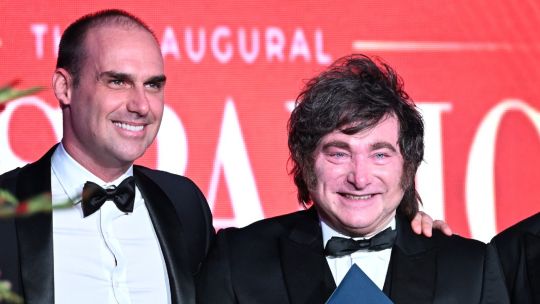
Just before last weekend President Javier Milei officially launched Tesla electric cars in Argentina. Celebrating the innovation of Elon Musk, Milei delivered a speech assuring that “for decades Argentina lived behind its own Iron Curtain to pursue obsolete economic theories … an almost Soviet scheme which said that producing and importing cars was incompatible.” The libertarian president directly linked Tesla’s arrival to tax and excise cuts, as well as deregulation to facilitate the entry of electric cars into the local market. Musk participated in the launch via a video call from an airborne plane, but seemed not to know why he was speaking. The first available vehicles in the country will be the Tesla Model 3 sedan and the Model Y SUV, to be purchased exclusively via a company website. But Milei’s favourite is the Cybertruck, as he mentioned in New York last September, leading the company to bring him a black one for the launch to pretend to drive, complete with a golden leonine paintjob.
SANTUCHO TRIBUTE NIXED
Last Tuesday the Social Sciences Faculty of UBA Buenos Aires University decided to suspend its tribute to Mario Roberto Santucho, the former leader of the ERP (Ejército Revolucionario del Pueblo) leftist guerrillas, in the 50th anniversary of his death in a Villa Martelli shootout with the military. The tribute, which was to take the form of placing a sculpture of the revolutionary leader’s face in the faculty patio, was questioned by many people, including Vice-President Victoria Villarruel, because Santucho took up arms against constitutional and elected as well as military governments. The faculty will replace the tribute with “a day of academic reflection and debate on the social, economic and political context” of Santucho’s times in order to “reinforce the faculty’s commitment to the values of the democratic system, as well as the policies of memory, truth and justice.” Last weekend the Human Capital Ministry had asked UBA to explain this controversial decision and take the necessary steps to prevent it from taking place. The tribute was also repudiated by UBA Vice-Chancellor Emiliano Yacobitti (a militant Radical), saying that it was impossible to recognise a man who had used violence against the democratic system.
MILEI’S WEEK
President Javier Milei last Tuesday received his Polish counterpart Karol Nawrocki in the Casa Rosada. The main topic of their conversation was the war in Ukraine, with whom Poland is firmly allied, but the libertarian leader and his conservative guest also have much in common, including alignment with the United States. On Wednesday night Milei flew to Paraguay together with Foreign Minister Pablo Quirno to meet its new President Pedro Alliana (who replaced Santiago Peña earlier this month), staying on the next day when he was scheduled for an event in Corrientes. The agenda of their talks included the Hidrovía Paraná-Paraguay waterway, infrastructure, energy and organised crime. Milei also confirmed that he will attend the 69th Mercosur Summit in Uruguay next Friday, despite the presence of Brazilian President Luiz Inácio Lula da Silva (who has made a point of not inviting Milei to his January 5 inauguration since Argentina has yet to recognise the legitimacy of his re-election). Next year just around the corner should include another encounter with United States President Donald Trump, according to Washington’s Ambassador Peter Lamelas, who was with Trump in Palm Beach on Thursday.
CHAINSAW ACCORDING TO SANTILLI
According to Cabinet Chief Diego Santilli’s report to the Senate last Wednesday, the Javier Milei presidency has slashed the national public administration by almost 22,000 employees, thus saving nearly US$3.5 billion annually. The government explained that relatively few people were actually fired with the state opting not to renew contracts in most cases while there were 5,413 voluntary retirements apart from those retiring for reasons of age. Santilli also insisted that the Central Bank gold reserves were “in perfect order” in response to opposition charges that they had been shipped off to London. The Cabinet chief further claimed a positive employment record for the government with the creation of 645,000 jobs while admitting that many were unregistered. But Peronist senators accused the government of causing massive unemployment and also took it to task for antagonising Brazil, among other criticisms.
GROSSI STILL WAITING
With less than five weeks left for António Guterres as United Nations secretary-general, the Security Council remained deadlocked over his successor at press time with all eight candidates facing at least one veto from a permanent member. Costa Rica’s Rebeca Grynspan, UNCTAD’s secretary-general, remains in the lead, followed by Argentine Rafael Grossi, the director-general of the International Atomic Energy Agency (IAEA), but neither have consensus among the great powers – the United States, the United Kingdom, China, France and Russia – despite the historic meeting of Donald Trump, Xi Jinping and Vladimir Putin on November 19 at the APEC summit in China, where they pledged UN reform. Grossi’s situation is complicated by the government’s energetic action to halt the Sea Lion oil exploration project off the Malvinas at the International Tribunal for the Law of the Sea in Hamburg.
RAPID RESPONSE TO AMNESTY
The government last week replied to Amnesty International’s critique of the Argentine abstention from voting on a United Nations resolution against gender violence backed by 175 countries, stating: “Amnesty seeks to teach lessons out of London to a country which has lowered femicides. Amnesty International, via its office in Argentina, has launched a campaign of disinformation against our country.” Claiming that there were 20.6 percent less femicides last year than in 2017 according to Supreme Court figures, the government explained that it had abstained because the resolution sneaked in “clauses on sexual and reproductive health with which Argentina disagrees” (according to the Amnesty critique, sexual and reproductive health includes access to abortion).
BOCA CHAMPS WELCOMED HOME
Just before midnight last Sunday the Boca Juniors team landed at Ezeiza International Airport to a hero’s welcome, a day after winning the Copa Sudamericana against Brazil’s Atlético Mineiro in the Colombian city of Barranquilla with goals from Santiago Ascacíbar and Uruguayan Miguel Merentiel, their first international title in 18 years.





Comments