

The international landscape is often viewed as something distant, but for Argentina – with an economy whose fortunes are closely tied to its place in the global economy – political developments in the world's major powers often act as an invisible rudder.
What happens at the ballot box in key trading partners, financial powers or diplomatic allies can accelerate crises, open up commercial opportunities or constrain the Casa Rosada's room for manoeuvre.
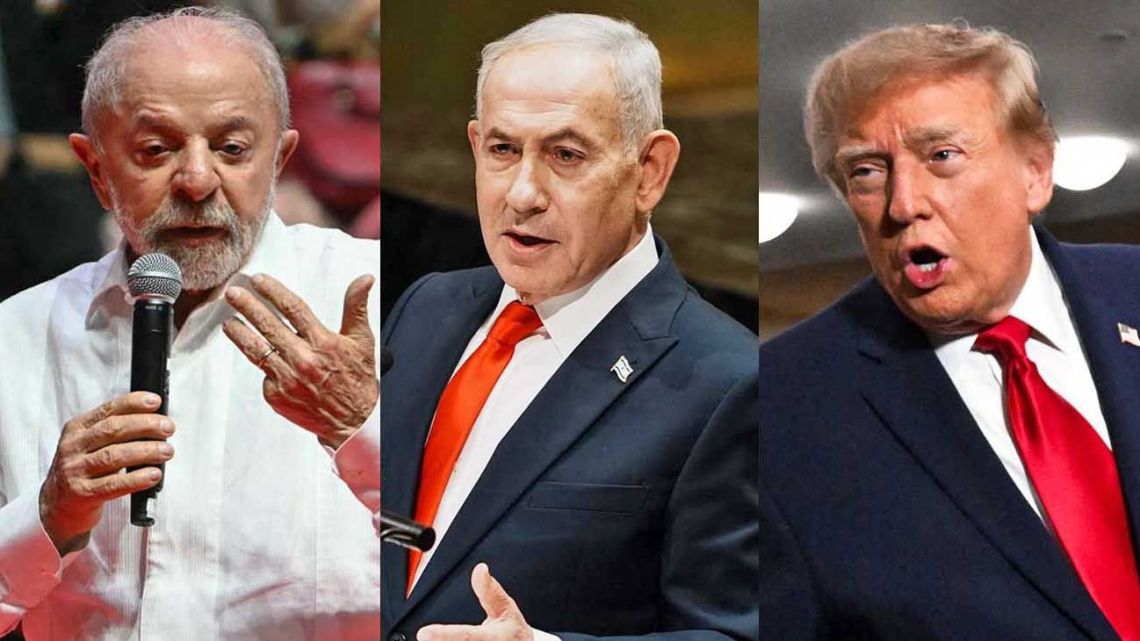
Against this backdrop, the global electoral calendar features three unavoidable dates that, for geopolitical, economic, security or financial reasons, will have a direct impact on Argentina's national agenda: upcoming elections in Brazil, Israel and the United States.
A change of direction in any of these governments would have a direct bearing on Argentina's immediate future.
Brazil's elections (October 4)
The election in neighbouring Brazil will determine whether the region's largest economy and Argentina's main trading partner maintains its current course or takes a different direction.
With Luiz Inácio Lula da Silva seeking to remain in office and the right-wing opposition, represented by Flavio Bolsonaro, seeking to regain power, South America's largest country is experiencing intense polarisation.
Brazil absorbs a huge share of Argentina's industrial exports, particularly automobiles. A shift in political alignment or a move towards protectionist policies or unilateral liberalisation could disrupt day-to-day trade. The future of the Mercosur – whether the bloc prioritises free-trade agreements or maintains a more closed approach – will also depend heavily on who occupies the Planalto Palace.
Relations between the Casa Rosada and Brasília are currently marked by pronounced ideological tensions, including direct clashes between Lula and President Javier Milei. A change in Brazil's political orientation – whether through the election of a government more closely aligned with Argentina's current administration or a further deterioration in relations with the Brazilian government – would significantly alter South America's geopolitical axis and affect the two countries' positions in international forums.
Israel's parliamentary elections (October 27)
The Middle Eastern nation is heading towards key legislative elections to renew the Knesset, against a backdrop of instability within the governing coalition and the leadership of Benjamin Netanyahu in doubt, with national security and the region's various conflicts dominating the political agenda.
Argentina's current administration has prioritised a close and strategic relationship with Israel and Netanyahu, expressed through high-profile diplomatic gestures, such as the relocation of the embassy and unequivocal support for Israel in international forums. A change of government in Israel, or a reconfiguration of its political landscape towards a more moderate or centre-left position, could cool that alignment.
Given judicial investigations and the historical legacy of international terrorism in Argentina – including the attacks on the AMIA Jewish community centre and the Israeli Embassy – intelligence cooperation and the temperature of tensions in the Middle East have a direct impact on the country's security profile and foreign policy.
US midterm elections (November 3)
The next presidential contest is not due until 2028, but US politics is permanently shaped by midterm congressional elections and the dynamics of Congress, which can constrain the strength of the White House.
The United States wields decisive influence on the boards of the International Monetary Fund and other multilateral lending institutions. The position of the administration in power and political backing from the US Treasury are vital for Argentina in negotiations over debt refinancing, disbursements and access to external financial assistance.
Against this backdrop, the political support that Trump has given Milei's administration is also of fundamental importance.
At the same time, major global investors and US-based corporations are closely watching institutional stability and Argentina's economic direction. If control of the US Congress were to shift, or if the elections were to lay the groundwork for a new presidential cycle, global priorities on the energy transition, lithium, gas and oil – particularly Vaca Muerta – could change, affecting the flow of foreign direct investment (FDI).
Trading partners
Argentina's trade with its main partners reflects a pronounced agricultural-export profile, complemented by strategic industrial and technological ties.
Brazil is the main destination for Argentine exports and a key Mercosur partner, with bilateral trade exceeding US$12 billion a year. The bilateral balance usually runs a deficit for Argentina because of its large imports of manufactured industrial goods and vehicles.
The United States, meanwhile, is Argentina's second-largest trading partner and a steadily expanding market, particularly as cooperation grows in energy, critical minerals, aluminium and agribusiness, alongside strong financial and bilateral ties.
Israel, meanwhile, stands out as a highly profitable Middle Eastern trading partner. Argentina is a consistent exporter of kosher meat, cereals and agricultural products, generating a trade surplus. In the opposite direction, it imports high-value-added goods such as advanced technology, pesticides, fertilisers and medical equipment.













Comments