


This last week might well go down in any future history of the Javier Milei administration as the one marking the limits of deregulation with at least two major setbacks for Deregulation & State Transformation Minister Federico Sturzenegger. Within the space of just four days Decree 690/2026 radically deregulating the work of harbour pilots came and went after their stoppage briefly turned the River Plate into the Strait of Hormuz, stranding hundreds of vessels carrying the export jewels in the libertarian crown – the government might deny total defeat on the grounds that fees quadrupling most other regional ports were whittled down by 20 percent but it was a retreat by any stretch of the imagination.
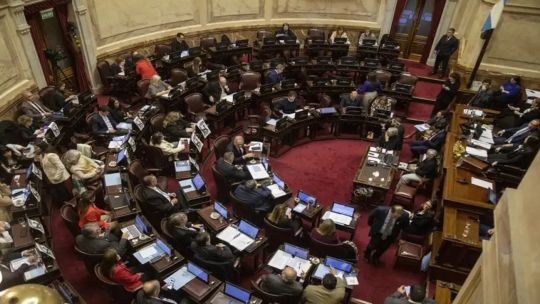
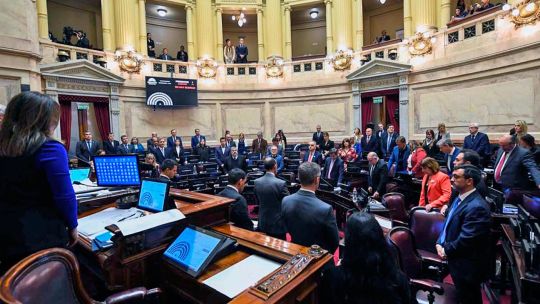
And then just when nationalistic frenzies were escalating even beyond the World Cup final due to an alleged anti-Argentine campaign abroad – resulting in a ridiculous decree barring the entry of “Argentinophobes,” which did not prevent the Spanish singer Rosalía from performing her concerts here – Sturzenegger had no better idea than to insert a chapter lifting all restrictions on land sales to foreigners in the government bill enshrining private property. This initiative had already perished in midweek, the day after suspension of the decree bypassing harbour pilots, due to deficient support in the Senate. At the start of the week the government had already sensed a losing battle, trading in lifting all restrictions for raising the current limit of 15 percent of all land to 25 percent but their moderate allies continued to resist any sellout and the chapter was withdrawn.
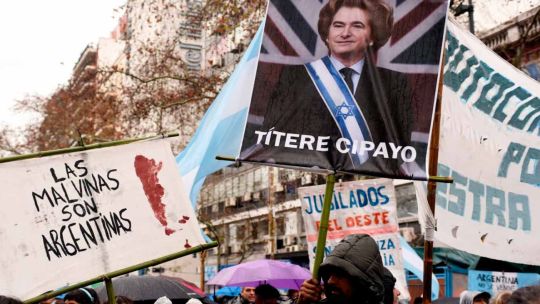
The knee-jerk reaction of the politicians and lawyers rejecting this move was to criticise it as unconstitutional in violating Article 41 of the Constitution by jeopardising sovereignty but, strictly speaking, it was very much in the spirit of the 1853 Constitution, as Sturzenegger pointed out, in the very different times of its author Juan Bautista “to govern is to populate” Alberdi when Argentina could not give away enough land to encourage immigration. In less abstract terms, those fearing an enormous appetite abroad to gobble up all Argentine land are somewhat off the mark because the current cap of 15 percent established by the Cristina Fernández de Kirchner administration in 2011 is far from exhausted – some five percent of the land is in foreign hands, mostly on the fringes of the country in Andes mining, Misiones forestry projects and Patagonia. Thus even with the collapse of Sturzenegger’s initiative, well over 200,000 square kilometres of Argentina is still theoretically up for sale.
Almost all the opposition also rejected the legislation because its underlying motive was seen as seeking to sell out the country to Milei allies such as Donald Trump (who has just tried to buy out FIFA), Peter Tiel (with one foot more out of this country than in) and Silicon Valley but critics might well have made the government doubt the wisdom of its own move if they had floated other possibilities – notably China. In any event foreign purchasers (whether Chinese or North American or whoever) could always move in with or without restrictions if they find local proxies but surely one of Argentina’s biggest problems is procuring investment of any kind with even the billions signing into the RIGI incentive scheme for major investors still mostly in the waiting-room.

This abortive deregulation drive at the wrong moment is a further symptom of the economic dogmatism permeating this administration losing touch with the public pulse. Another example is the insistence that debtors (with almost half of all families in the red) only have themselves to blame, oblivious of the sharp fluctuations of interest rates in the past year or the role of free-market policies in accelerating the rise of an underground economy, leaving those not making ends meet at the mercy of loan sharks and digital wallets (Milei’s own $LIBRA cryptocurrency scandal might only be the tip of an iceberg) – in fairness to the latter, it should be said that their problems with repayment treble those of the more cautious traditional banks.
The government’s image continues to tumble with its main hope the opposition’s vacuum abhorred by Nature and which could still be corrected in the next 14 months – as things now stand, Milei is heading for a first-round lead and runoff defeat with percentages very similar to the previous government. A winter of discontent but while the libertarian administration has been unable to celebrate keeping the World Cup in Argentina, it is at least bringing a Pope back here after four decades.





Comments