

Latin America’s right-wing wave reaches Colombia on Friday, but the country’s new president is about to discover that governing a deeply divided nation is far harder than winning an election.
Conservative lawyer Abelardo de la Espriella prevailed by the slimmest of margins after campaigning on the fiscal austerity of Argentina’s Javier Milei, the hard-line security policies of El Salvador’s Nayib Bukele and a close alignment with Donald Trump.
Now he’s inheriting one of the region’s toughest governing tasks, facing a widening budget deficit, accelerating inflation, high interest rates and a deteriorating security situation driven by record coca production that’s strengthening armed rebel groups.
De la Espriella joins Milei, Chile’s José Antonio Kast and Peru’s Keiko Fujimori in a broad regional shift to the right that is already being tested by the scale of challenges they’re facing.

Only 35 percent of Peruvians view Fujimori – who took office last month after narrowly winning election in her fourth bid for the presidency – positively, compared to 55% who hold an unfavourable opinion, according to LatAm Pulse, a survey conducted by AtlasIntel for Bloomberg News and published this week.
While she’s seen as Peru’s best chance for stability after years of political chaos, Fujimori lacks congressional majorities and is poised to face many of the same challenges that plagued predecessors in a nation that has had nine presidents in the past decade.
Kast enjoyed a 12-point gap between his approval and disapproval ratings when he took office in March. Just months later, it’s largely disappeared, with a decision to let fuel prices rise the most since at least 1980 and sluggish economic growth risking an early end to his honeymoon.

That’s a warning for De la Espriella. Ahead of his inauguration, half of Colombians said they viewed him negatively, while 45% held a positive view, according to LatAm Pulse.
He scored a boost last month when Latin American development bank CAF offered US$9 billion in financing that will help ease fiscal pressure. But he also suffered a setback when his coalition lost a tussle for Senate leadership, demonstrating his lack of a majority that would help smooth the way for his legislative ambitions.
And while Colombia’s fiscal deficits and mounting debt have investors demanding the sort of austerity he’s promised, that carries risk of leaving him out of step with voters – especially with leftist opponents already calling for mass protests.

“These right-wing governments are stuck in a dilemma that isn’t easy to resolve,” said Sandra Borda, a professor at Bogota’s Universidad de los Andes. While they represent business interests that “demand strict discipline in public spending,” they also “fully understand that rolling back any of the subsidies or social programs created by left-wing governments would create very serious governability problems.”
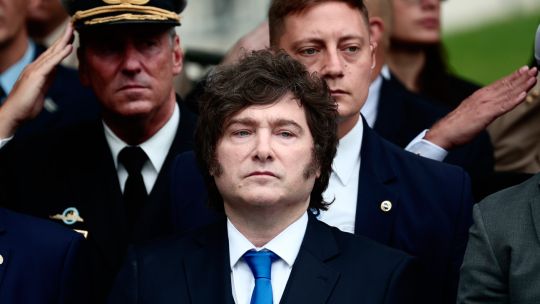
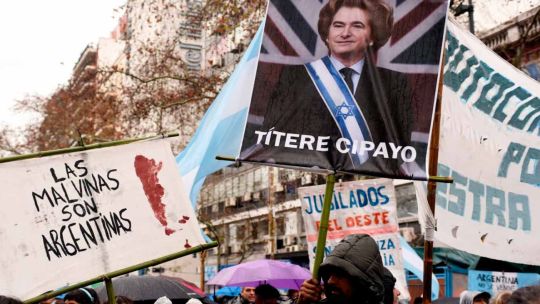
It’s Argentina’s brash libertarian leader who may best exemplify both the promise and difficulty of governing in Latin America now.
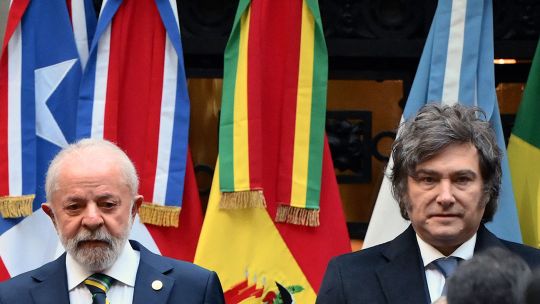
Milei, the region’s conservative standard bearer who will attend De la Espriella’s inaugural ceremony, succeeded in bringing inflation down from peaks near 300 percent, guided Argentina’s crisis-prone economy through a brief recession, and erased its persistent budget deficits.

But nearly three years into his presidency, annual inflation is still hovering around 30 percent, Argentines are frustrated with a lack of job opportunities, and recent corruption allegations against one of his closest aides are weighing on his popularity.
Some 62 percent of Argentines disapproved of Milei in July, against 37 percent who regarded him favourably, according to LatAm Pulse.
De la Espriella’s most pressing concern is likely to be security, an issue that even more than economics has helped propel conservative gains across Latin America. He’s promised to build mega-prisons as part of a tough-on-crime approach to violence and Colombia’s guerilla groups.

But for decades, dismantling the organised crime networks that operate throughout the Americas has proved far more difficult than campaign trail rhetoric suggests.
“They were quite effective at showing how left-of-centre governments had failed to address crime, or were ignoring crime,” Will Freeman, a fellow for Latin America studies at the US-based Council on Foreign Relations, said of the region’s crop of conservative leaders. “But now they actually have the responsibility of meaningfully reducing violence.”
Trump and the US have promised to help. But proximity to the US president may also pose risks.

Washington gave Milei a $20 billion financial backstop ahead of a closely-fought midterm election last year, is offering technical support to De la Espriella on the fiscal front and has formed a new coalition regional partners to fight drug trafficking.
Trump, however, remains broadly unpopular even in nations like Colombia, where he endorsed De la Espriella ahead of June’s runoff. More than half of Colombians, 54%, hold a negative view of the US leader, against 34% who see him positively, LatAm Pulse found.
Majorities in Chile and Argentina also rate him poorly, according to the survey.

For all Trump’s efforts to exert influence in Latin America, leaders like De la Espriella may not be able to count on him if they get in trouble, said Sergio Guzmán, founder of Bogota-based consultancy Colombia Risk Analysis.
“The US previously treated the region with a greater degree of generosity, but it will be too preoccupied with its own domestic priorities to throw Latin America a lifeline,” Guzmán said. “What we saw with Milei was really the exception rather than the rule.”
AtlasIntel surveyed 2,191 people in Colombia, 982 people in Peru, 1,120 people in Argentina and 1,801 people in Chile between July 30 and August 3. The Colombia and Chile polls have a margin of error of 2 percentage points. The Peru and Argentina surveys have a margin of error of three percentage points.
related news
by Oscar Medina, Manuela Tobias & Carla Samon Ros, Bloomberg







Comments