

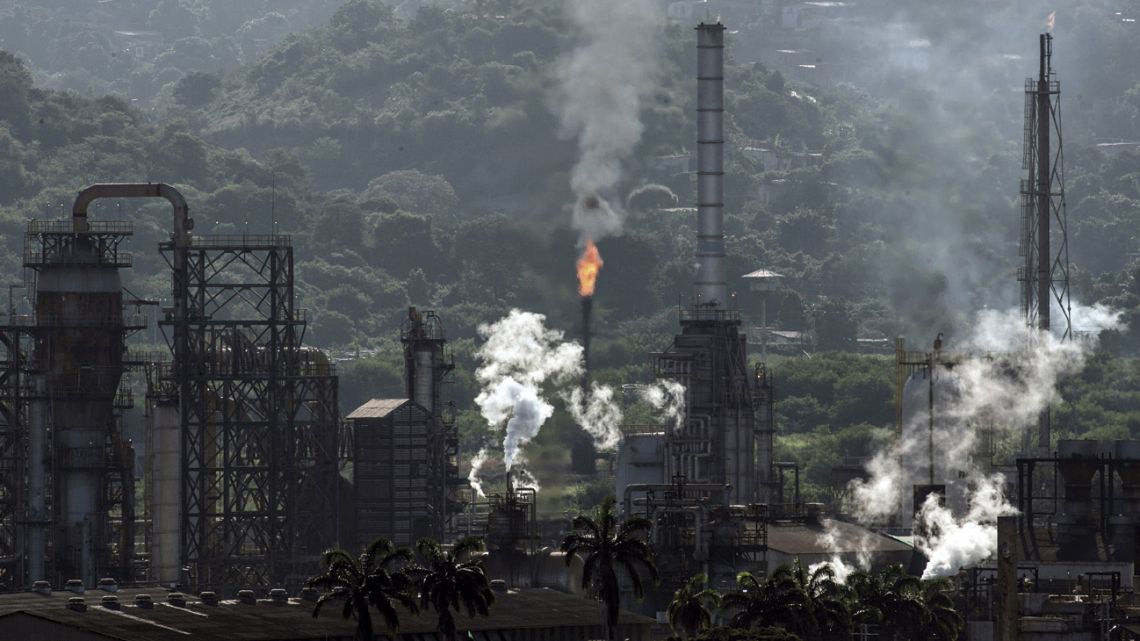
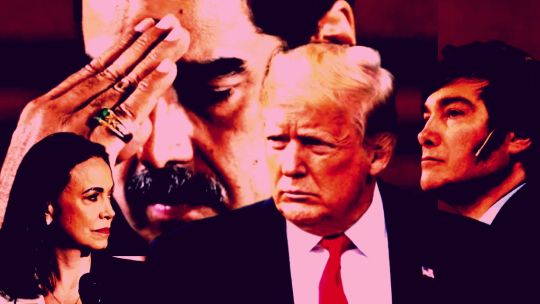
The United States could run Venezuela and tap into its oil reserves for years, US President Donald Trump said in an interview published Thursday, less than a week after toppling its leader Nicolas Maduro.
“Only time will tell” how long Washington would demand direct oversight of the South American country, Trump told The New York Times. But when asked whether that meant three months, six months or a year, he replied: “I would say much longer.”
The 79-year-old US leader also said he wanted to travel to Venezuela eventually. “I think at some point it’ll be safe,” he said.
US special forces snatched president Maduro and his wife in a lightning raid on Saturday and whisked them to New York to face trial on drug and weapons charges, underscoring what Trump has called the “Donroe Doctrine” of US hegemony over its backyard.

Since then Trump has repeatedly asserted that the United States will “run” Venezuela, despite the fact that it has no boots on the ground.
Venezuela’s interim leader Delcy Rodríguez insisted that no foreign power was governing her country. “There is a stain on our relations such as had never occurred in our history,” the former vice-president said of the US attack.
But she added it was “not unusual or irregular” to trade with the United States now, following an announcement by state oil firm PDVSA that it was in negotiations to sell crude to the United States.
US lawmakers push back
The US Senate took a major step Thursday toward passing a resolution to rein in Trump's military actions in Venezuela -–a rare bipartisan rebuke following alarm over the secretive capture of leader Nicolas Maduro.
The Democratic-led legislation, which bars further US hostilities against Venezuela without explicit congressional authorisation, got through a key procedural vote with support from five Republicans.
The vote on final passage, expected next week, is now seen as little more than a formality, and would mark one of Congress's most forceful assertions of its war-making authority in decades.
The effort is seen as largely symbolic however, as the resolution faces a steep climb in the US House and almost no prospect of surviving a likely veto by Trump.
‘Tangled mess’
Oil has emerged as the key to US control over Venezuela, which has the world’s largest proven reserves.
Trump announced a plan earlier this week for the United States to sell between 30 million and 50 million barrels of Venezuelan crude, with Caracas then using the money to buy US-made products.
On the streets of Caracas, opinions remain mixed about the oil plan. “I feel we’ll have more opportunities if the oil is in the hands of the United States than in the hands of the government,” said José Antonio Blanco, 26. “The decisions they’ll make are better.”
Teresa González, 52, said she didn’t know if the oil sales plan was good or bad. “It’s a tangled mess. What we do is try to survive, if we don’t work, we don’t eat,” she added.
Trump, who met oil executives Friday, is also considering a plan for the US to exert some control over Venezuela’s PDVSA, The Wall Street Journal reported. The US would then have a hand in controlling most of the oil reserves in the Western Hemisphere, as Trump aims to drive oil prices down to US$50 a barrel, the paper reported.
US Vice-President JD Vance underscored that “the way that we control Venezuela is we control the purse strings.”
“We tell the regime, ‘You’re allowed to sell the oil so long as you serve America’s national interest,’” he told Fox News Wednesday.
Loss of life
Vance, an Iraq veteran who is himself a sceptic of US military adventures, also addressed concerns from Trump’s “Make America Great Again,” saying the plan would exert pressure “without wasting a single American life.”
Caracas announced on Wednesday that at least 100 people had been killed in the US attack and a similar number wounded. Havana says 32 Cuban soldiers were among them.
The US operation in Venezuela – and Trump’s hints that other countries could be next – spread shockwaves through the Americas, but but he has since dialled down tensions with Colombia. A day after Colombia’s leftist President Gustavo Petro spoke with Trump on Wednedsday, Bogotá said Thursday it had agreed to take “joint action” against cocaine-smuggling guerrillas on the border with Venezuela.
– TIMES/AFP





Comments