

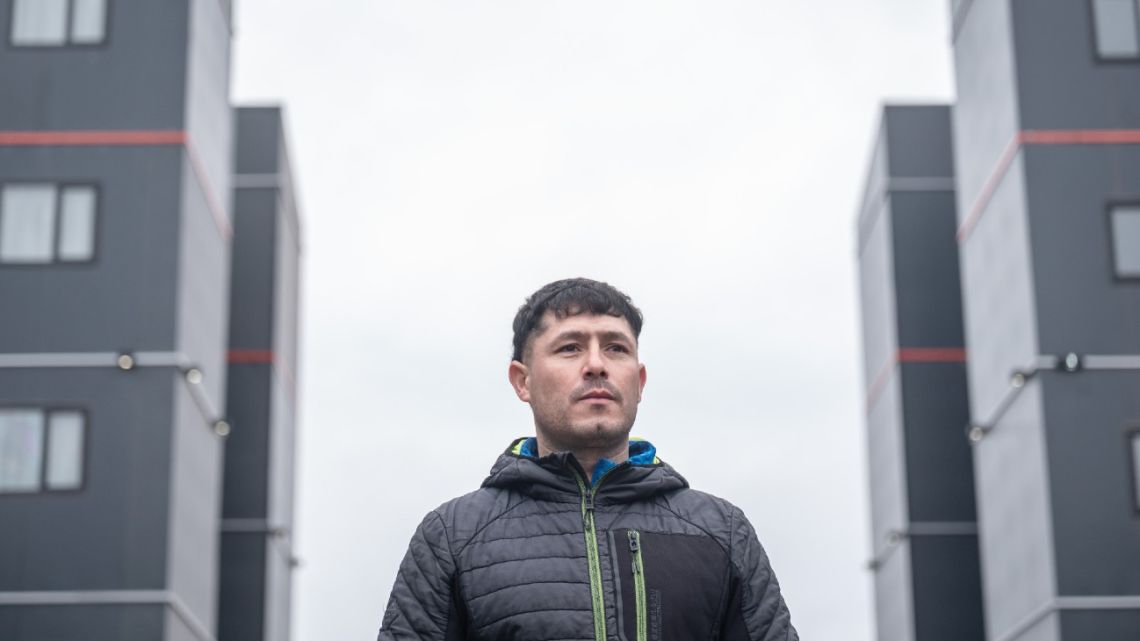
Diego Esquivel heard the wild tales down south as his career mired in Buenos Aires. Big pay, breakneck growth and small businesses with so much money they didn’t know what to do with it.
He realised an energy boom in windswept Patagonia wasn’t another false promise but a ticket to prosperity he couldn't achieve at home. So the 38-year-old joined thousands of Argentines who are relocating to the dusty plains that have transformed from flyover country into the biggest success story of President Javier Milei’s free-market experiment.
“My situation completely changed in just six months,” said Esquivel, whose salary tripled when he moved to the barren province of Neuquén to take a job managing the Vaca Muerta Services housing complex for oil workers. The divorced father of four is now helping his daughter pay for college expenses, something he couldn't afford on his old US$900 monthly salary working at a healthcare provider.
“In Buenos Aires, I couldn’t make ends meet. That’s the difference,” he said.

It’s voters like Esquivel, who identifies as independent, that hold the key to Milei’s future in a country infamous for its pendulum-swing politics. Even though Argentina’s next presidential election is a year away, Wall Street and Buenos Aires are already fixated on whether Milei’s economic model – and his stewardship of Latin America’s right-wing leaders – will convince voters to support his re-election bid. US President Donald Trump administration also has a stake in Milei’s success after extending a US$20-billion lifeline to his government last year.
Milei does have results to show: Inflation, once near 300 percent, is now close to 30 percent; the economy has likely grown two years in a row. Poverty is at its lowest level in a decade. All the major credit rating agencies have upgraded Argentina’s sovereign debt. His signature investment programme has approved 27 projects so far that total US$76 billion that’s coming in gradually and an additional US$133 billion of proposals under evaluation.
Yet foreigners’ bullish optimism is masking workers’ pain that’s dividing the country. While investors including billionaire Peter Thiel plow money into oil and gas down south, lithium in the north and copper out west, those investments haven’t yet trickled down to the real economy in Buenos Aires and other metro areas that tend to determine presidential elections. Instead, job losses, soaring utility bills and indebted households solidify a feeling among middle class Argentines that the economic growth is evading them. Over 32,000 businesses have closed since he took office, bringing the total number of private-sector employers to the lowest level since 2007.

“This economy is beginning to reveal two Argentinas,” says Marcelo García, director of the Americas at consulting firm Horizon Engage. “The winners of the Milei economic programme are capital-intensive. The losers – including small businesses, retail and construction – are labour-intensive.”
Only 39 percent of Argentines approve of his government, down from 43 percent at the start of the year, according to LatAm Pulse, a survey conducted in September by AtlasIntel for Bloomberg News. It’s not a seismic shift, but investors are beginning to worry: Argentina’s sovereign bonds rank among the worst performers in emerging markets over the past two months.
Milei zigzags between denying that times are tough, blaming his predecessors for the crisis he inherited and acknowledging that his nation’s heartland is still hurting.

“We’re not in paradise, this isn’t Switzerland, but we can’t ignore the initial conditions,” Milei said at a conference on August 20. “The photo is still horrible but the movie – it’s the best movie in Argentina’s history.”
The libertarian’s legacy now hinges on whether his success in Neuquen can reach the rest of the economy. Milei pledged five percent growth in 2026 in his budget last year, but Argentina is now on track to expand just 1.5 percent. Data in July showed the worst one-month drop since the Covid-19 pandemic, and the economy likely shrank between April and September, marking what academics call a technical recession.
Only four of Argentina’s 23 provinces and Buenos Aires City have added private sector jobs in the formal economy since Milei took office. Neuquén is growing faster than everywhere else.
Cash to ‘casino’
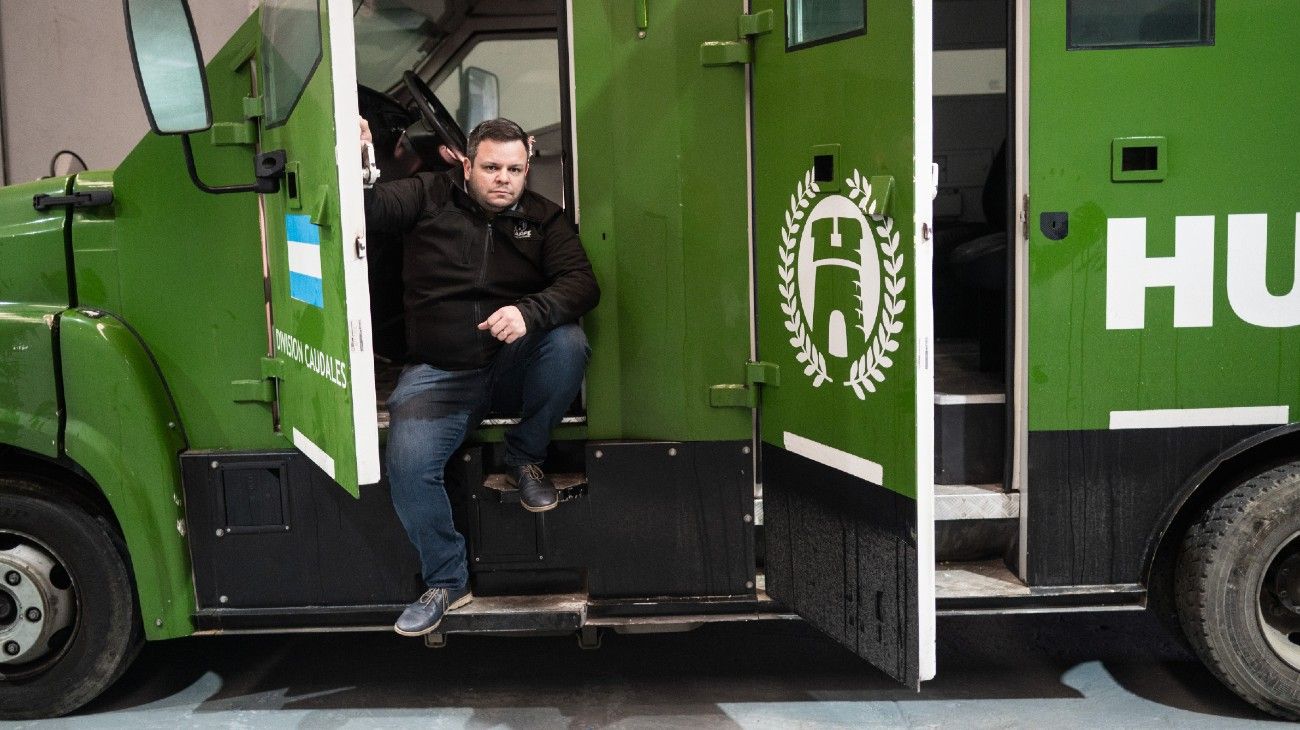
Matías Pizzio is hiring and expanding operations in Neuquén. He hauled three armoured trucks 13 hours down south to safeguard cash headed for banks and ATMs. The general manager of cash-in-transit firm Huarpe Seguridad Integral, Pizzio set up shop this year as oil fortunes led to a wealthier year-round community needing a place to park their money.
“That is the real economic spillover generated by oil development,” said Pizzio, 39. “We saw a major business opportunity. Neuquén’s growth and demand from our clients led us to establish a presence in the province.”
Pizzio may be trucking loads of cash, but others warn that customers don’t know what to do with it. Investment adviser Christian Lobenstein started hosting workshops in Neuquén a few years ago to counsel small business owners who were poised to score big from the energy rush. The portfolio manager quickly became alarmed by locals’ lack of financial literacy.
A couple years ago, he struggled to convince one business owner whose company won contracts to dig oil wells that the 600 million pesos (US$390,000) sitting in his bank would be put to better use in financial markets before 200 percent inflation wiped it out in his account bearing zero interest.
“I built an investment strategy for him, but I was never able to get him to transfer the funds,” says Lobenstein. “There is this idea that the capital market is a casino and that, just as it can make you 10 percent one day, it can make you lose 20 percent the next.”
Foreigners seem less cautious about investing in Argentina. Thiel bought a US$12-million mansion in Buenos Aires’ poshest neighbourhood, and then went on to buy a sizeable stake in Argentina’s largest private oil company Vista Energy SAB. Oklahoma tycoon Harold Hamm’s firm Continental Resources is bidding for oil fields in the Dead Cow, or Vaca Muerta, shale deposit. JPMorgan, Chevron and a litany of other firms are either financing oil and gas projects or doing the drilling themselves.
Milei needs that optimism in Argentina’s south, west and north to translate into votes next year in the densely populated east. In 2023, he flipped several swing states from the grip of Peronism, Argentina’s leftist movement that’s dominated politics for decades. The libertarian won 60 percent of votes in Neuquén just four years after market-friendly leader Mauricio Macri lost the province with 37 percent of ballots.
Today, Milei’s rivals – Peronist leaders Sergio Massa, Axel Kicillof and Máximo Kirchner, the latter a son of former presidents – are equally unpopular or even more so, and it’s still unclear among them who will emerge as the top contender next year. A fragmented opposition and power struggle within Peronism could be Milei’s biggest advantage.
Even as Neuquén becomes Milei’s success story, frustrated locals warn the local economy is too hot. Oil rigs are gushing but paved roads, street lighting and basic infrastructure aren’t widespread, as new arrivals strain the public transit, health and education systems built for another era. With a population of about 700,000, the province reported 21,000 new residents last year, forcing the local government to start building 160 new classrooms for thousands of children. Residents bemoan the emerging stereotype of arrivals who show up unemployed and unprepared for harsh winters in Patagonia’s less scenic territory.
Carlos Isa is still betting on Neuquén, but two years after a cross-country move from northern Argentina, he’s less ecstatic about his wager. Business is good, but not as great as he had hoped for his company Micronor, which specialises in earth-moving equipment. Like global oil prices, dredging the land it comes from can be a volatile business, and Isa’s costs in Vaca Muerta are higher than elsewhere in the nation.
“Many people come here thinking this is a golden dream, but today I would advise caution,” says Isa, 50. “They think they’ll come to Vaca Muerta and strike it rich. The truth is that it does not really work that way.”
Oil drillers make up a sliver of the workforce, but Isa and others affirm that those big salaries misleadingly dominate urban legend across Argentina. All the industries clutching onto the energy-fueled bandwagon pay better compared to Buenos Aires, but the extra income gets watered down by Neuquén’s higher cost of living.
Even Neuquén Province Governor Rolando Figueroa is telling job seekers to pump the brakes.
“When some people go on television and talk nonsense about the number of available jobs, they are not reflecting reality,” Figueroa said in an interview, chastising the Buenos Aires elite. “To get a job in Vaca Muerta, you have to train for at least a year, you can’t just show up and find a job overnight.”
‘We talked about shutting down’
Back in Buenos Aires, Alicia Arce lost her biggest customer earlier this year. The 63-year old’s cleaning supplies store sits a block away from FATE, a tire plant that closed in February after 80 years in operation.
FATE had become a symbol both of good-paying factory jobs and Argentina’s protectionist history that created exorbitant costs for everyday items. Milei’s decision to open up the economy to more foreign trade – including imported tyres – left the plant flat-footed after dominating the market for decades.
The plant employed nearly a thousand workers, providing Arce with a steady flow of clients who needed to pick up mops, detergents and other essentials after their shift. She estimates her sales are down 30 percent since Milei took office as workers’ salaries haven’t kept up with inflation.
“We’ve talked about shutting down,” says Arce, who runs the store with her husband. “We’ve reached the point where we don’t even have enough money to fill up a tank of gas. So what exactly are we keeping this business open for?”
Argentina’s economy has lost over 265,000 private sector jobs since Milei took office, somewhat offset by an informal economy that’s gained just as many workers, though often earning significantly less than they did on payroll.
Roberto Ambrosio is one of them. The former machine operator at FATE knew the factory was in decline, but always assumed it would persevere – after all, it had overcome so many other crises in Argentina. Yet signs emerged: Workers hadn’t received a wage increase in a year and a half. Tire production gradually fell from 10,000 wheels a day to 7,000. Ambrosio stopped eating red meat, a staple of Argentines’ diets.
Since losing his job, Ambrosio took up painting gigs as he watched former colleagues join the legions of Uber drivers. At his age, he doesn’t expect to get another salaried job again. He’s living off his wife’s salary, along with their college-age son living at home. His old income of 1.6 million pesos at the plant – already below the national average – is gone. “Now, if I am lucky, I’ll earn 300,000 pesos.”
A lifelong Peronist voter, Ambrosio staunchly opposes Milei.
“Uber helps you pay the electricity or petrol bill, but it doesn’t support a family,” says Ambrosio. “We had to cut expenses absolutely everywhere.”
Esquivel, the housing complex manager who left the Buenos Aires area to move to Neuquén, voted for Milei three years ago and again for his party in the 2025 midterm race. But looking ahead to next year’s presidential election, he now says he’s undecided despite landing the exact type of hot job Milei envisioned in a free-market Argentina.
“The government’s decisions can affect us for better or worse, but I try not to fantasize about any party or politician,” Esquivel said. “The truth is I don’t know. There’s a long way to go to 2027 and I haven’t decided who I’ll vote for.”
related news
Michel Temer: ‘It would be ideal for Lula to concede an amnesty to Bolsonaro – but I don’t think he will’

A look at the investigations that spooked Brazil's Flávio Bolsonaro
Flávio Bolsonaro travelling to United States on private jet from Argentina
IMF strikes preliminary Argentina deal as market return dims
by Ignacio Olivera Doll, Bloomberg
Image Gallery










Comments