

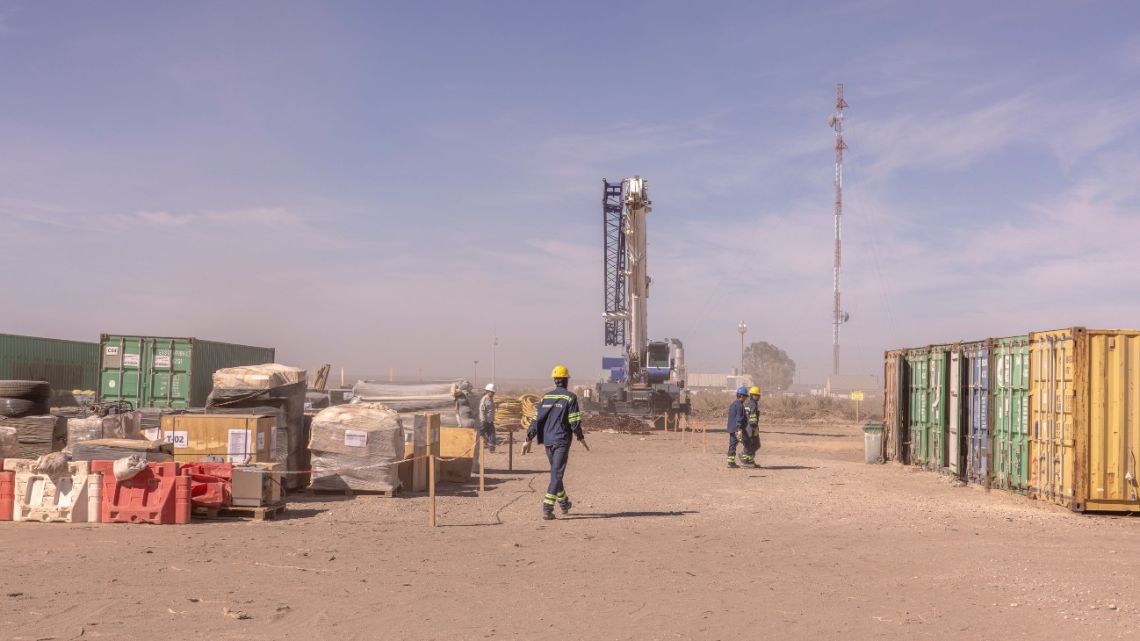
Phoenix Global Resources Plc, a crude producer backed by trading house Mercuria Energy Group Ltd, is preparing a US$6-billion expansion in Argentina’s booming Vaca Muerta shale patch after President Javier Milei broadened his investor incentives to include oil drilling.
Phoenix will apply in the coming days to the programme, known by its Spanish acronym RIGI, to develop acreage on the eastern flank of Patagonia’s shale fields plus a new asset in another corner of the basin that it’s close to acquiring, Chief Executive Officer Pablo Bizzotto said in an interview.
Milei has leveraged RIGI to lure energy and mining projects worth tens of billions of dollars – offering up tax breaks that directly improve shale economics and legal guarantees that shield companies from policy meddling that was rife in Argentina before he took office in 2023.
“RIGI takes your asset and relocates it virtually to a developed country,” Bizzotto said on March 27 in Buenos Aires. “Of course there are financial advantages that boost returns, but the strongest aspect for me is the message it sends: Argentina isn’t going to move the goalposts.”

Milei’s move to widen the scope of the RIGI incentives to Vaca Muerta oil wells promises to quicken shale growth. For Phoenix, the programme has helped to spur its acquisition talks and deliberations of adding a third drilling rig.
Meanwhile, rivals Tecpetrol SA and Pampa Energía SA have announced they are submitting multibillion-dollar proposals as construction makes headway on a signature oil pipeline with its first crude cargoes about a year away. Phoenix itself plans to keep shipping through the already-expanded Oldelval SA pipeline.
Mercuria founded Phoenix nearly a decade ago and holds a roughly 90 percent stake in the business that it took private in 2022. It has stayed the course in Argentina even as other international companies like Exxon Mobil Corp, TotalEnergies SE and Equinor ASA divested assets – either because of ongoing frustrations with capital controls or to flip acreage for a tidy profit.

The trading house’s doubling down on oil production in Argentina – Phoenix could deliver 260 percent growth by the end of the decade from its current 22,000 barrels a day – demonstrates how Milei is finally starting to draw international capital to the country’s shale patch after years of homegrown development.
Mercuria’s perseverance might be attributed to having a local minority partner, businessman José Luis Manzano, who’s proven adept at navigating Argentina’s economic crises. Phoenix’s US$6-billion RIGI application will span a multiyear capex strategy. Since the investment total must date to when RIGI first came into effect, in 2024, about US$1 billion has already been disbursed.
The Vaca Muerta ramp-up coincides with soaring oil prices amid war in Iran, which Argentine shale leaders view as a chance to position themselves as reliable newcomers increasingly able to cover a portion of global demand. Daily crude production recently surpassed a turn-of-the-century record, and now stands at nearly 900,000 barrels, mostly shale, with one third exported.

For oil executives, the sudden rally in Brent past US$110 is the first true test of whether Milei can avoid the trap his predecessors fell into. They repeatedly capped domestic oil prices and blocked exports in order to stem inflation driven by higher fuel prices – only to spoil the appeal of investing in the Vaca Muerta.
Milei prohibited such direct interventions by law. So far, the libertarian is employing other methods – postponing fuel taxes and allowing a larger biofuel blend in gasoline – to mitigate price hikes at the pump.
“The Argentine market is working with export parity,” said Bizzotto, a former upstream vice president at state-run YPF SA, using a term that refers to local and global prices trading in step. “It’s the most powerful signal yet in the Milei era – and crucially for us, with a foreign majority shareholder – that market conditions will be respected.”













Comments