

The European Union and South American bloc Mercosur are set to sign an agreement Saturday, more than 25 years in the making, to create one of the world's largest free trade areas.
Agreed in Brussels last week despite opposition from European farmers who fear for their bottom line, the pact is finally set to be signed in the Paraguayan capital Asunción.
Together, the EU and Mercosur account for 30 percent of global GDP and more than 700 million consumers.
The treaty eliminates tariffs on more than 90 percent of bilateral trade.

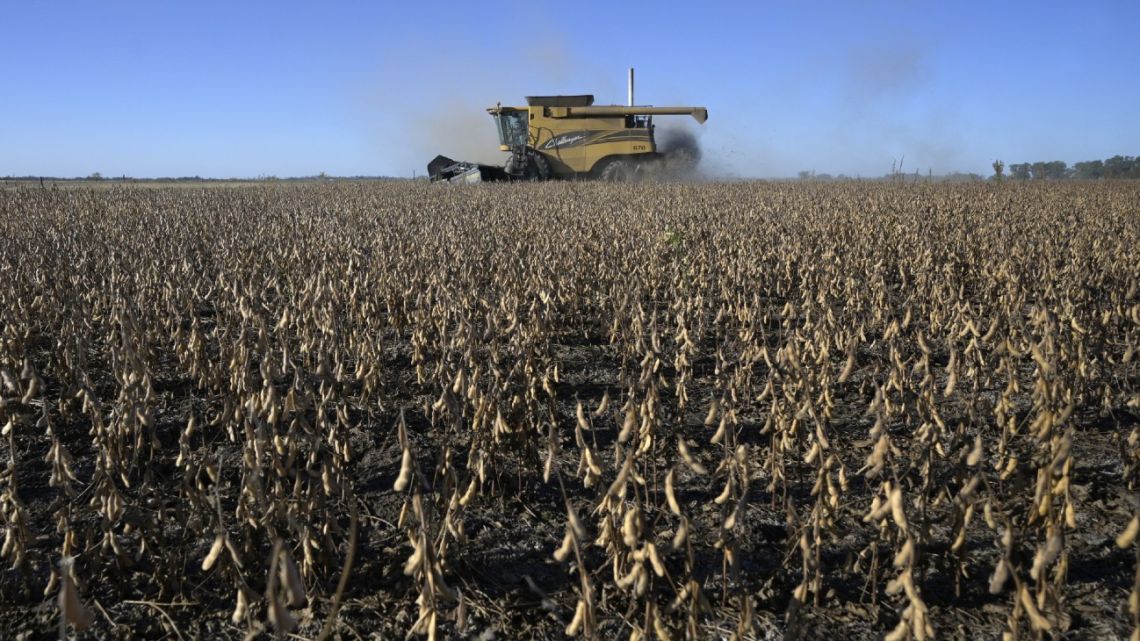
It is meant to favour exports of European cars, machinery, wines, and spirits to Mercosur, which will in exchange have easier access for its beef, sugar, rice, honey and soy.
The agreement has been under negotiation since 1999 between the EU and Mercosur founding members Argentina, Brazil, Uruguay, and Paraguay, which holds the bloc's rotating pro-tempore presidency. Bolivia is also a member, but was not among the bloc's founders and will not be a party to the pact.
European Commission President Ursula von der Leyen is scheduled to travel to Rio de Janeiro on Friday with European Council head António Costa, from where they will fly on to Asunción for the signing.

In addition to host president Santiago Peña, Uruguay's president Yamandú Orsi will also attend the signing.
The attendance of Argentina's leader Javier Milei is expected to attend. Brazil's Luiz Inacio Lula da Silva has not confirmed.
'Historic day'
Lula last week hailed an "historic day for multilateralism" after the EU agreement, in the face of "an international context of growing protectionism and unilateralism."
The European Commission, which negotiated the text, failed to win over all member states, with heavyweight France leading an ultimately unsuccessful push to sink it.
Ireland, Poland, Hungary and Austria also voted against the accord, but this was not enough to block it after holdout Italy ultimately threw its weight behind the pact.
Argentine trade analyst Luciana Ghiotto told AFP the agreement was essential "to show that there is a third way without tying ourselves to the United States or China" in a time of heightened unilateralism.
"It is the longest-running negotiation worldwide, and the rush to conclude it has to do with [US President] Donald Trump's administration and its massive use of tariffs," she added.
Arguing that the existing trade regime was unfavourable to his country, Trump has imposed tariffs on a vast array of products imported to the United States from all over the world, since he returned to the White House a year ago.
Fragmentation
For the EU, the deal with Mercosur "is a way to shore up autonomy and a place as a significant actor internationally," said political scientist Alejandro Frenkel of Argentina's University of San Martín.
For the South American bloc, it was a rare victory at a time of "crisis and internal fragmentation" on how to deal with threats from Trump against countries such as Venezuela and Cuba.
After Saturday's signing, the pact must still be ratified by Mercosur members and the European Parliament, where a majority in favour is still not certain.
European farmers fear the deal will lead to an influx of cheaper South American products due to production standards considered less stringent.
Thousands have been protesting in France, Poland, Ireland, and Belgium in recent days.
In a bid to allay fears, the European Commission announced a crisis fund and safeguards allowing for the suspension of preferential tariffs in case of a damaging surge in imports.
related news


by Hugo Olazar with Martin Raschinsky, AFP





Comments