

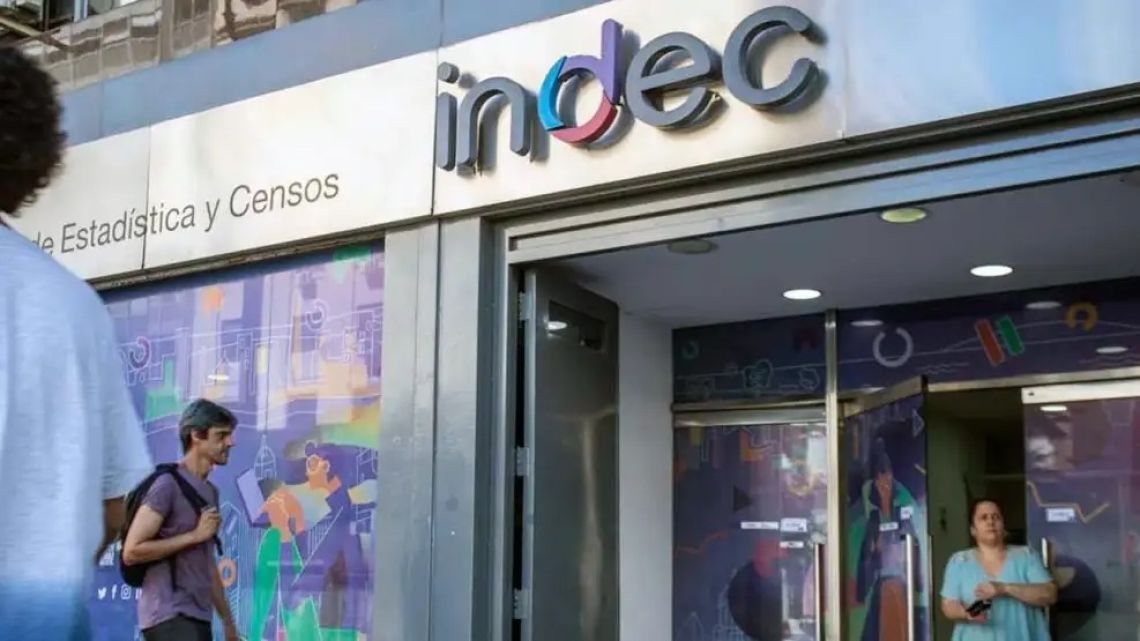
Economy Minister Luis Caputo was in damage control mode in midweek, seeking to play down the impact of Marco Lavagna’s abrupt resignation as INDEC national statistics bureau chief over the government’s decision to postpone yet again the new methodology to update the measurement of inflation.
It was a "friendly" exit, Caputo claimed, stemming from technicalities regarding the inflation index. Insisting that "there is nothing to hide," he also denied any pressures from the International Monetary Fund (IMF) to update the mechanisms for measuring inflation.
An IMF mission arrived in town last Thursday, the day after his remarks.
The government shared the idea of applying the new methods once inflation had been completely tamed but Lavagna’s problem was that he had already announced a specific date and felt committed. This exposed the government to "political attack,” Caputo explained, denying any impact for the Javier Milei administration despite "the deplorable wave of rumours."

Meanwhile, the government is stuck with a consumer price index based on a hopelessly outdated 2004 shopping-basket including items which have disappeared almost completely from everyday life while more recent objects of mass consumption remain off the radar.
According to the Chequeado fact-checking website, the index continues to be based on such outmoded technology as fax machines, video and cassette recorders, diskettes, telegrams and videoclub rentals among others.
Meanwhile more recent innovations ranging from streaming platforms to coffee in capsules aren’t included in the index.

But perhaps the key figure here explaining the government’s aversion to the new methodology is that it allocates 14.5 percent of the index to public services whose billing is in the process of being rapidly increased by the La Libertad Avanza government in order to correct relative prices whereas electricity, gas, water, etc. only represent 9.4 percent of the old index.
Resignation

Lavagna stepped down last Monday after just over six years at the helm. Apart from the government’s suspension of the new consumer price methodology, his exit was also thought to stem from widespread pay unrest at the bureau over frozen salaries leading to a strained atmosphere. But the official had also felt committed to the reform to update the methodology for measuring inflation after heading the process.
In a farewell message to staff, Lavagna said he had decided to “close this chapter” after “six years of hard work and enormous challenges.”
His replacement will be Pedro Lines, the bureau’s technical director, Caputo announced the same day.

"The appointment of Lines, given his eminently technical profile, ensures institutional continuity, the agency's current statistical operations and its annual schedule," read a statement.
Lavagna, the son of former economy minister Roberto Lavagna (2003-5), was appointed to the post on December 30, 2019 by former president Alberto Fernández. He remained in office when Javier Milei was sworn in four Decembers later.
Some workers at the bureau expressed concern over the departure of Lavagna, who is seen as an ally of opposition Peronist leader and 2023 presidential candidate Sergio Massa.

“We are deeply struck by a resignation coming eight days before the release of the new index,” said Raúl Llaneza, a workers’ delegate at INDEC in comments to the La Nación newspaper. “We demand an INDEC independent from political power.”
Chequered history

INDEC has had a chequered history. It gained notoriety during former president Cristina Fernández de Kirchner's 2007-2015 Presidency when its statistics became unreliable as a result of political pressure.
Lavagna’s tenure continued the normalisation of statistics that began when Jorge Todesca took charge of the bureau during Mauricio Macri’s 2015-2019 Presidency.
His decision to remain at the helm during the Milei administration drew criticism from the Peronist opposition but provided the head of state with credibility as his government slashed inflation, its major achievement since coming to office.

Inflation fell from 211.4 percent in 2023, when Milei devalued the peso by half, to 31.5 percent in 2025 – its lowest level in eight years.
However, the bureau’s most recent data, from December, showed prices had risen by 2.8 percent, continuing an upward trend beginning in June.
Lavagna was harshly criticised, mainly by the opposition, for delays in updating the existing consumer price index. His critics allege he had postponed its renewal until after the 2025 midterms.

Under the terms of its most recent deal with the IMF, Argentina was meant to introduce a new index in December 2025.
– TIMES/AFP/NA











Comments