

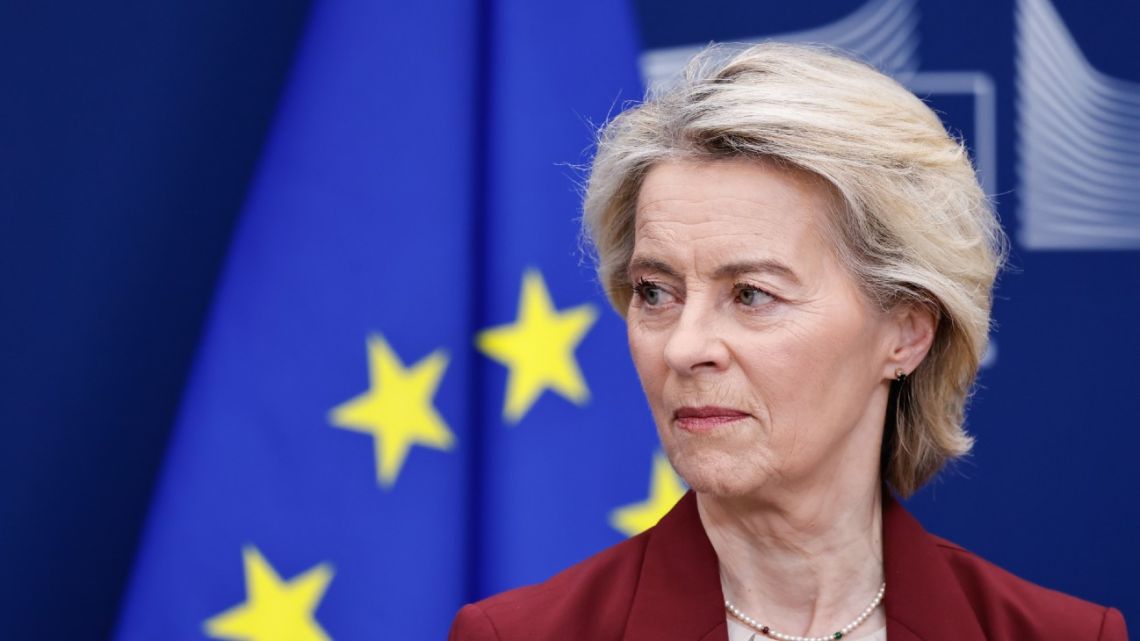
Ursula von der Leyen was supposed to sign the European Union’s largest free-trade agreement on Saturday, proving the bloc’s standing as a geoeconomic force.
Instead, the European Commission president will have to figure out a way to salvage the Mercosur pact by rallying last-minute support from countries including Italy that helped delay the deal – yet again – over concerns it would hurt domestic farming sectors.
Negotiations on the trade accord – with Argentina, Brazil, Uruguay and Paraguay – have been drawn out over 25 years, rankling the South American countries. Brazilian President Luiz Inácio Lula da Silva said earlier this week the time was now or never.
In a letter to Lula Friday, von der Leyen and European Council President Antonio Costa regretted missing the December 20 self-imposed deadline and said they’re “actively working” to get the deal across the finish line, according to the document seen by Bloomberg.

Officials say they will try again to sign the deal on January 12, but there’s no guarantee.
The ongoing failure to ratify the accord is a blow for the EU, which wants to use the transatlantic agreement as evidence that it could be a global power. It especially wants to prove it can move outside the orbit of China and the United States, which have increasingly antagonistic trade relationships with Europe.
“This is Europe’s independence moment,” von der Leyen said earlier this week, ahead of a summit when EU leaders would tackle funding options for Ukraine as well as Mercosur.

The EU views China as both an economic competitor and a systemic rival and has been navigating an escalating trade confrontation that’s seen both sides impose tariffs on the other’s imports. Earlier this year, Beijing announced plans to tighten controls on its exports of rare earths and other critical materials, showing the EU how vulnerable its industries are.
And this summer, the EU accepted what it saw as an unbalanced trade agreement with the US, agreeing to a 15-percent tariff on most of its exports while pledging to remove all duties on American industrial goods.
The EU-Mercosur trade pact could help Europe escape its souring dynamics with the US and China. The pact would create an integrated market of 780 million consumers, gradually erase tariffs on goods including cars and give Europe easier access to Mercosur’s vast agricultural industry and resources.

Critically, that would give the EU economic ties and supply chains beyond the US and China. The deal would also show the region that Europe can offer a credible economic alternative to the two superpowers.
Failure to secure the Mercosur partnership “would certainly be a blunder of epic proportions for Europe’s ambitions to position itself as a relevant player on the global economic scene,” said Agathe Demarais, senior policy fellow at the European Council on Foreign Relations, a think tank.
For now, the EU has been unable to find the majority support needed for passage, mostly due to deep-seated anxieties that the new trade dynamics would merely undercut Europe’s agriculture sector.

During a summit Thursday in Brussels, EU leaders faced down thousands of protesting farmers setting tires ablaze and dumping potatoes in the streets.
After the summit ended, however, the leaders expressed optimism that they could still move forward in January.
Another three-week wait is “tolerable” after 25 years of negotiations, von der Leyen told reporters. “I’m very confident we will bring it home.”

The deal’s fate may come down to Italy. Italian Prime Minister Giorgia Meloni has said that she needs more time to win domestic approval.
“Other developing economies are watching and would take note of how hard it is to get anything over the line with the EU,” Demarais said.
For Berlin and many others, however, the Italian leader was trying to extract the maximum price for its kingmaker role, seeking more concessions for its agricultural sector.

Lula said Meloni had told him she just needed a few more days. But while some expect that Italy will ultimately give its blessing, given the potential benefits for its exporters, others have been more downbeat.
“If there’s no signature on December 20, then the agreement is dead, and this will have consequences for the EU in future trade relations with countries around the world,” Bernd Lange, chair of the European Parliament’s trade committee, said this past week.
In an attempt to get the deal through this week, the European Parliament and EU capitals agreed to add fresh protections for European farmers that would shield them from sudden price or import swings.

It didn’t work. And if things keep lingering without a conclusion, the two blocs may shift their attention elsewhere.
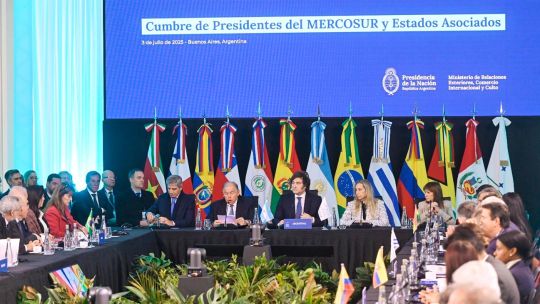
“Without political will and courage from its leaders, it will not be possible to conclude a negotiation that has dragged on for 26 years,” Lula told his Mercosur counterparts at the bloc’s semi-annual summit Saturday. “Meanwhile, Mercosur will continue working with other partners.”
The South American bloc wants to conclude an agreement with the United Arab Emirates, and is exploring possible partnerships with Canada, the UK and Japan. The EU, for its part, is trying to close a deal with India, which is also almost two decades in the making.

“If the EU wants to remain credible in global trade policy, decisions must be made now,” German Chancellor Friedrich Merz said on his way into the summit in Brussels.
by Jorge Valero & Augusta Saraiva, Bloomberg









Comments