

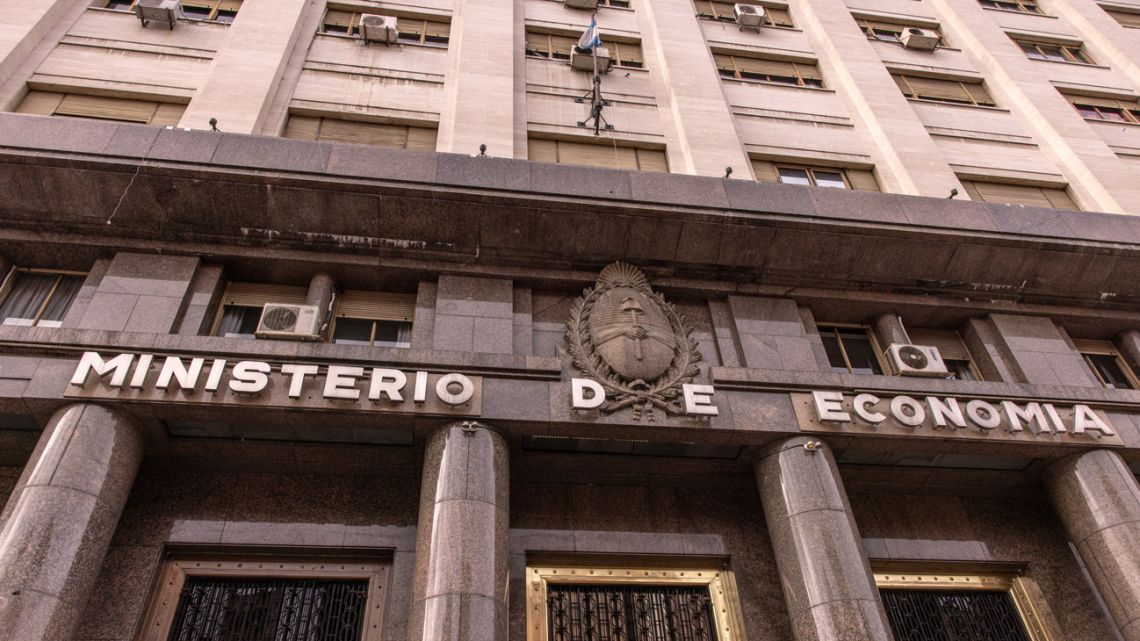
A rout in Argentina’s bonds has taken bullish investors by surprise, as a global emerging markets pullback compounds concerns over President Javier Milei’s re-election prospects and the country’s ability to meet billions in upcoming debt payments.
Argentina’s sovereign dollar bonds have been the worst performers across emerging markets over the past two months, with a relentless sell-off pushing yields to nearly 12 percent earlier this week and spreads to their highest level in more than a year. The losses have accelerated despite calls from asset managers including Vontobel, Carmignac, Schroders and ProMeritum Investment Management, who have said the debt is too cheap to ignore.
“Most large investment funds were overweight and surprised by the magnitude of the sell-off. They never thought it would go this far,” said Ramiro Blazquez, a Latin America strategist at StoneX. “Argentina is one of the first places investors cut exposure when they reduce risk because it’s a higher-risk credit, and that magnifies the move.”
Investors piled into Argentine assets on hopes that Milei will tame inflation and enforce fiscal discipline. While he’s made strong progress on those objectives, it has come alongside lackluster economic growth – potentially hurting prospects for a second term when the country holds its presidential elections a year from now. Argentina is also on the hook for roughly US$25 billion in hard-currency debt payments next year, which threatens to strain its already-precarious finances.

Further exacerbating the losses are the ownership dynamics of Argentina’s bond market, where offshore money managers already hold substantial positions while domestic investors have been reducing their share. That leaves fewer buyers to support prices when risk appetite deteriorates and offshore funds cut their holdings – a scenario that appears to have played out in recent weeks, as US bond yields at multi-decade highs spark selling across emerging markets.
Election worries
Argentina posted its first annual budget surplus in 15 years in 2024 and Milei has tightly controlled public spending, while bringing annual inflation down sharply from the triple-digit rates seen when he took office. Growth, however, has stalled, with the economy expected to slip into a mild recession this year, adding to concerns over support for Milei’s reforms.

The government confidence index compiled by Torcuato Di Tella University, often used as a proxy for support for the incumbent in election periods, is hovering near the lowest levels of Milei’s presidency, around 40 percent.
“The economy is in transition,” said Fernando Sedano, chief LatAm ex-Brazil economist at Morgan Stanley. “Investors think if you have better growth dynamics, chances of policy continuity are eventually greater.”
At the same time, about US$4.5 billion in debt payments loom in January alone on the country’s Global and Bonar bonds. The government has suspended local sales of dollar-denominated bonds in recent months as borrowing costs surged, shutting off a financing channel it had expected to generate an additional US$1 billion this year and US$5 billion the next. International borrowing, meanwhile, remains prohibitively expensive.

Government data also point to waning support from domestic investors. Argentine residents held 23.3 percent of the country’s Global 2030 bonds at the end of June, down from 35.9 percent at the end of 2024, according to the INDEC national statistics bureau. Their share of Global 2035 notes fell to 19.5 percent from 35 percent over the same period, leaving the market increasingly reliant on foreign demand.
“Argentine bond prices remain captive to external markets due to overweight positioning from offshore investors and a lack of catalysts before the election,” said David Austerweil, a portfolio manager at VanEck.
The sell-off has continued even as Argentina’s Central Bank accelerated dollar purchases in October, bringing acquisitions this year to over US$15 billion. The government is counting on booming energy exports, particularly from the Vaca Muerta shale formation, to help facilitate the foreign currency needed to meet its obligations.

Some investors see the sell-off as an opportunity to buy more of Argentina’s debt on the cheap, arguing that key aspects of the country’s reforms – such as fiscal discipline and lower inflation – remain in place.
“We see substantially more pessimism reflected in prices than is justified by the underlying fundamentals, creating what we believe is an attractive medium-term opportunity for investors willing to look through the current noise,” said Thierry Larose, a portfolio manager at Vontobel Asset Management.
As if often the case in Argentina, however, markets will likely take their cue from the direction of the country’s politics. That could set up a bumpy ride for next year.

“Ultimately, it is only the 2027 Presidential election that matters,” Austerweil said. “If Milei wins, the sell-off will become a distant memory; if he loses, the recent spread widening will look modest in comparison to what comes after.”
by David Feliba, Bloomberg











Comments