

Carlos Ramírez was six years old on March 14, 1977. In the early hours of that morning, police officers and Army personnel surrounded his home and opened fire. His mother, Vicenta, was killed by a gunshot to the head, despite having raised a white cloth to signal her surrender.
Argentina’s courts ruled that the boy and his two younger siblings, María Ester, aged four, and Mariano, aged two, should be sent to the Casa de Belén children’s home, where they remained until December 1983. At the institution, their surname was changed and they were subjected to all manner of abuse: physical, psychological and sexual. Whenever one of them asked about their biological family, they were labelled “terrorist” or “subversive” and punished.
This lasted seven years – the rest of their childhood.
Forty-five years on, in April 2022, Carlos recounted this story before Federal Oral Court No. 1 of La Plata. He delivered his testimony from Sweden, the country where he settled after the return of democracy, when he was reunited with his father.

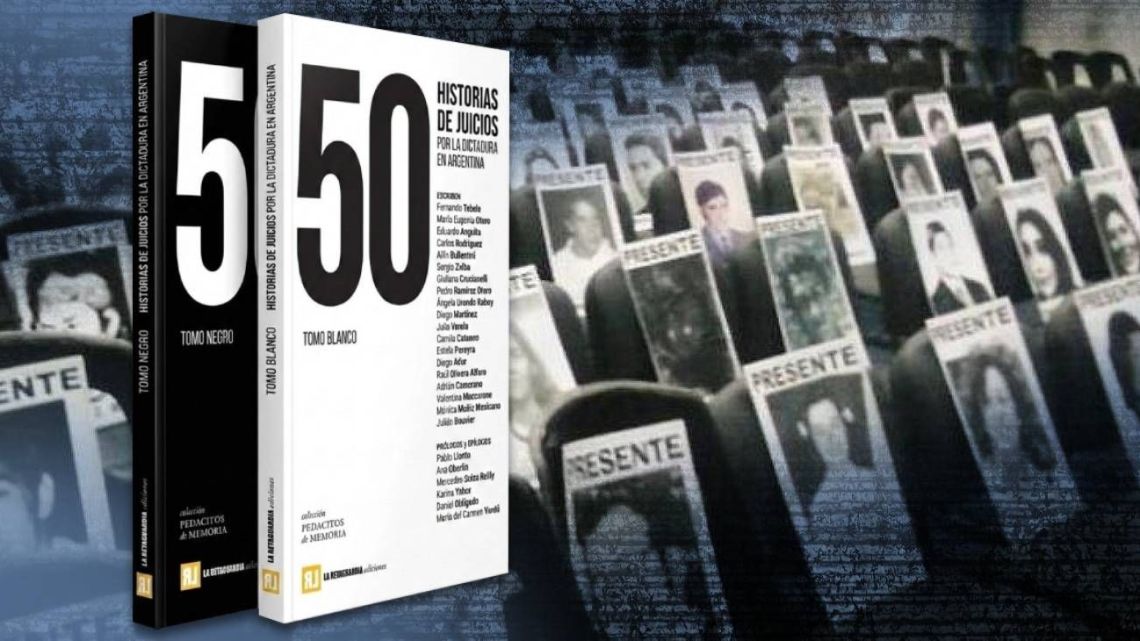
Carlos’ story is one of 50 featured in Cincuenta historias de juicios por la dictadura en Argentina (“Fifty stories from trials related to the dictatorship in Argentina”), the latest book published by La Retaguardia, an independent media outlet that was founded in 2003 and quickly became a leading outlet in covering trials for crimes against humanity.
The Covid-19 pandemic forced a change in reporting practices and in June 2020, La Retaguardia began broadcasting court proceedings on YouTube. Initially, some courts refused to allow the transmission of certain stages, such as witness testimony or the reading of closing arguments. Over time, however, permissions were expanded, and in July 2024 the Criminal Cassation Court ruled in favour of televising all trials.
The decision proved crucial in making the administration of justice more transparent. Indeed, it paved the way for other media outlets to adopt the practice. A number of news websites, for example, now feature live streams on their homepages of high-profile cases such as the notebooks corruption trial.

La Retaguardia, however, does more than simply relay court footage. “We generate our own footage too and decide where to focus. It’s editorial coverage. Thanks to that, some survivors have recognised their torturers on screen. In the ‘Contraofensiva’ trial, for instance, a woman in Río Gallegos watching recognised a police officer who had appeared as a witness. Two years later, that man was convicted,” said Fernando Tebele, one of the outlet’s founders.
First-hand

testimonies
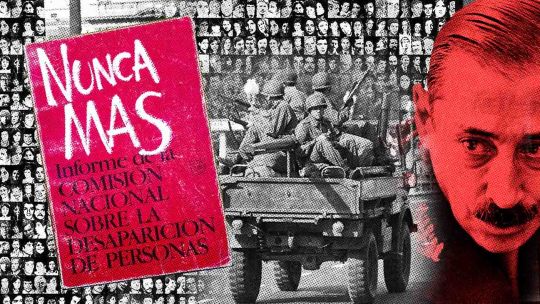
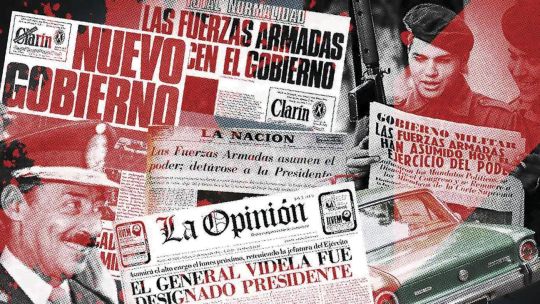
The new book is being published in a particular context: March 24 marks the 50th anniversary of the last military coup in Argentina, and, contrary to what might have been assumed a few years ago, state policies of Memory, Truth and Justice no longer appear to command broad consensus.
Before assuming office in December 2023, President Javier Milei claimed that the crimes committed by the dictatorship were “excesses.” His vice-president, Victoria Villarruel, is a prominent figure in defending the military establishment. Competing narratives about what happened in Argentina during the 1970s lie at the heart of the cultural battle pursued by the ruling La Libertad Avanza party.

“They want to present younger generations with a version of reality that simply isn’t true. They are no longer advancing the ‘two demons’ theory, but rather speaking of only one: the guerrillas, which they attempt to portray through acts of terrorism that were exceptional rather than widespread,” said Tebele. “This goes beyond denialism – there is no-one who does not know what happened in the country. Now it is about justification.”
For this reason, the team at La Retaguardia decided to compile 50 testimonies drawn from court records. Written in a journalistic, narrative style, each story reveals the human impact behind what was a systematic plan of extermination carried out by state forces.
The disappeared, those tortured in clandestine detention centres and stolen babies were the most visible victims of the dictatorship, but they weren’t the only ones. The testimony of Carlos Ramírez and his siblings shows that entire childhoods were devastated. Mariana Eva Pérez, author of Diario de una princesa montonera (“Diary of a Montonero Princess”), lost her parents at 15 months old and has argued that the courts do not recognise her as a victim, allowing her to participate only as a plaintiff. Hers is also one of the stories included in the book.

Across the two volumes, sexual violence emerges as a constant. In one section, Nilda Eloy – who was held in six clandestine detention centres – expresses it plainly: “Sexual crimes must be judged as systematic practices, not subsumed under general offences. I do not believe anyone has an erection and is able to rape a detainee simply because a superior orders it.”
The 50 stories represent only a fraction of the vast number of people who have testified in court. They include direct victims of terror, as well as children, siblings and friends. There are also accounts from relatives of perpetrators who chose to assist in the pursuit of justice.
For example, the case of Martín Azcurra was revisited. He found four drawings in the possession of his father, dictatorship-era security officer Héctor Raúl Azcurra. They had been made by detainee Laura Susana Martinelli during her captivity. One was a self-portrait depicting her and her partner hooded and handcuffed. Martín later gave them to the victim’s daughter, Mariana Luz Oliva, who presented them during the “Subzona 15 III” trial in Mar del Plata. “This is my mother’s direct graphic testimony – she is the one present here today,” she told the judges.

The authors’ aim was not only to recover these stories in the month marking the coup’s anniversary, but also to reach younger generations. To that end, and up to March 24, La Retaguardia has been publishing short excerpts from the stories on its social media channels.
Many stories remain to be reconstructed. The pact of silence among perpetrators persists and most survivors have already testified. Nevertheless, human rights organisations believe there is still scope to uncover further details through those who completed compulsory military service during those years.
Five decades after the coup d’état, the trials continue, and the past is still being pieced together, fragment by fragment. La Retaguardia’s reporting functions as a living archive – the testimonies that emerged in courtrooms reconstruct the past, but they also speak to the future.





Comments